The Marianna: The Genesis of Ducati’s Racing Success
We tend to take for granted that Ducati has such great reputation as a maker of racing motorcycles. But that was not always the case. In fact, it was the Marianna racing bike of 1955 that laid the foundations for all sporting success Ducati had afterward. So how did this all come about?
HOW DUCATI STARTED MAKING MOTORCYCLES
Ducati was founded in 1926 by Antonio Cavalieri Ducati as Società Scientifica Radiobrevetti (SSR) Ducati making and selling vacuum tubes and other radio components. The company soon became successful as a major industrial business and by 1935, the founders’ three sons (Adriano, Marcello and Bruno) had taken over the business and invested in a new factory in Borgo Panigale. The product range meanwhile also included complete radios, photo cameras, turntables, film projectors and even electric razors. A far fetch from how we currently know Ducati!

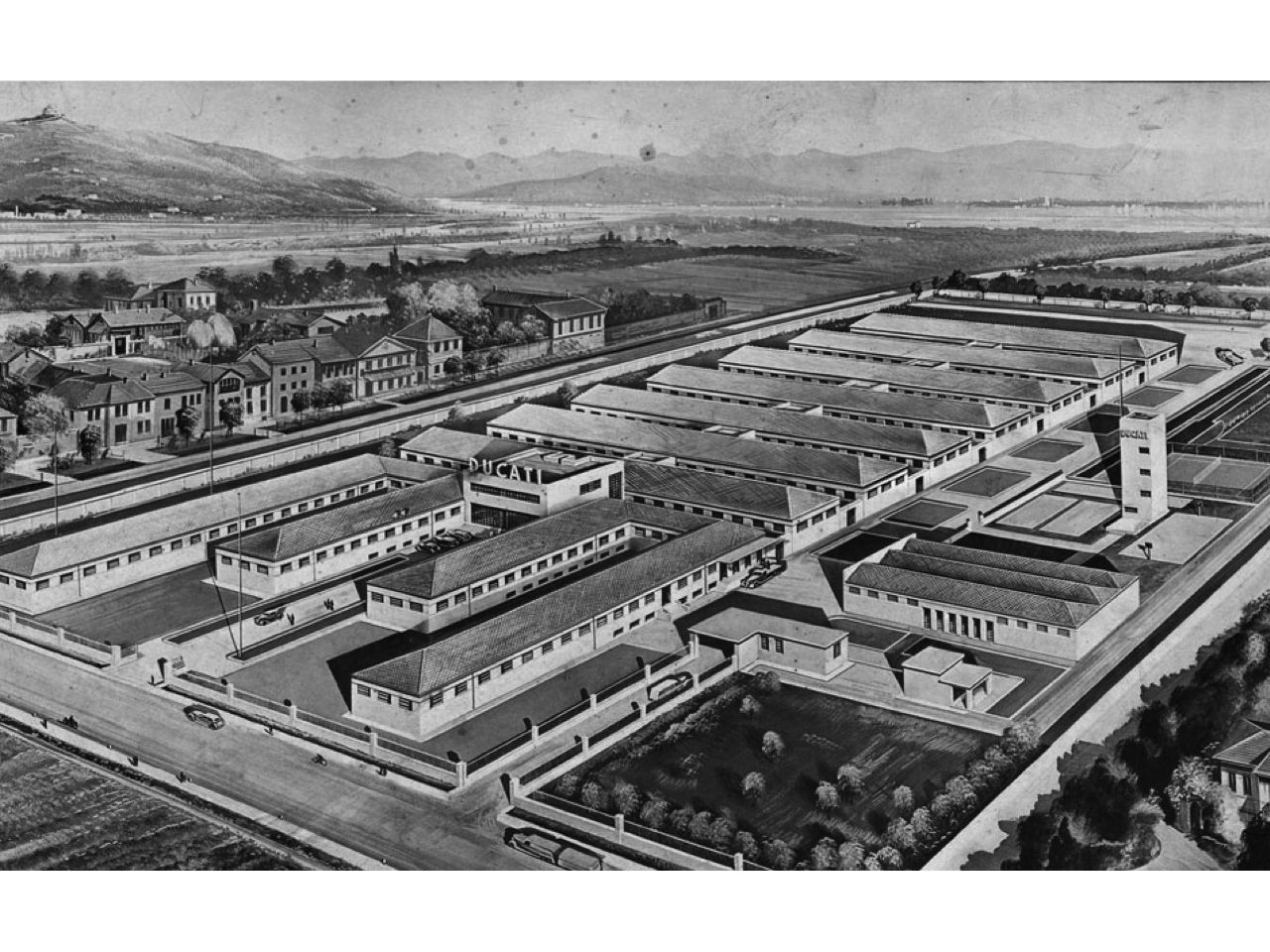
The second world war proved to be very disruptive for the company when the factory was destroyed in a bombing raid on 12 October 1944. It meant that Ducati (by then employing 11,000 workers) had to be rebuild from the ground up.
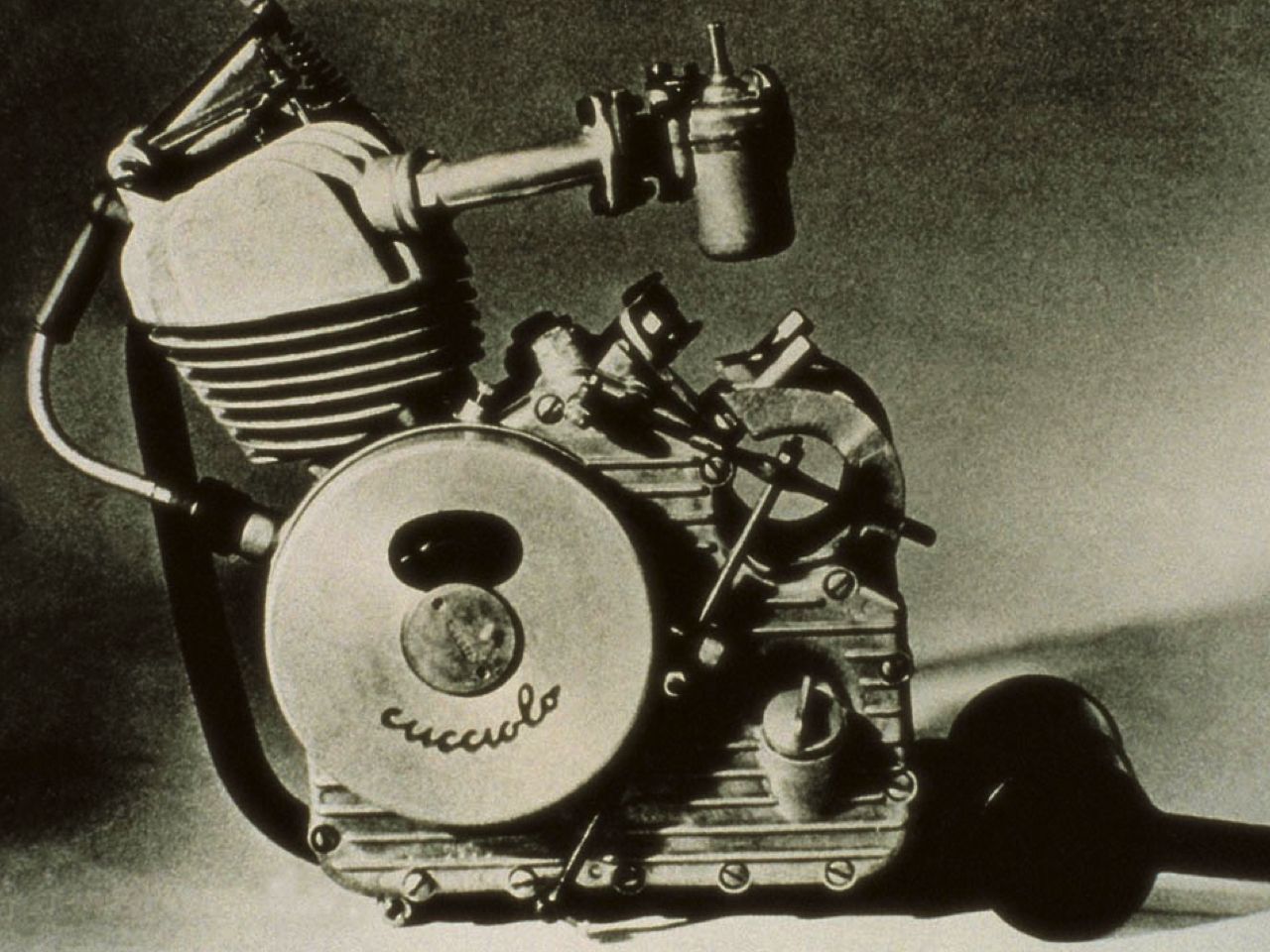
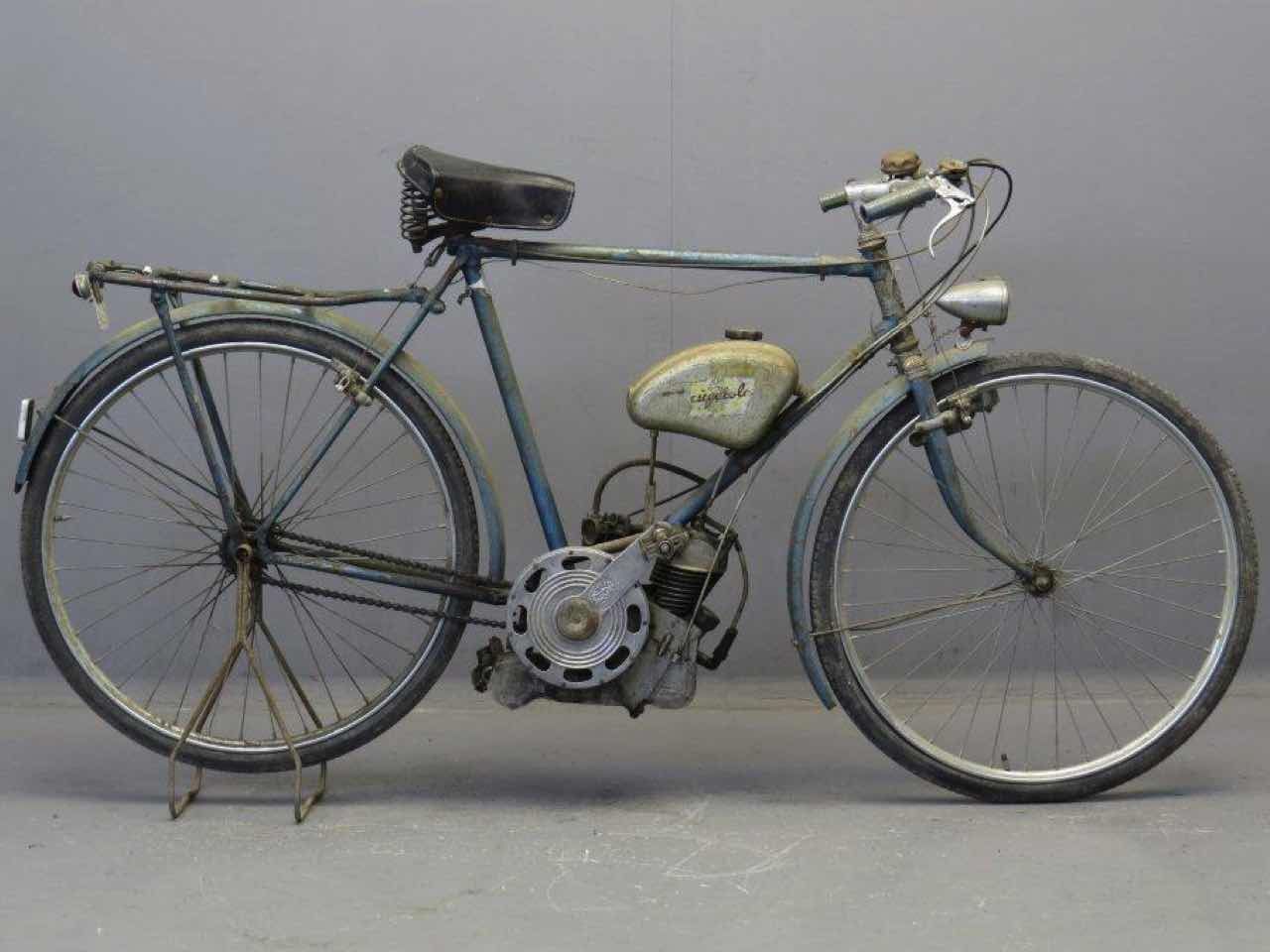
During the final war years, the Turinese design company SIATA developed a clip-on bicycle engine as they foresaw a demand for cheap forms of transportation. SIATA looked for a partner to mass produce this engine they named the Cucciolo (Italian for puppy). It was more or less by accident that an agreement was made with Ducati in 1946. The partnership was very successful and lasted until 1950 with over 200,000 units sold.
In 1950, the Ducati brothers sold the company to the Italian government-controlled Istituto per la Ricostruzione Industriale (IRI) in order to get funding for much needed investments. This meant that Ducati was able to introduce its first complete motorcycle, still using the Cucciolo engine the same year. The company was restructured in 1953, creating Ducati Meccanica that went on as a motorcycle manufacturer and Ducati Elettronica as a manufacturer of electrical components. The latter lives on to this day as Ducati Energia.
GRAN FONDO RACING
Even though Ducati was only making motorcycles for a short time, by 1950 the organisation was already showing signs of a serious infection with the racing virus. The newly introduced 60 Sport (with an enlarged and further developed Cucciolo engine) was immediately taken to the race track, although with little success. Smaller Cucciolo racing bikes are entered in 50cc races but also proved unable to make a name for Ducati as a manufacturer of sporting motorcycles. Ducati’s managing director, Giuseppe Montano, dreamt of success in the biggest events of the early 1950s: the Gran Fondo races…
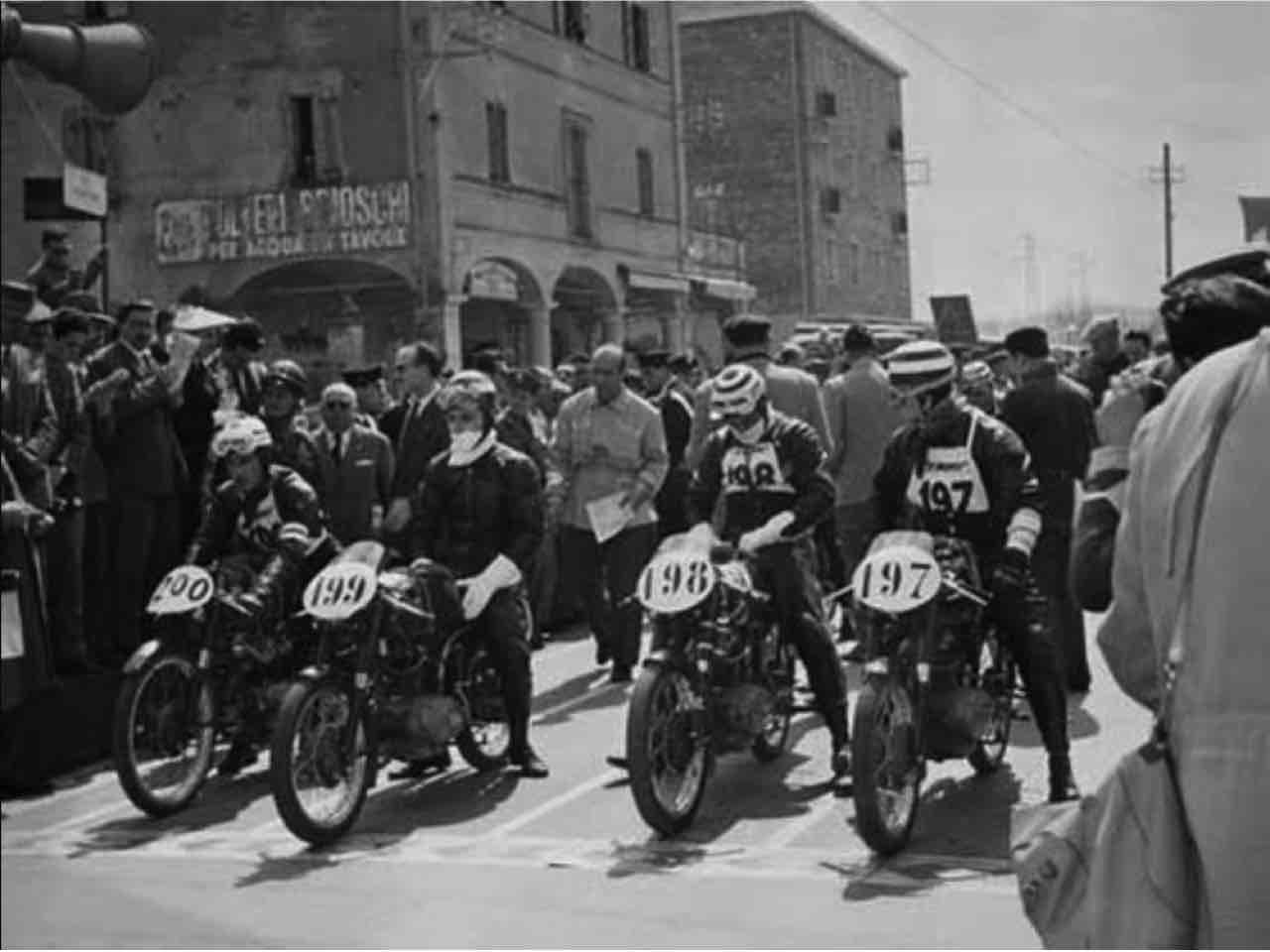
Gran Fondo (meaning ‘Big Ride’) racing was the way for any Italian maker of motorised vehicles to show its racing pedigree. Endurance racing events, in particular the Mille Miglia and Targa Florio for cars and the Motogiro d’Italia and Milano-Taranto for motorcycles, drew huge crowds and received ample media attention. Especially in the years after the world war, with Italy still worn-down by destruction, these traveling racing circuses were hugely popular.
The Bologna-based Stadio sport newspaper had a large role in organising and marketing the Motogiro d’Italia throughout Italy. It also played an important role with convincing Ducati to take up a serious attempt in competing. The Stadio editor, Luigi Chierici, had good relations with Ducati director Montano and it is likely that the dream of Ducati as a racing success originated between these two men.
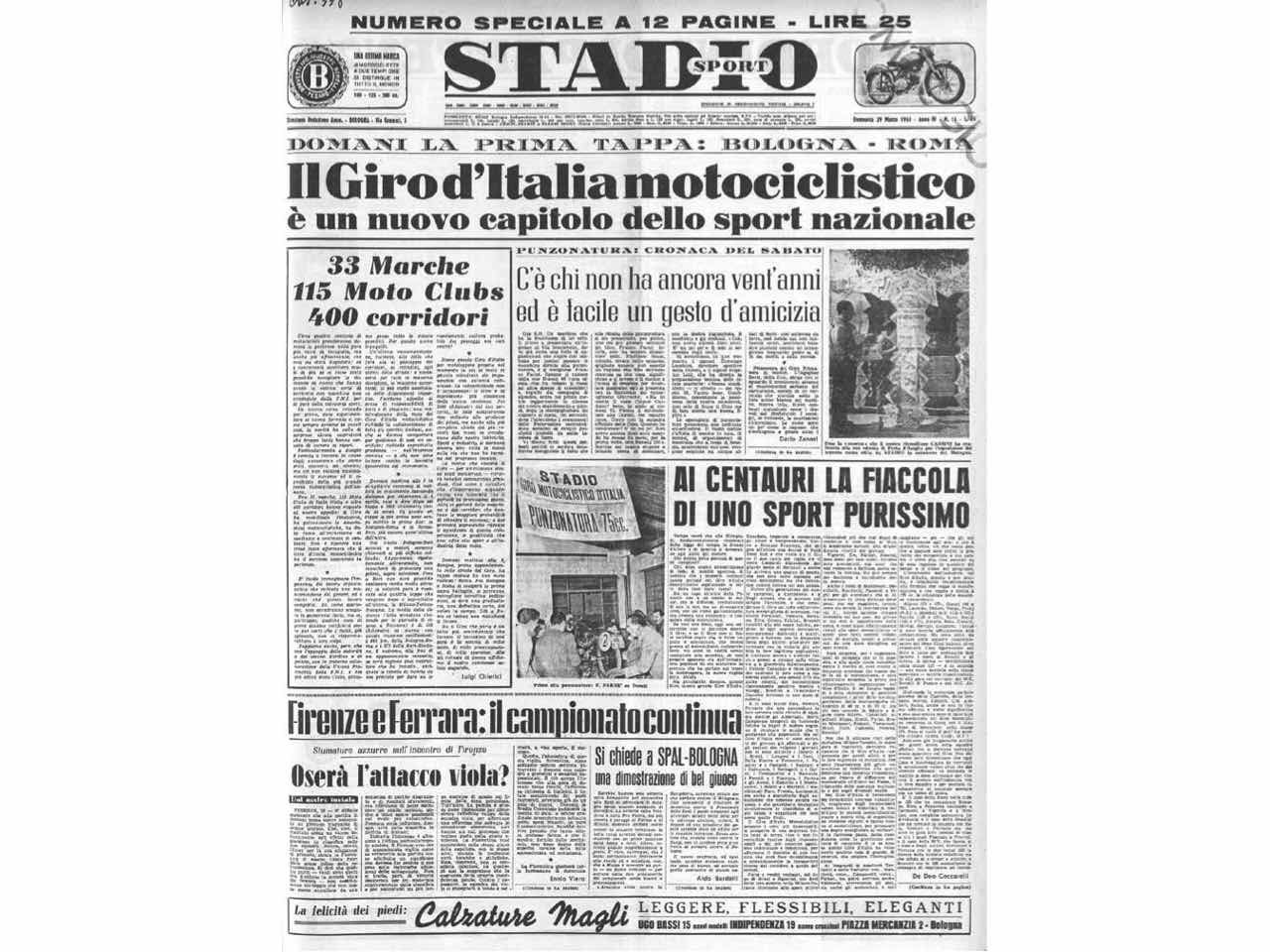
The first Motogiro was held in 1953: a 3,050 kilometre endurance race, starting and finishing in Bologna over the course of 6 stage days. As Ducati had little else, the Cucciolo was entered in the 50cc sub-class and had some stage wins. But with Laverda, Benelli and MV Agusta taking the wins in the major classes, Ducati was still an insignificant player.
Things didn’t improve for Ducati in 1954. With the introduction of Ducati’s first in-house developed engine, the 98 Sport created high hopes for in the 100cc class. However, the embarrassment was great when rider Alberto Gandossi was only able to manage a 3rd place overall in a Laverda dominated field.
ENTER FABIO TAGLIONI
In 1954, Fabio Taglioni was working at Mondial as an assistant to the technical director Alfonso Drusiani. The two had a bit of an argument and this probably lead to Taglioni having some doubts about his future with Mondial. With general manager Montano looking for ways to get Ducati to higher esteem, an agreement was made for Taglioni to come to Ducati as technical director. Only three weeks after the disappointing 1954 Motogiro, on 1 May, Taglioni joined Ducati. It turned out to be a match made in heaven.
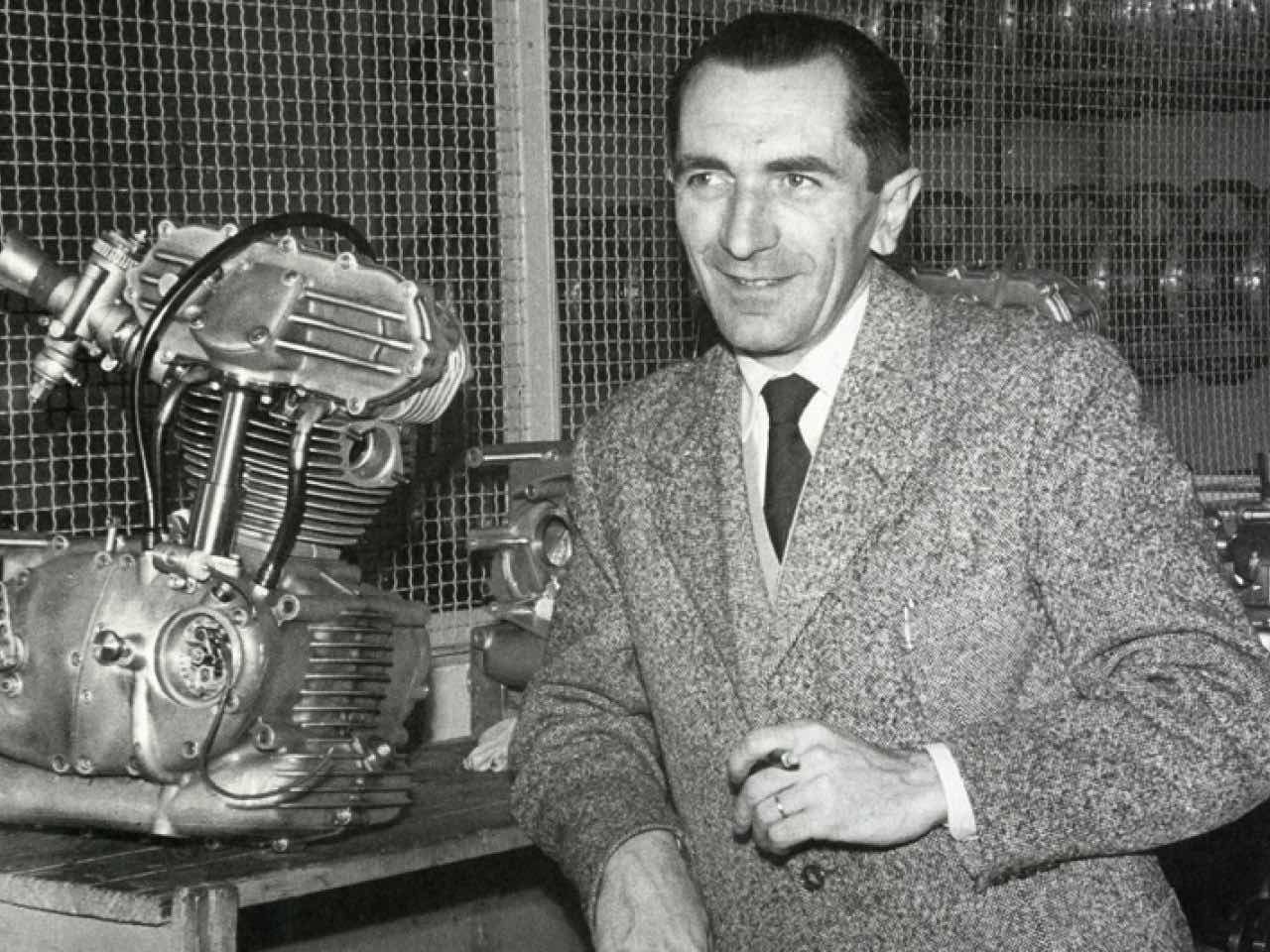
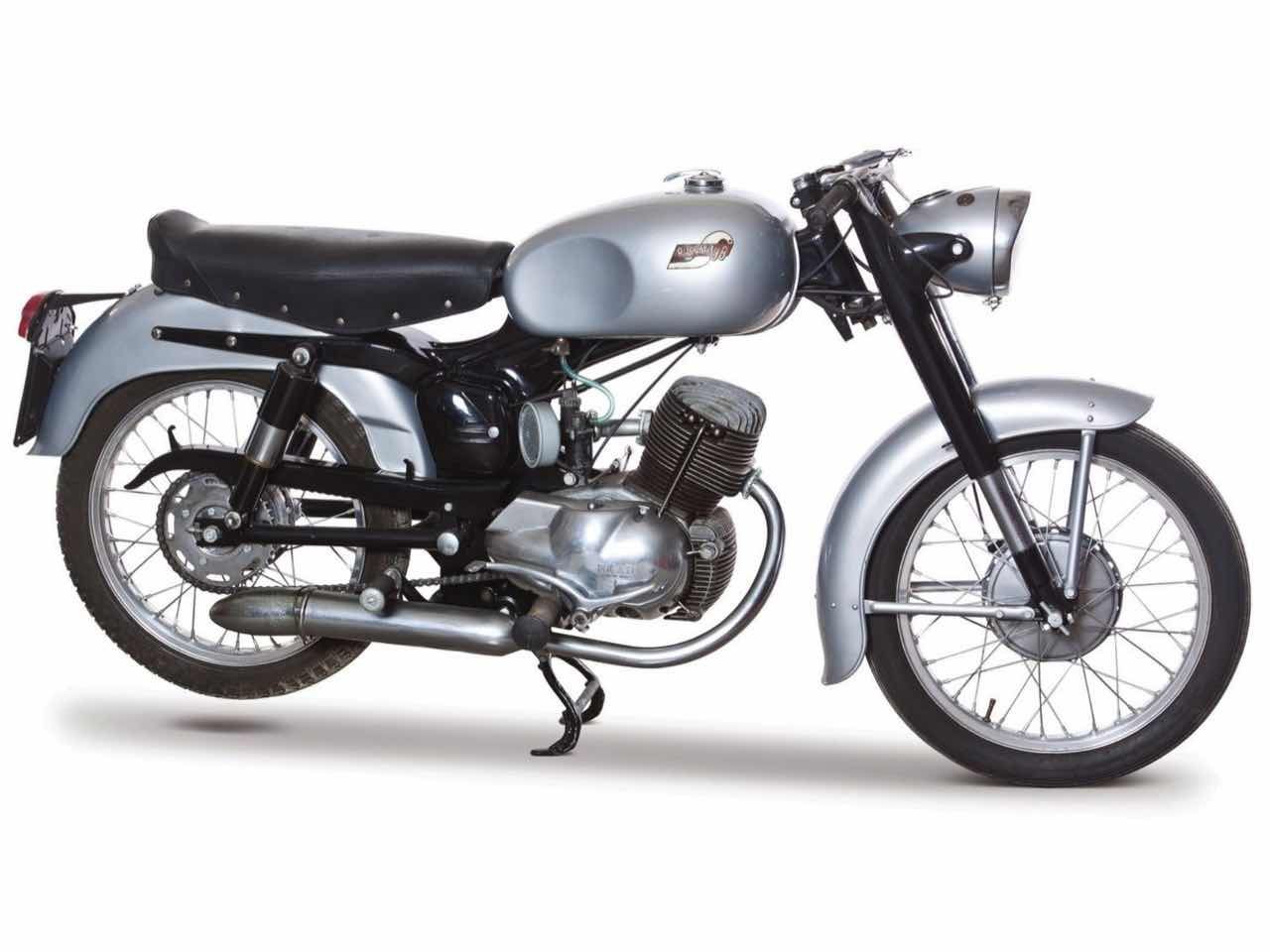
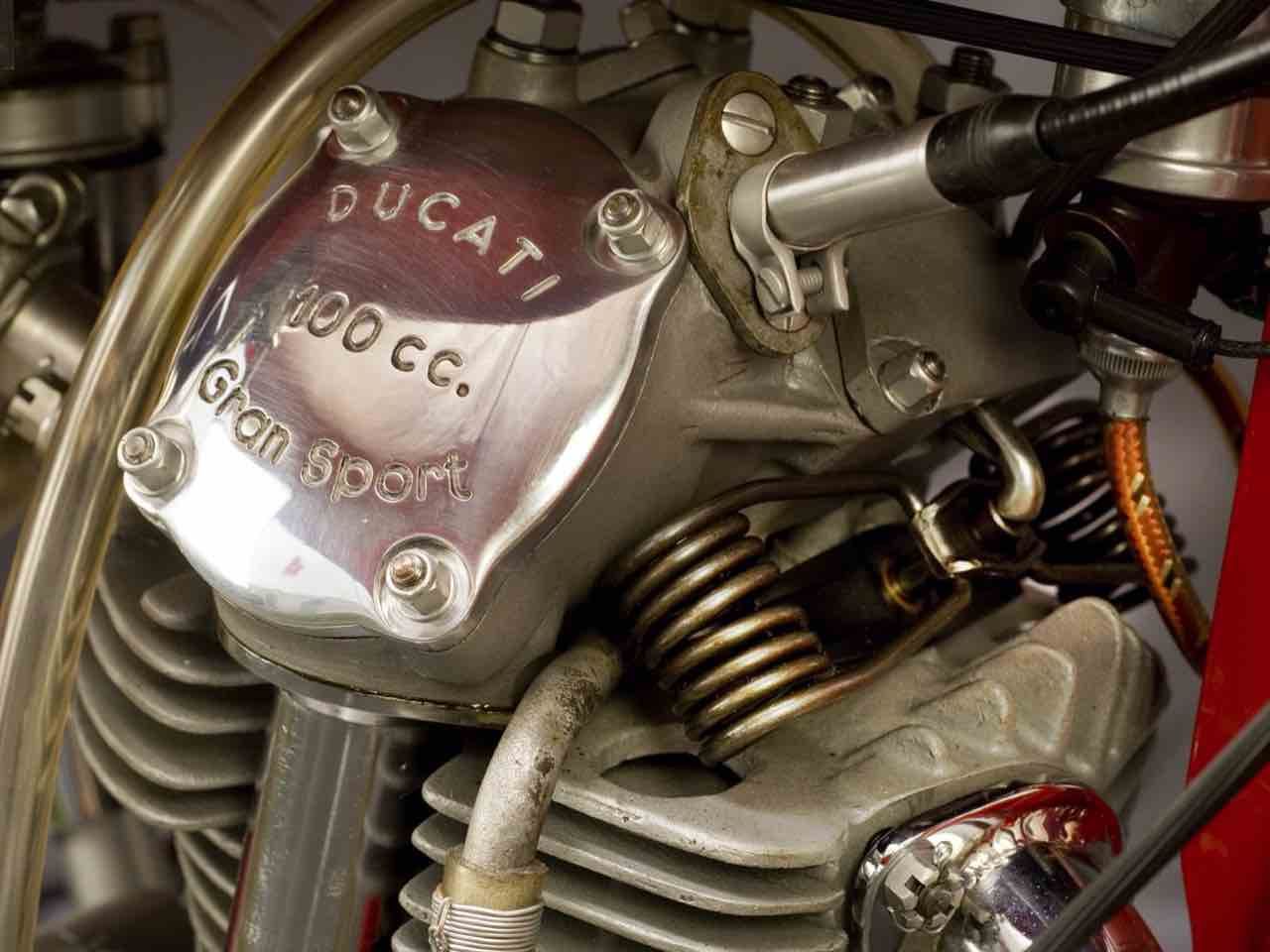
Taglioni started work on the new racing bike on his first day. Although only admitted later in his life, it is clear from the engine design that Taglioni was heavily influenced by the Norton Manx racing bikes. The bevel driven overhead camshaft with separate rocker box and hairpin valve springs is almost a mirror image of the British design albeit with a slightly wider valve angle. The bottom-end Taglioni created for the engine was quite different however: vertically split crankcases with integrated 4-speed gearbox and a straight cut driven multi-plate wet clutch. Bore and stroke were 49.4 x 52mm, creating 99.66cc.
It was a true jewel of an engine, with power output of 9 bhp at 9,000 rpm. It may not sound much but please bear in mind that works out as 90 bhp per litre which was pretty good in 1954! But perhaps even more impressing was the engine’s efficiency as initial tests soon proved the bike only needed 2.8 litres of fuel per 100km or racing distance. And that is an important factor if one wants to go endurance racing.
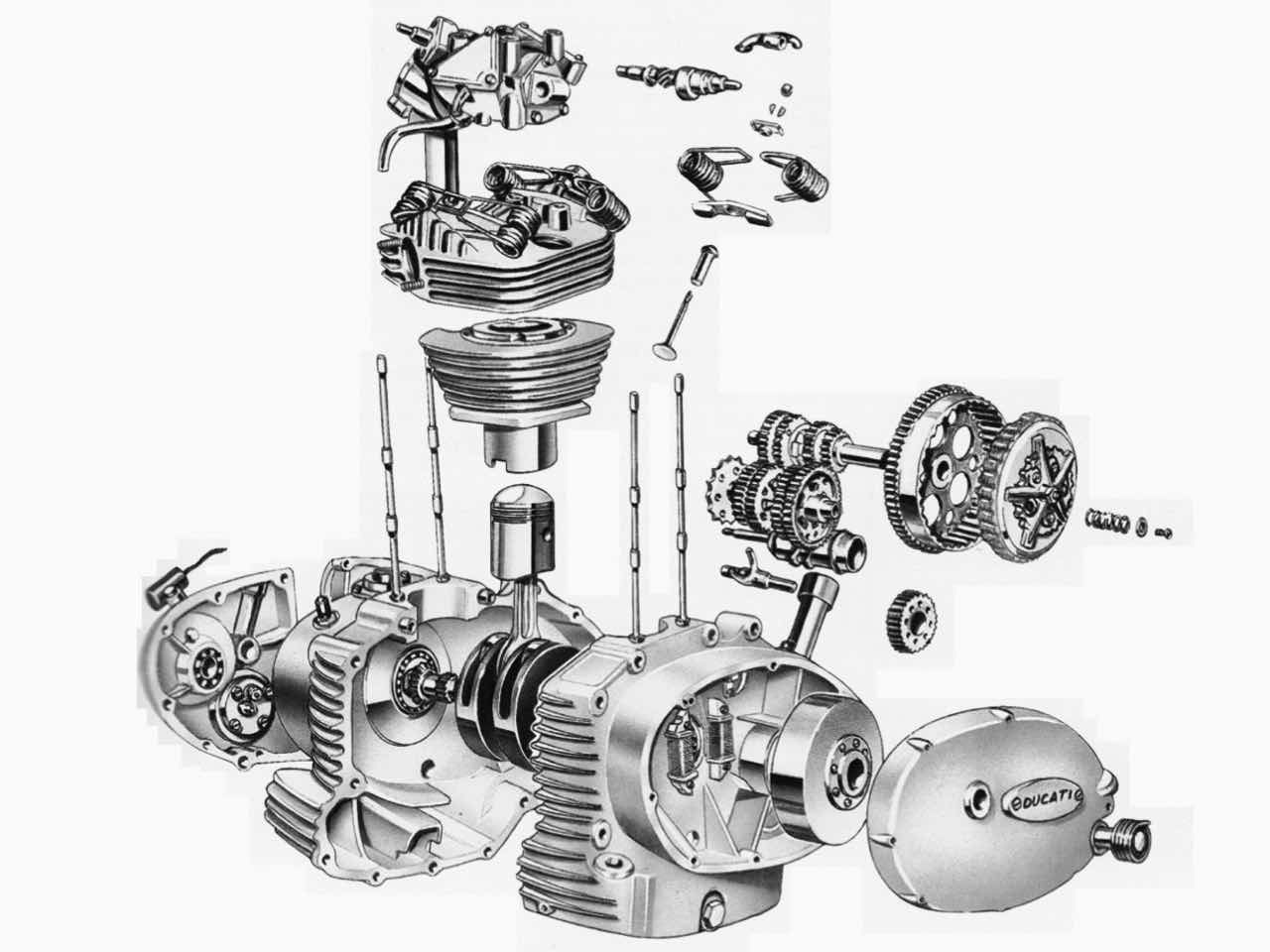
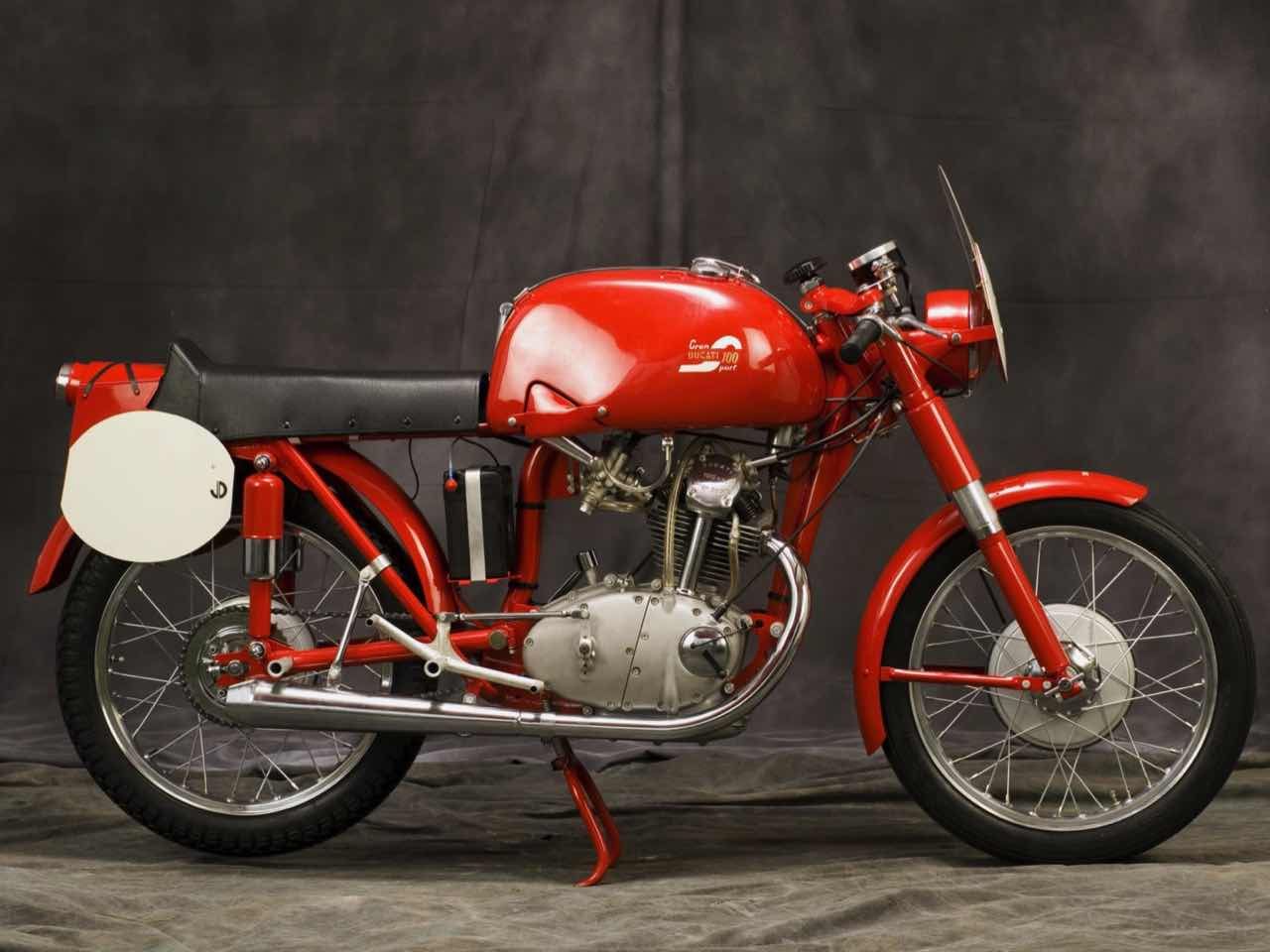
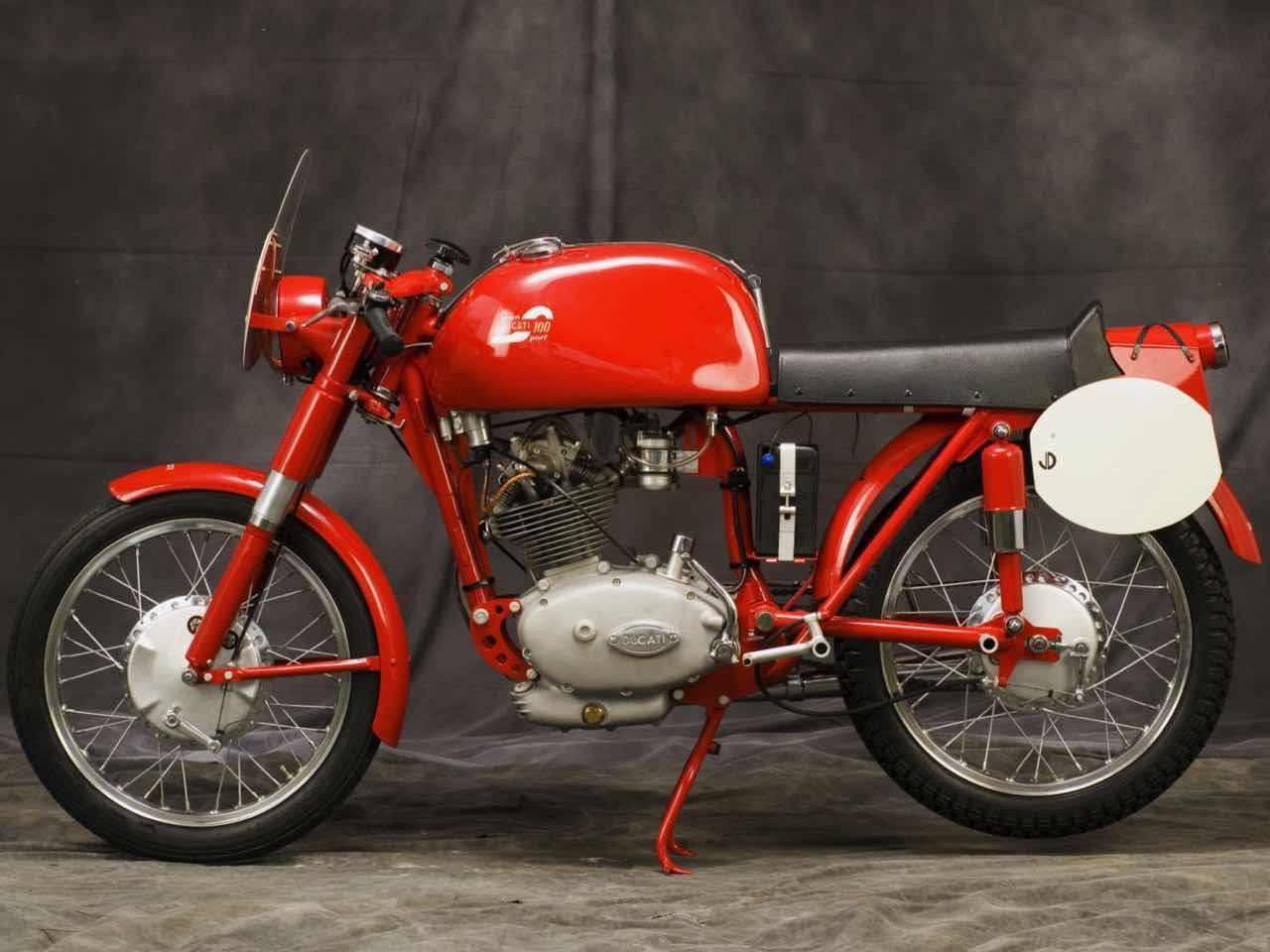
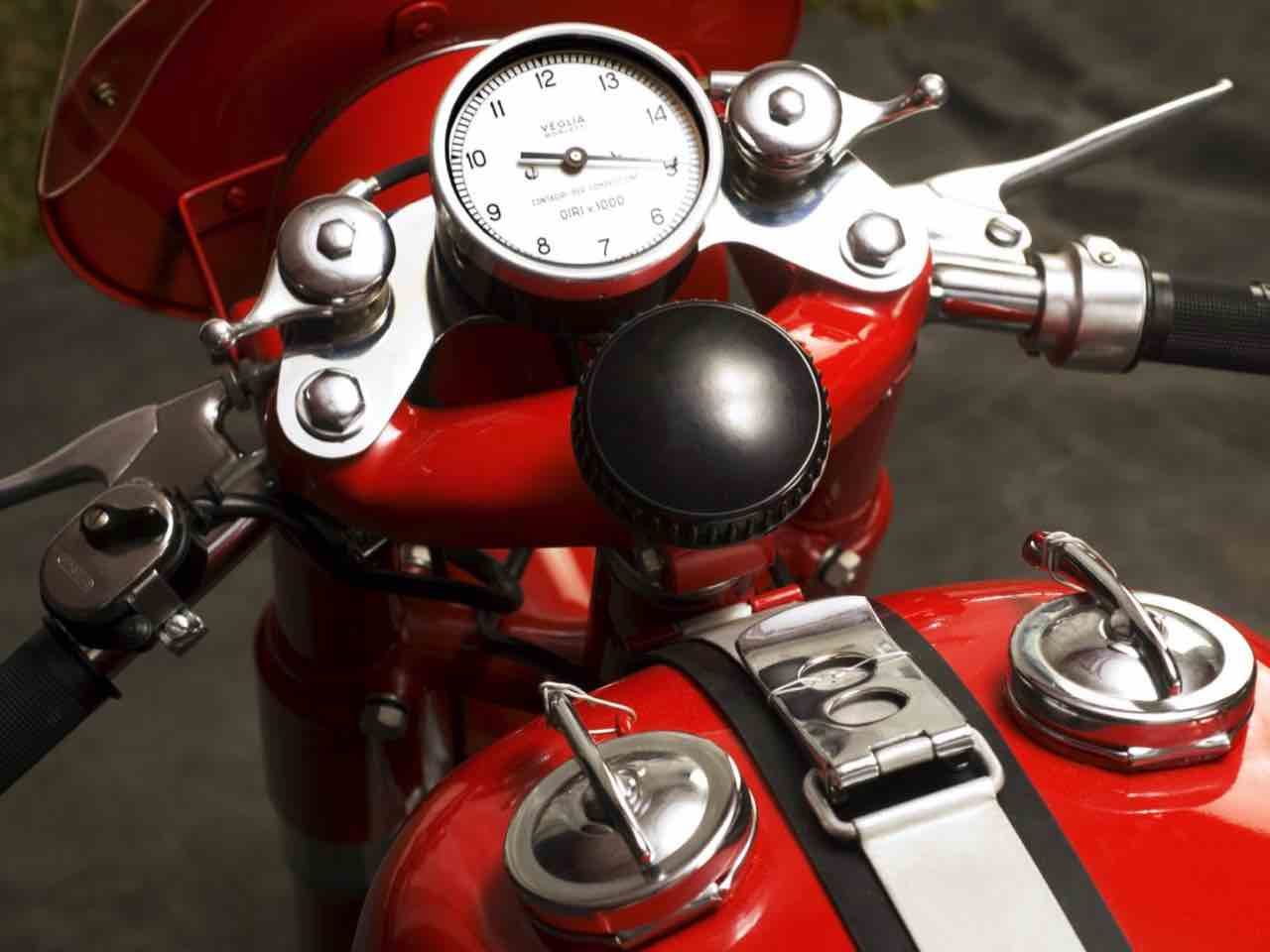
Over the course of 1954 and early 1955 the racing bike was developed from the ground up. A new frame was designed using a large single ‘backbone’ downtube that used the engine as a stressed member. New front fork and shocks were developed and magnesium Amadoro brake hubs were fitted to 17” aluminium rims. The fuel tank, seat unit and headlight were designed with long distance racing in mind. The final creation was named the 100 Gran Sport and only weighted 80kg. It was introduced to the public on 5 Mach 1955.
The 1955 season
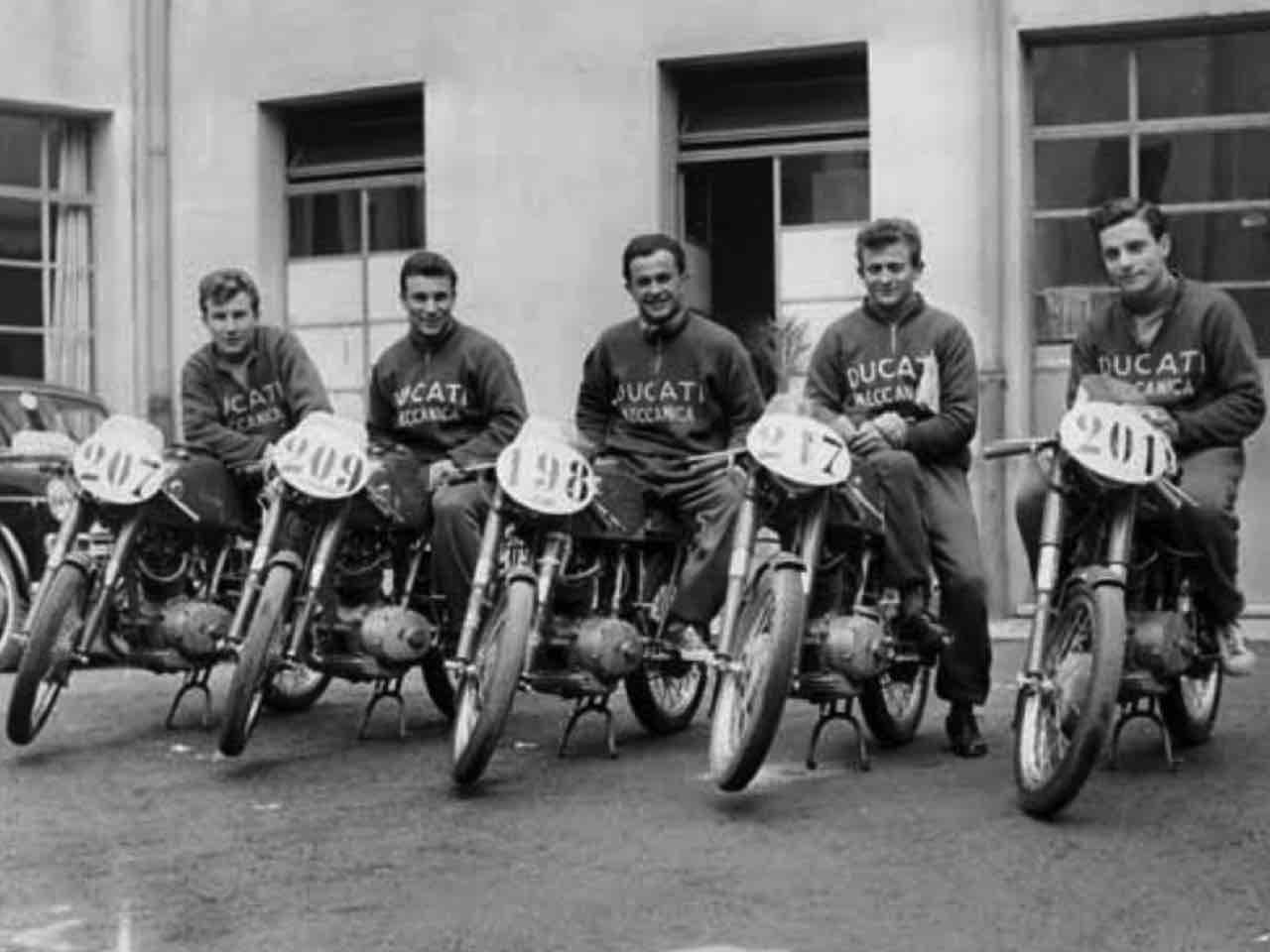
Ducati decided to enter in the 100cc class at the Motogiro d’Italia of 1955 to be held between 17 and 25 April. Race distance was a staggering 3,438 km covering the whole of the Italian peninsula. The top factory riders were Gianni Degli Antoni, Leopoldo Tartarini, Francesco Villa, Antonio Graziano, Ettore Scamandri, Franco Farnè and Giuliano Moaggi.
It must be stressed here how serious Ducati took the 1955 entry in the Motogiro. Not only did they have some years of embarrassment to compensate, it was also part of the strategy to become regarded as a serious player in the motorcycle industry once and for all. Lead by Montano and Taglioni, nothing was left to chance to make a good and lasting impression.
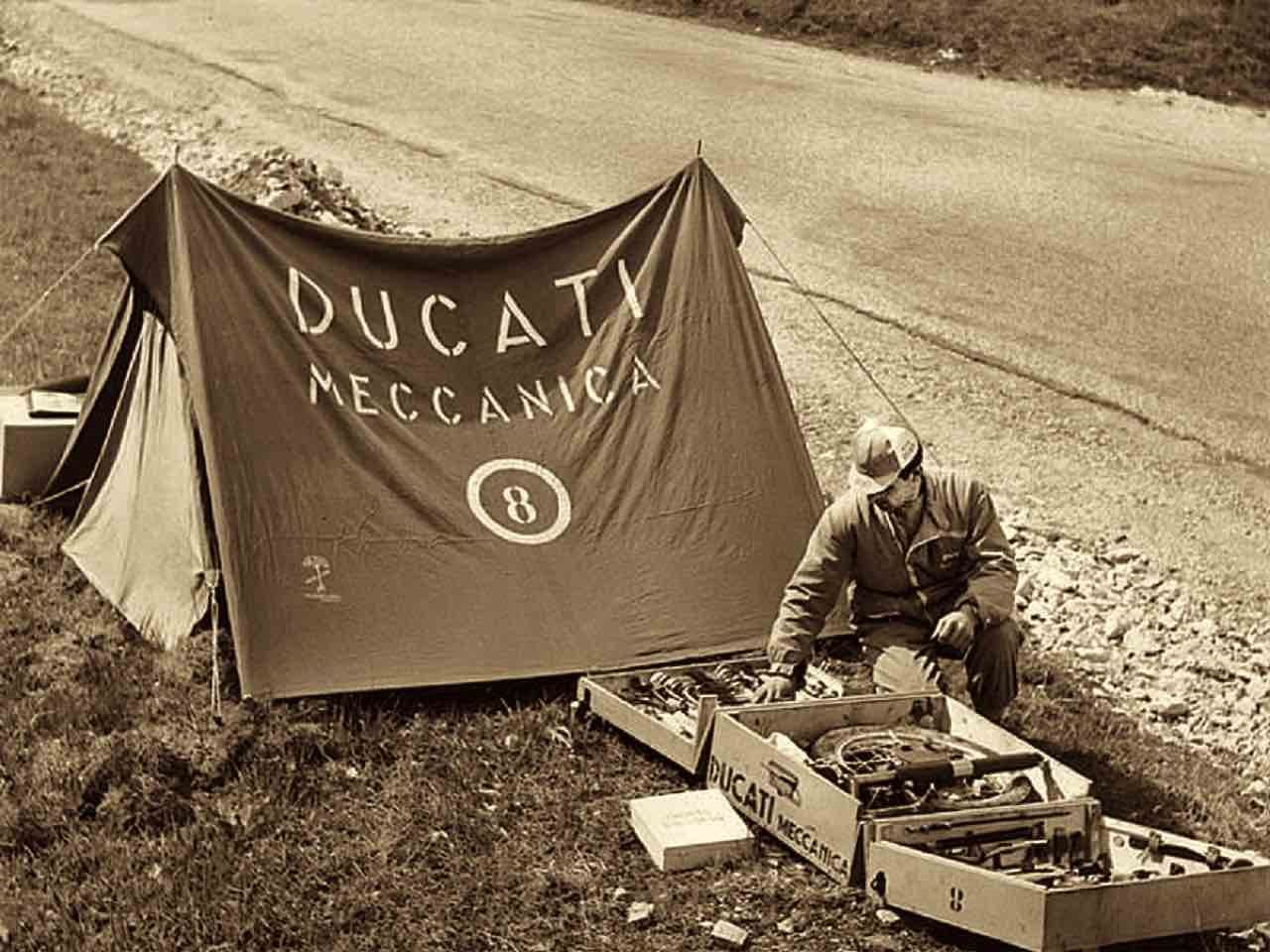
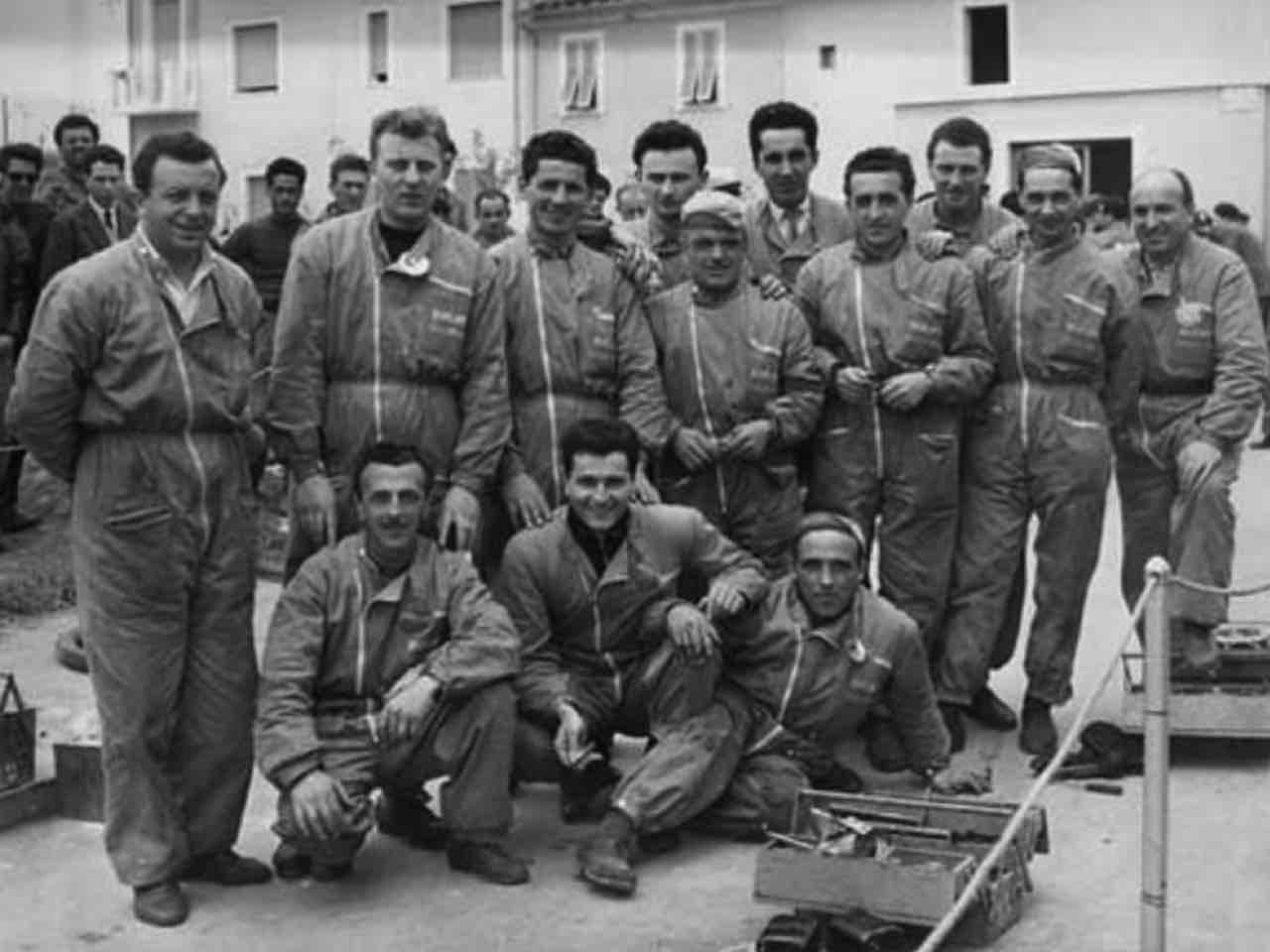
A total of no less than 37 Gran Sports were entered in the event. Ducati dealers were asked if they could point out any promising young riders that could be added to the team. This way, it became the Ducati-debut for Bruno Spaggiari. A large support team was set-up to make sure the riders and bikes were kept in the best condition. Ducati came very well prepared.
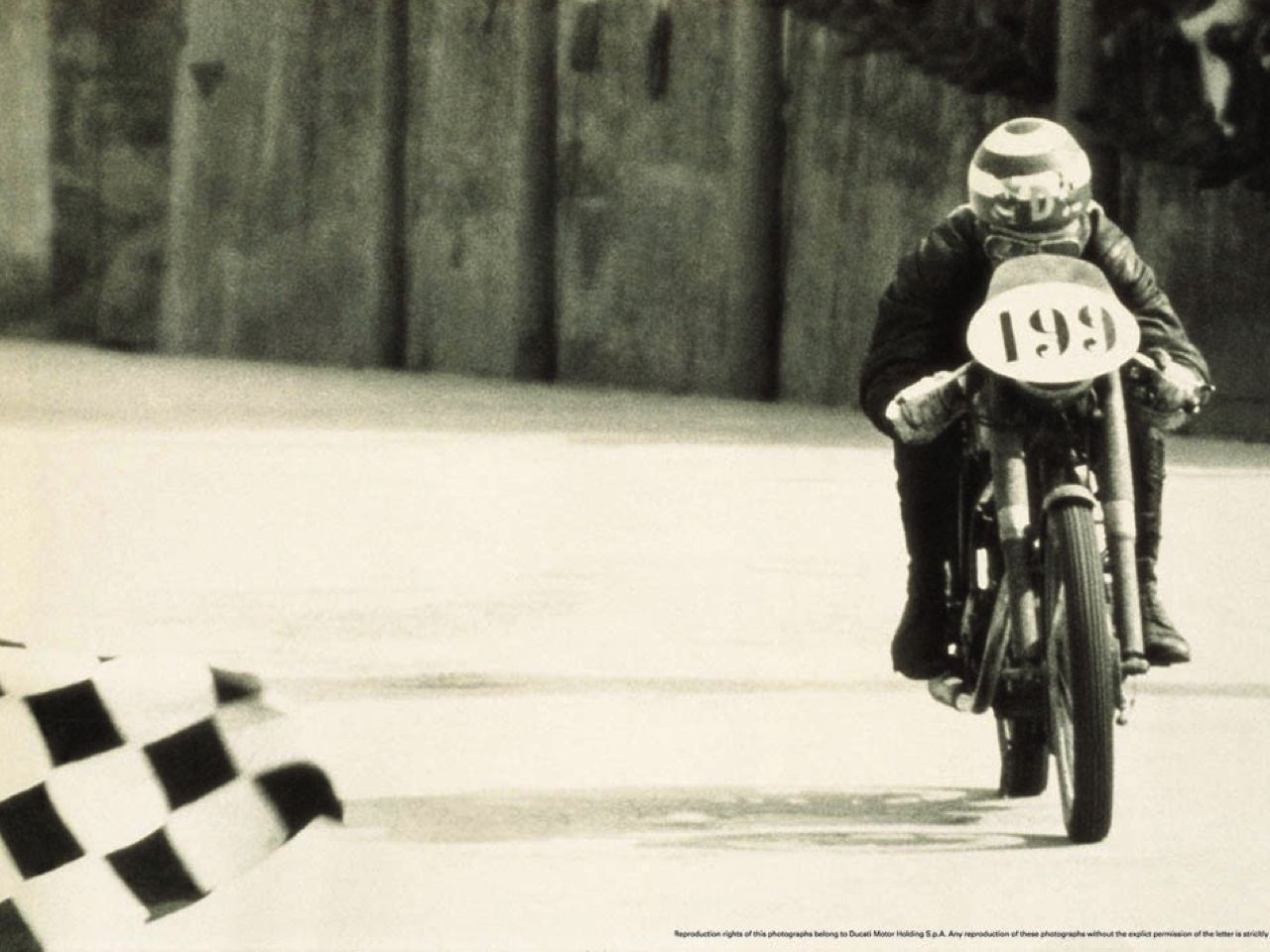
So how did all this turned out? Well, it is no overstatement that Ducati completely dominated the 100cc class in 1955. Every of the 9 stages was won by Ducati with Degli Antoni taking six stage wins and Tartarini, Villa and Graziano winning one each. Not only were all stages won, all stages at least had Ducatis placed 1 to 6!
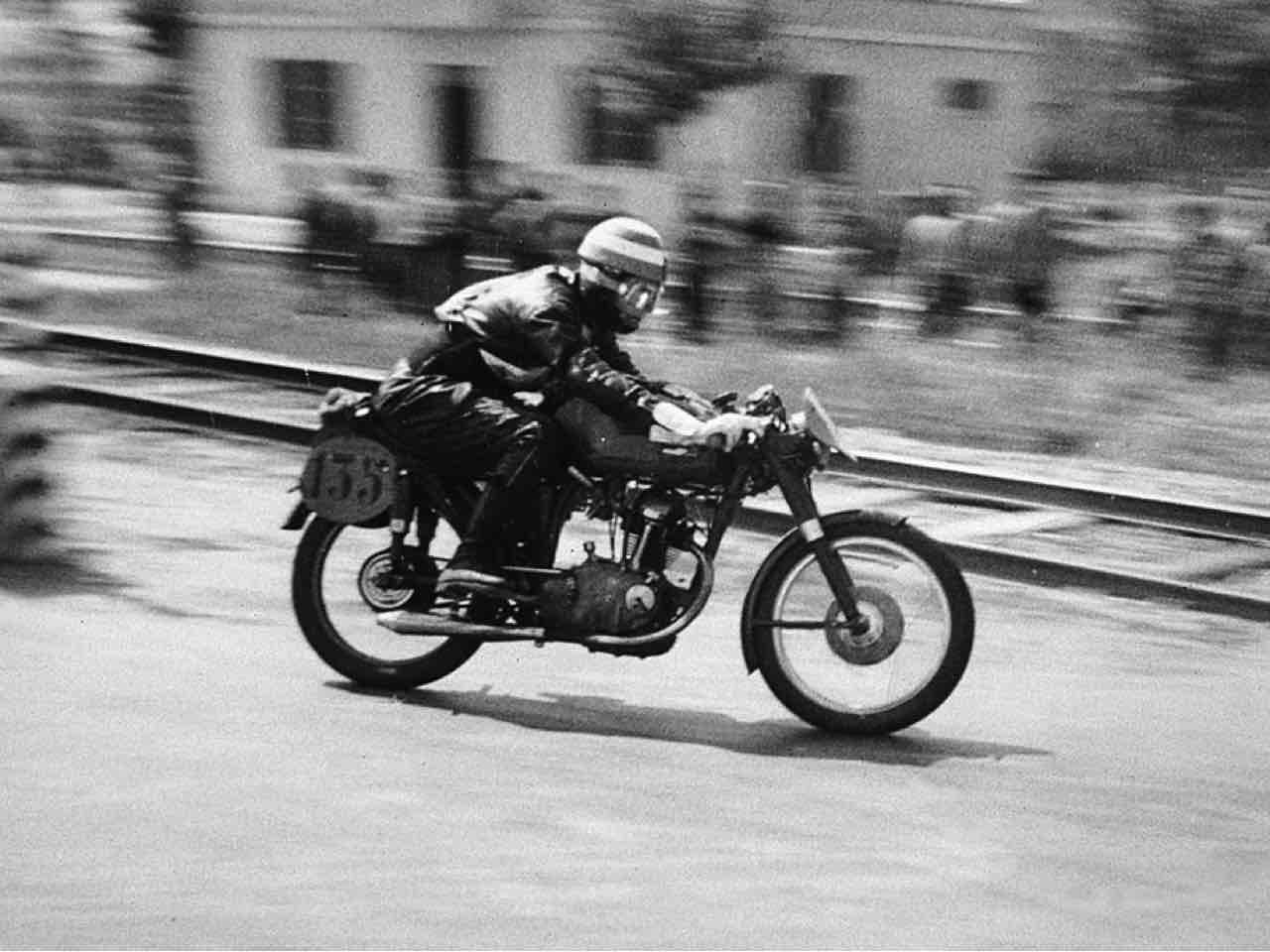
Degli Antoni won overall with an average speed of 98.9 km/h. This was faster than the winner in the 125cc class, Benelli rider Campanelli, who averaged 95.6 km/h. It also meant that Degli Antoni was placed 5th in the overall results of all classes. 100cc overall places 2 to 6 were also Ducati riders: Villa, Fantuzzi, Spaggiari, Maoggi and Scamandri.
Perhaps good to realize here is that these riders were taking a 100cc motorcycle, capable of a top speed around 130 km/h and driving it for 9 days over 3,000 km of public mountain roads and passes almost constantly full throttle and averaging nearly 100 km/h.
The success at the Motogiro meant that Ducati was heralded as the ‘Miracle of the Motogiro’. And because 1955 was named the year of Maria by the catholic church, the Gran Sport was nicknamed Marianna. It lay the basis of all future Ducati motorcycles and racing success.
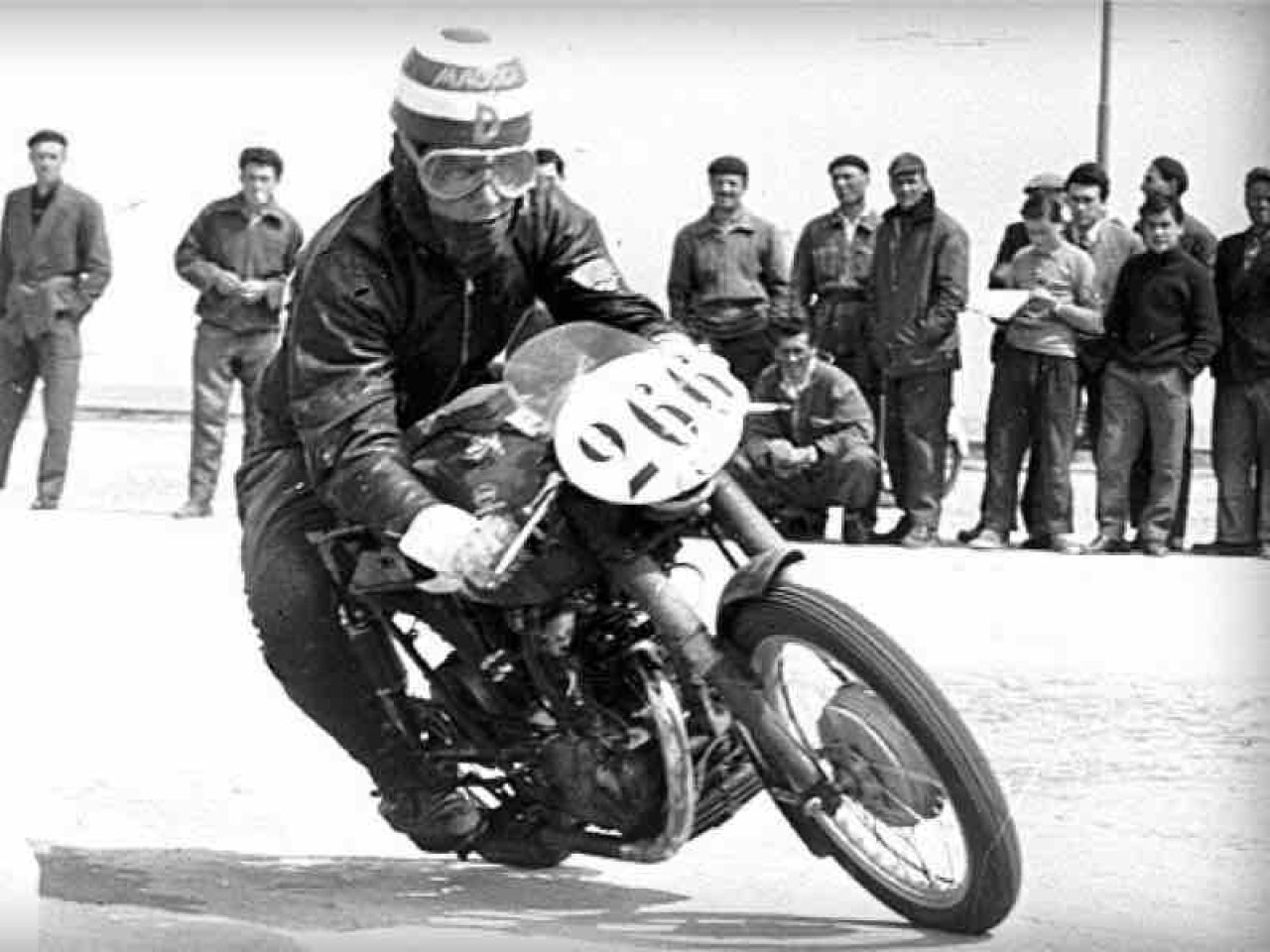
The 1955 season also meant competing the Milano-Taranto race in June. Here too, Ducati dominated the event with Degli Antoni winning the 100cc class with an average of 103,2 km/h and the next 5 places claimed by Ducati riders as well.
By increasing the bore to 55.3mm, Taglioni also prepared a 125cc version of the Marianna to compete in the 125cc class of the Milano-Taranto. Maoggi won the 125cc class but was not as fast as Degli Antoni on his 100 Gran Sport.
The 1956 season
The success of the 1955 season made Ducati enter in both the 100cc and 125cc classes of the Motogiro. The Marianna racing bikes were further improved and had slightly more power; now 10.5 bhp at 9,800 rpm for the 100 and 14 bhp at 10,000 rpm for the 125.
Results were even better than the year before: all stage wins in both classes were won by Ducati. Overall, Alberto Gandossi won the 100cc with an average 98.2 km/h with Villa 2nd and Spaggiari taking 3rd. The 125cc class was won by Giuliano Maoggi with an average 99.8 km/h and his team-mates Maranghi and Artusi taking 2nd and 3rd places.
Degli Antoni went on the win the Milano-Taranto in 1956 on his 125 Marianna. He fishished with an average of 103.2 km/h, faster than most of the 500s (!) competing in the race. Here too, Gandossi won the 100cc class.
The 1957 season
It may become a bit boring to sum up the Marianna’s successes, but the little thing went on and on to win every race it was entered in. The 1957 Motogiro again saw total Ducati dominance in both 100cc and 125cc classes. Apart from the 5th stage in the 125cc class, all stages were won by Ducati riders. Giuseppe Mandolini won the 100cc class with Artusi and Sestini coming 2nd and 3rd on their Mariannas. Antonio Graziano won the 125cc class with Pionava and Mondaini filling the rest of the podium.
But in 1957 a disaster that was waiting to happen put a nail in the coffin of all Gran Fondo racing. During the Mille Miglia race in May, Alfonso de Portago crashed his Ferrari 335 S after a tyre burst. He and his co-driver were dead but the wreck also caused a total of 10 spectators to lose their lives, among them 5 children. This tragic event lead the Italian government to ban all racing on public roads effective immediately.
It meant the end for the Motogiro, but also the Milano-Taranto (scheduled for June 1957) and an end to Gran Fondo racing as a whole.
How it evolved
With Gran Fondo racing now over, attention shifted to short-track racing. The Marianna did her job however as foundations was laid for future developments. Ducati was now taken seriously as a motorcycle manufacturer. The Marianna also proved to be a great platform to further develop both street and race models. It also cemented Fabio Taglioni’s reputation as a great engineer and it enabled him to lead Ducati into the future with many new designs to follow. The Marianna remains the genesis of Ducati as a manufacturer of racing motorcycles.