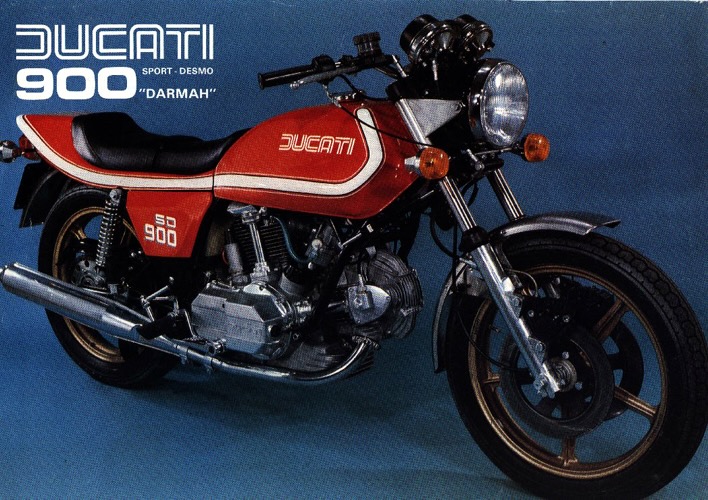
Ducati 900 Darmah: The Sensible Bevel
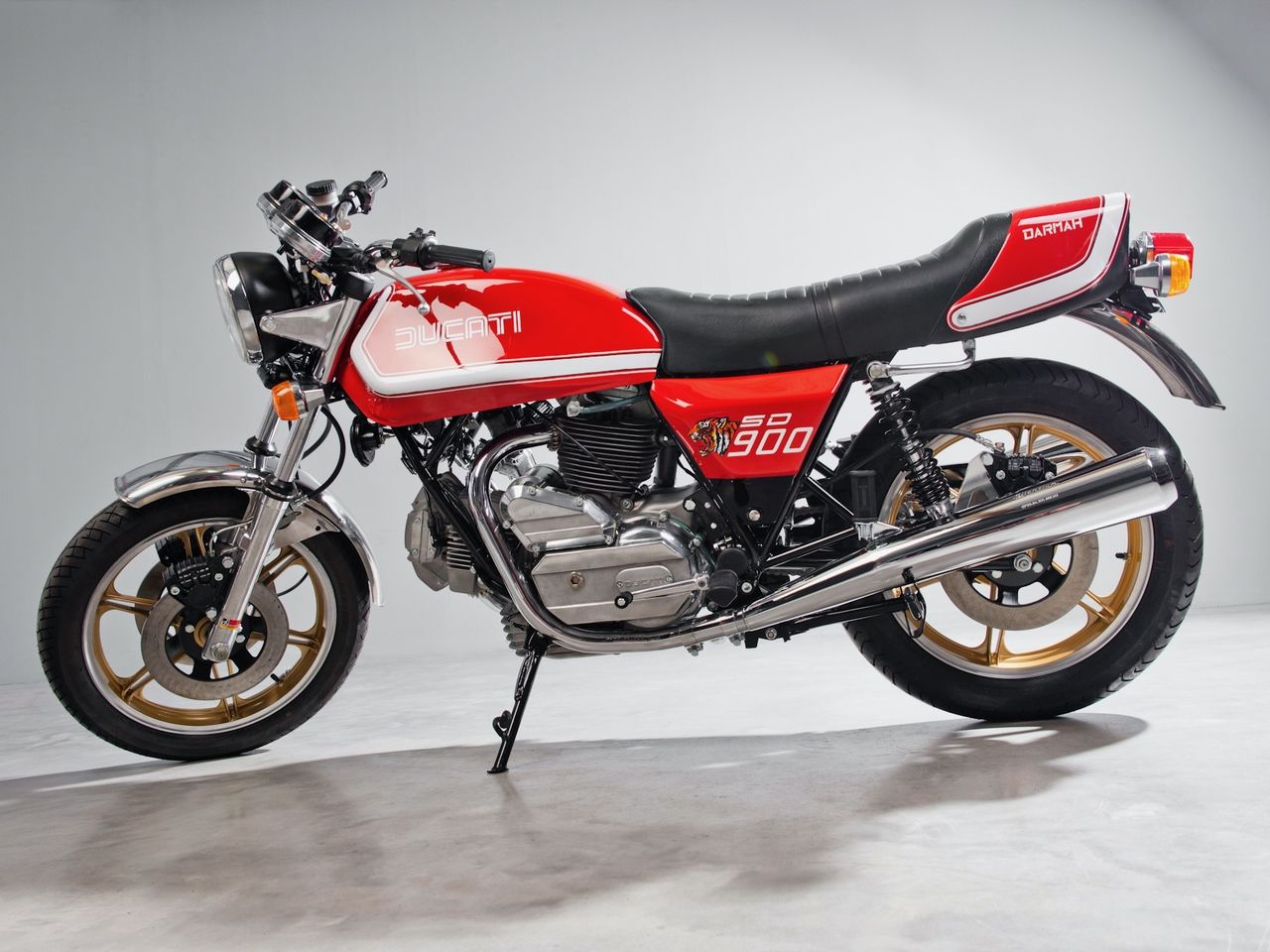
The Ducati 900 Darmah was supposed to be the sensible bevel Ducati. It had an electric starter, a comfortable dual seat, relatively relaxed ergonomics and enough practicality to actually travel on. Compared with the uncompromising 900 Super Sport, the Darmah looked positively civilised. But underneath it all was still a Ducati.
The same basic bevel-drive philosophy that had given Ducati its great sporting motorcycles of the 1970s remained at the heart of the Darmah. Desmodromic valve operation, Dell’Orto carburettors, a narrow 90-degree L-twin and a chassis designed by a company obsessed with racing were now wrapped in something approaching a grand-tourer. Which raises the question we explore in our new 32-minute documentary: Did Ducati ever really make the bevel twin sensible?
From the 860 GT to the Darmah
The introduction of the 860 GT did not bring Ducati the success it was hoping for. The design by Giorgetto Giugiaro, although very modern in its day, was a not well regarded. Ducati learned from the 860 GT with the introduction of the 900 Sport Desmo ‘Darmah’ or 900 SD in 1977. Although the two models were available simultaneously until 1979, the Darmah is regarded as the better sport-touring bike of the two.
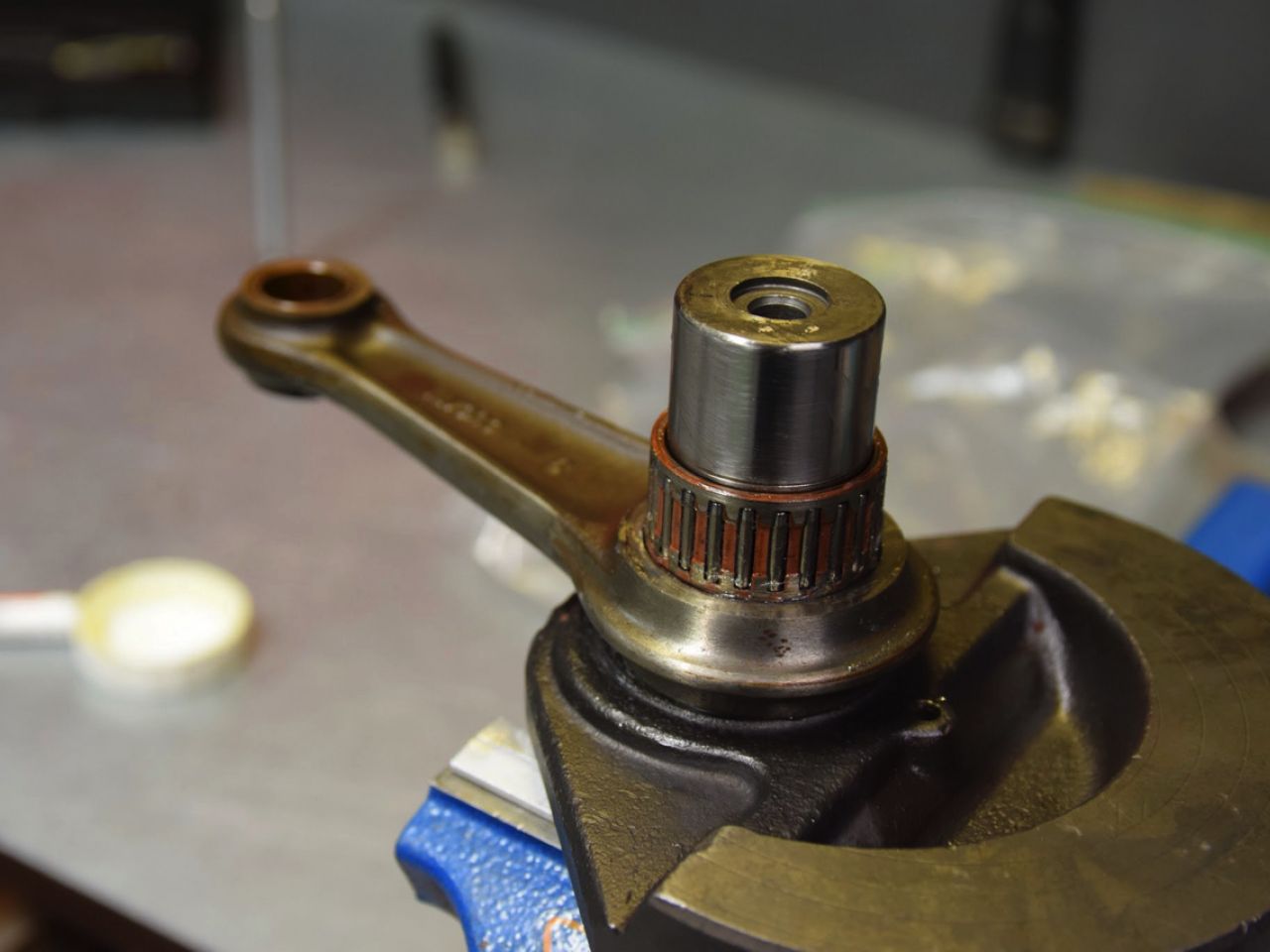
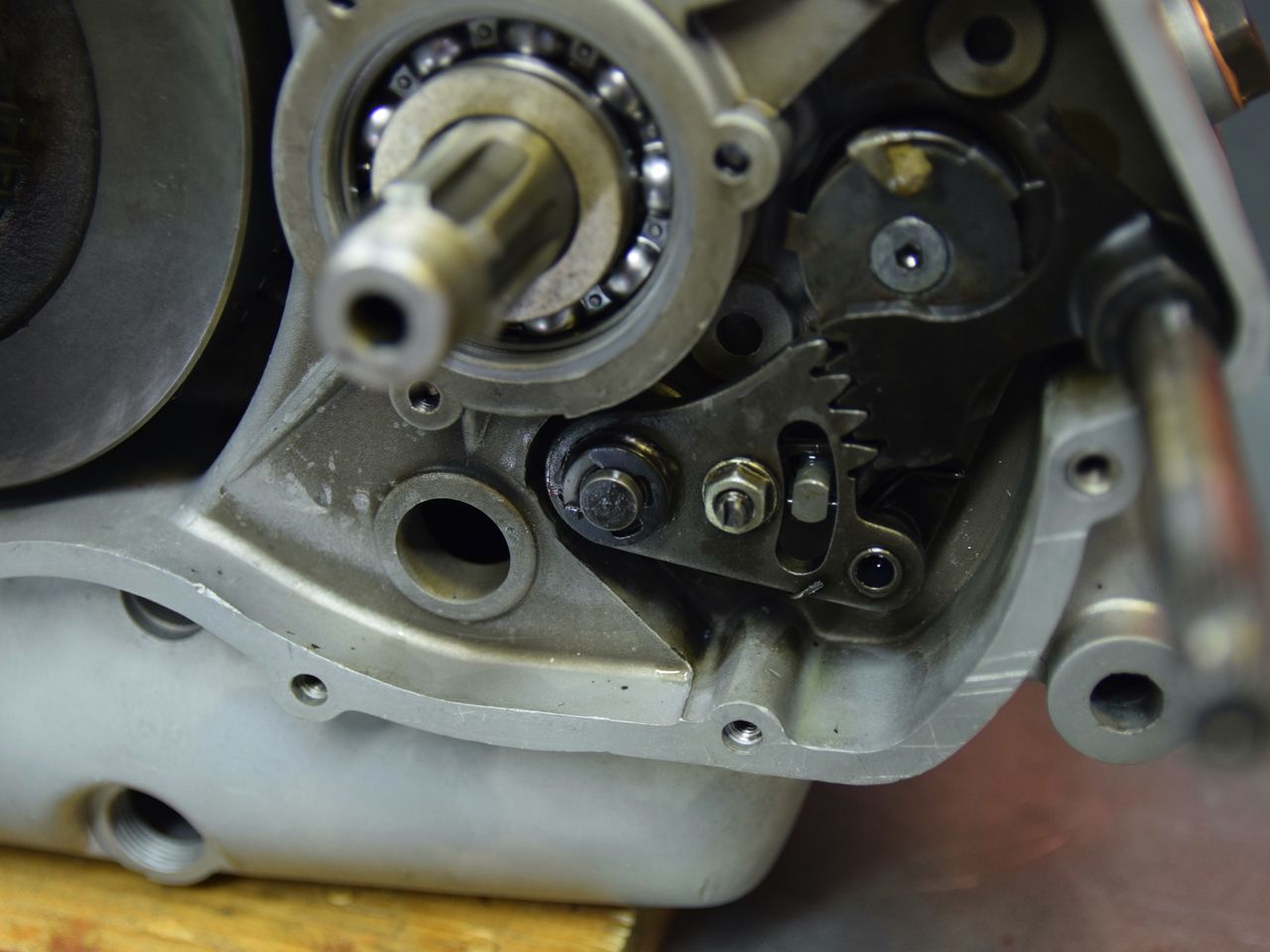
Several improvements were introduced on the 900 SD Darmah in 1977. The crankshaft was redesigned and desmodromic camshafts were now standard like on the 900 Super Sport. Perhaps the biggest improvement was the new gearshift selector drum now located on the left side. This meant an end for the rather crudely constructed crossover rod to make left-side gearshift possible in 1976. Other major improvements were the introduction of the Bosch ignition and an electric starter motor was fitted as standard.
The technical improvements of the 900 SD Darmah saw their way to all other Ducati bevel twins of 1978. Although the frame was much like that of the 860 GT, all bodywork was new. The fuel tank and seat formed a nice partnership by sharing a line all the way over the ‘ducktail’ end of the bike. Instruments were now Nippon Denso and the 900 SD was fitted with gold finished Campagnolo magnesium wheels. Leopoldo Tartarini’s design worked well and reception looked promising in 1977.
The anticipated success came with solid sales and in 1978 some minor updates were introduced. The 1977 Darmah had a Ceriani front fork, replaced by a Marzocchi front fork in 1978. The wheels were now Speedline. During 1978 the Lafranconi exhaust mufflers were replaced by Silentium and the kick-start lever was removed.
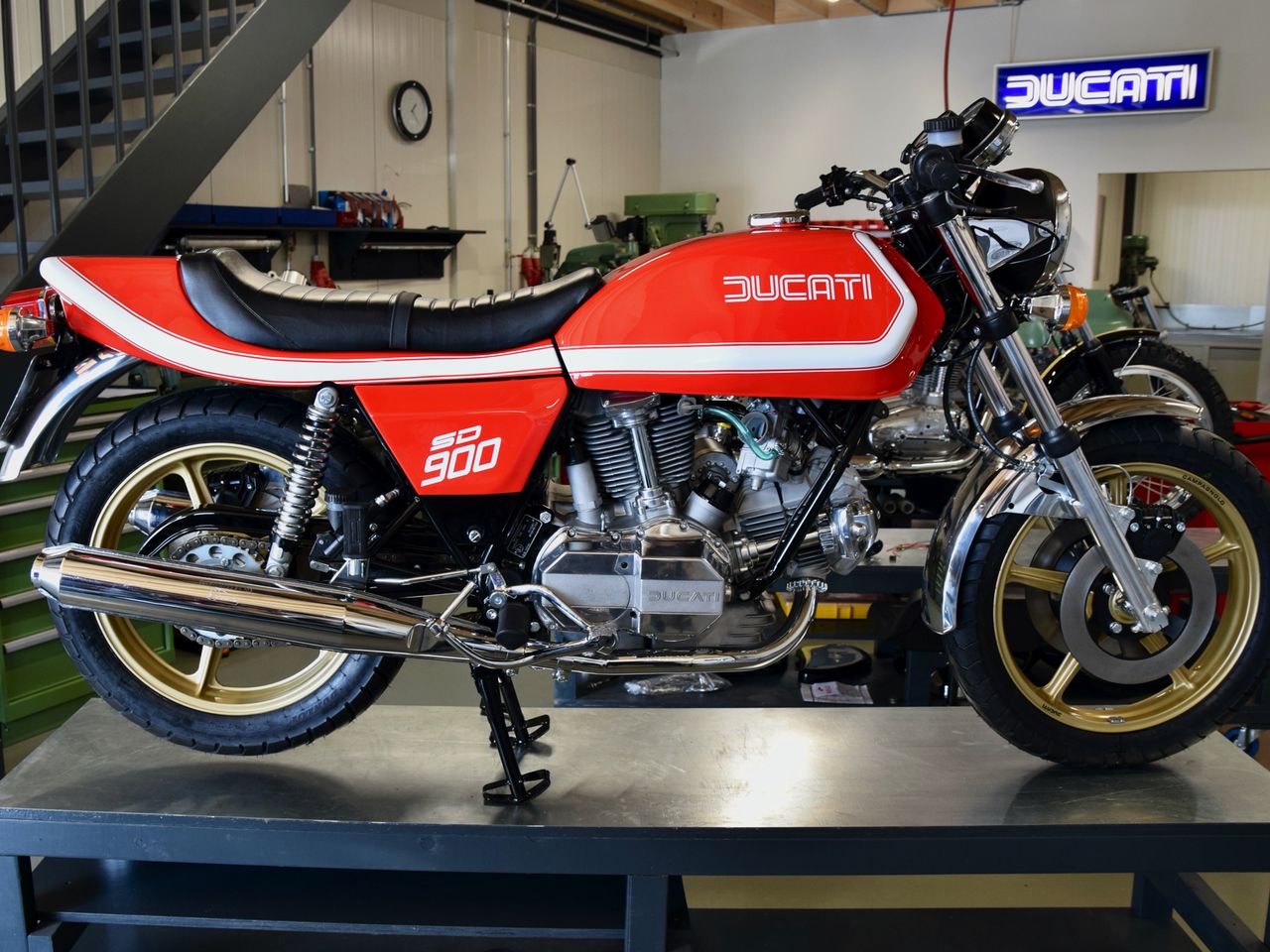
A new dual seat with thicker padding was introduced in 1979 and in 1980 FPS aluminium wheels replaced the Speedlines. Along with some minor changes, the final 900 SD Darmah of 1982 received a new colour scheme. For 1983, the Darmah together with the 900 Super Sport were replaced by the 900 S2.
RESTORING A DARMAH
Among the bevel-drive Ducati models, the Darmah is arguably the most suitable for everyday use. The basic technology is the same as on the more racing oriented bikes, making it a unique package for many classic motorcycle enthusiasts. In true Ducati-fashion, the Darmah has high-end driving characteristics, combining it with a comfortable riding position.
You have to keep in mind however that we are coming from a period where the Darmah was not regarded as a sought-after motorcycle. Many have high mileage, were neglected over the years and only the basics of maintenance was done (cheaply). Others were even butchered as a basis for a café racer or dismantled for parts.
Given the complexity of the Darmah’s technology (which is similar to the Super Sports) and the bad condition many are currently in, you have to be careful before completely restoring one. Even the economic value of top-condition examples is much lower than that of Super Sports. So investments in parts and labour has to be carefully considered. For someone looking to own a high-quality Darmah, it makes sense to buy the best on the market at a premium rather than to engage in a full nut-and-bolt restoration.
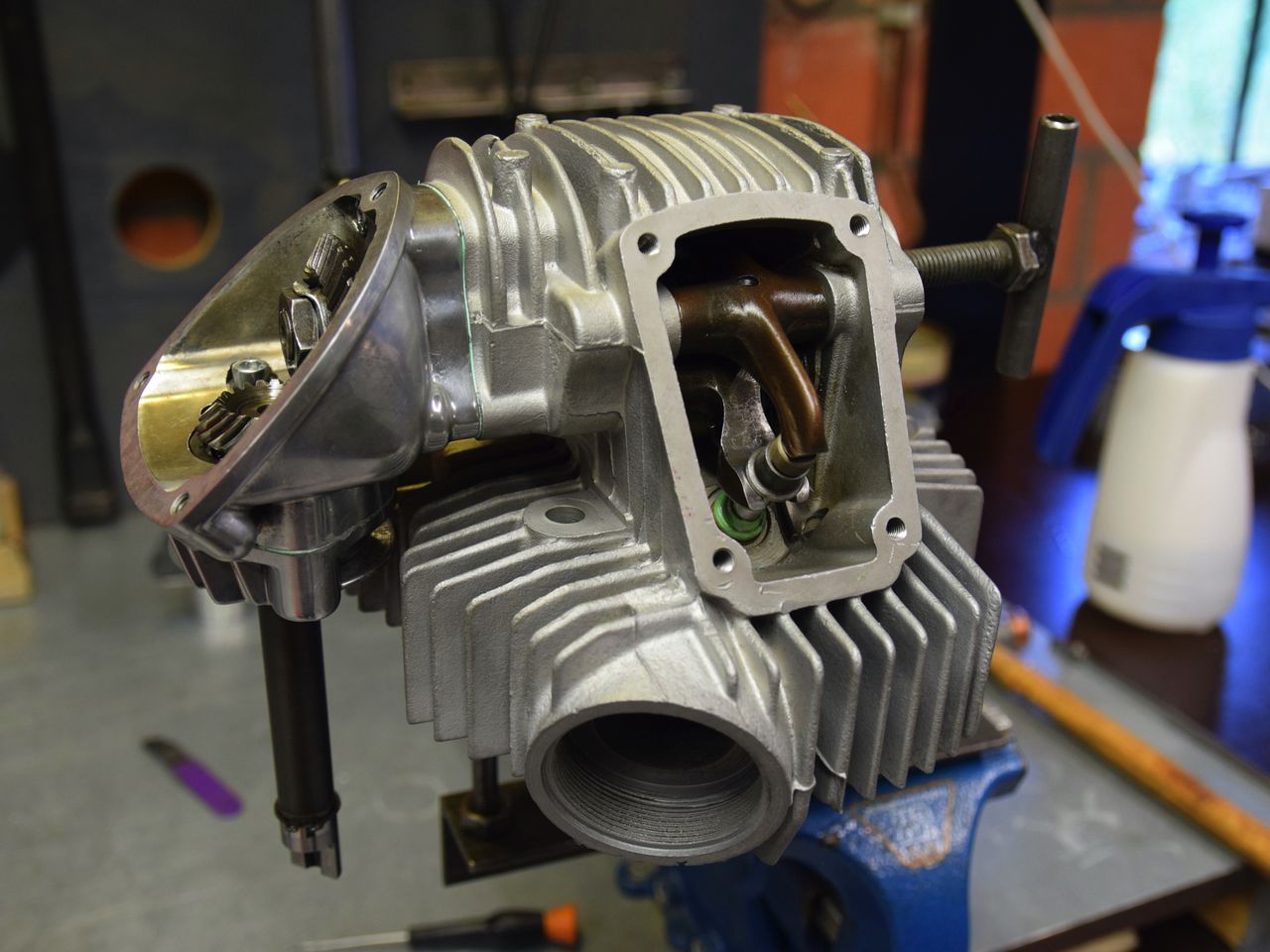
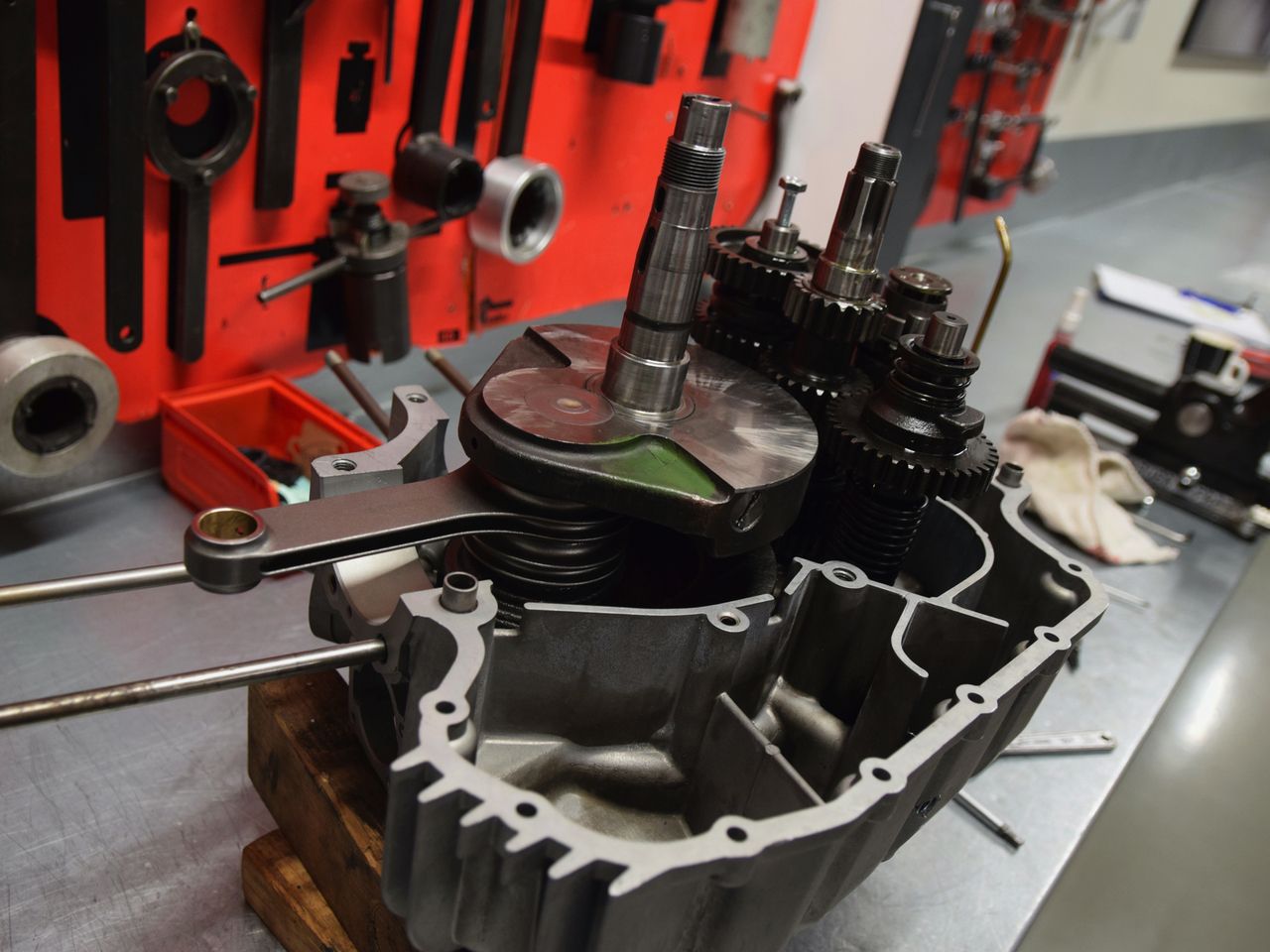
There is a big difference between restoring a Darmah completely, or to only having to take care of the bike’s cosmetics. With the engine being one of the most complex found in the entire history of motorcycles, it makes sense to try to find a Darmah that has had all necessary maintenance done; regular oil changes, valve adjustments etc. Also, check that the bike is changing gear properly and has a good compression on the cylinders. An engine rebuild will be an expensive and time-consuming endeavour.
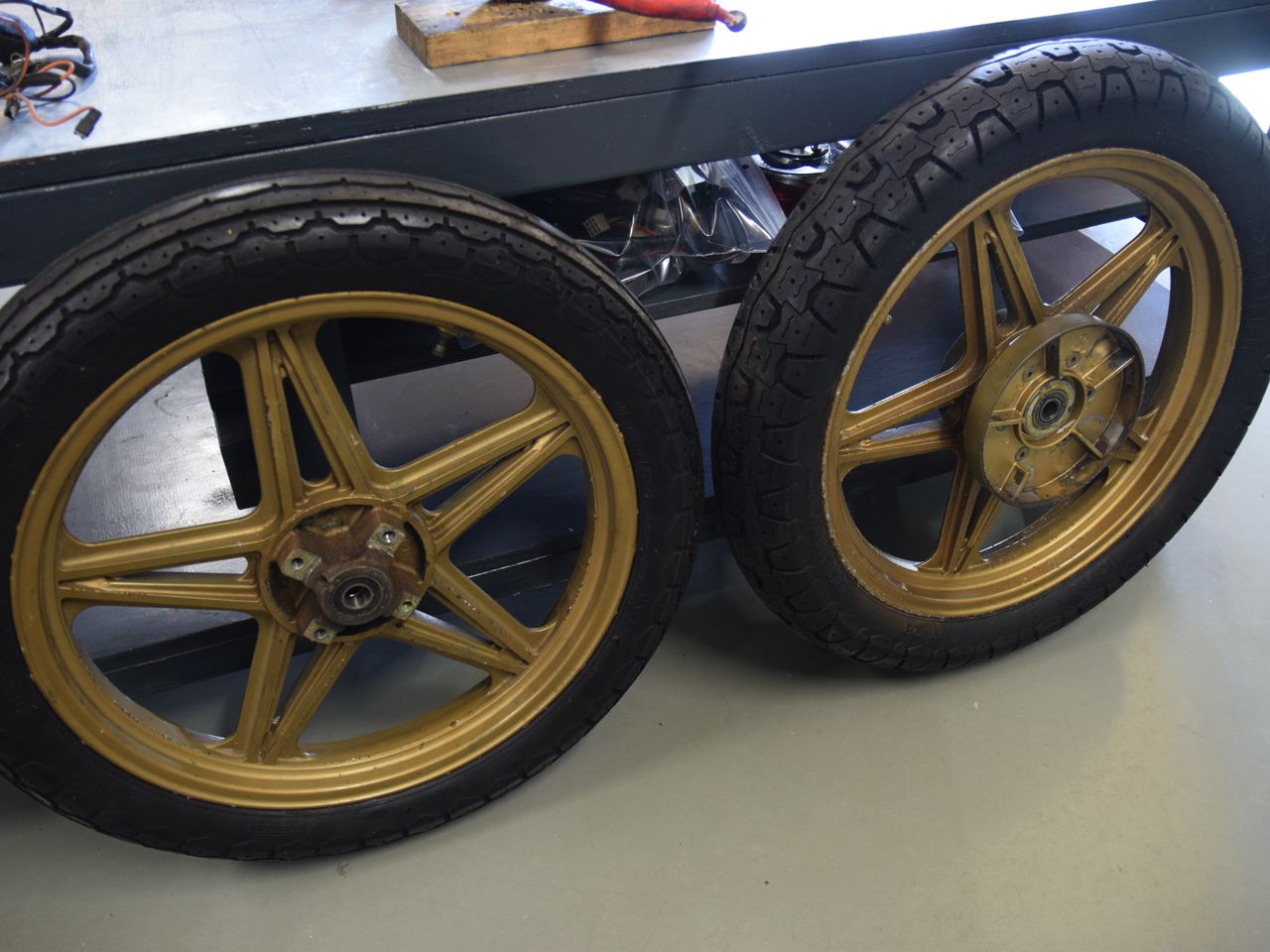
A side note must be added about the Speedline wheels fitted to the earlier Darmah models. They are known to crack and break under stress which can cause very dangerous situations. It is therefore advised to replace them for either Campagnolo or FPS wheels but these are not easily found nowadays.
After having restored and serviced quite a number of Darmahs over the years, we certainly know our way around them. Even complete, ground-up restorations have been performed in our workshop as many of our clients appreciate the Darmah as the ultimate driving bevel-drive Ducati.
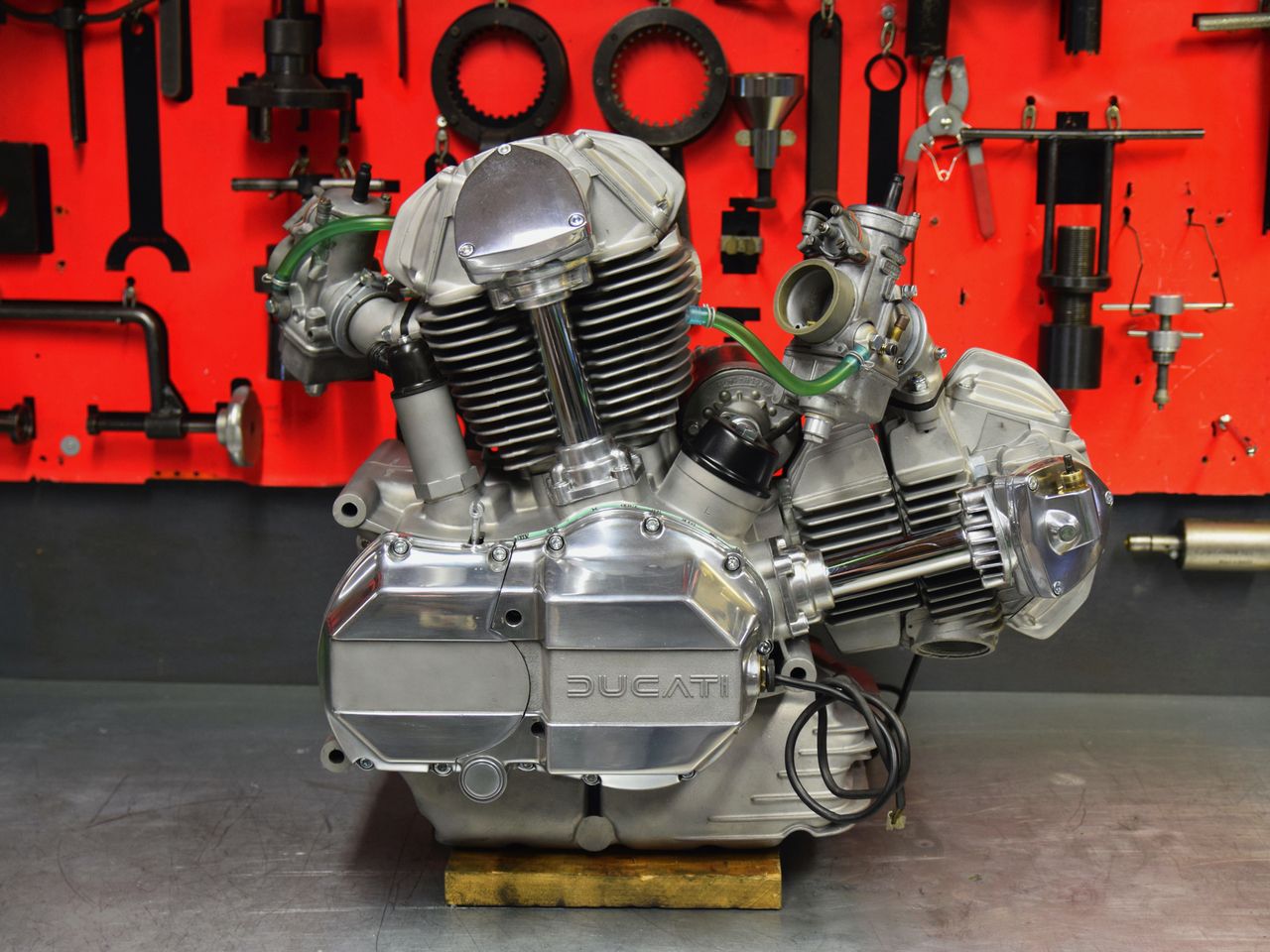
At Back to Classics, we try to keep as many parts available in our online store, but many parts are becoming harder to find in an acceptable condition. The more complete and original the bike is, the easier it is to restore it. Abandoned restoration projects with parts packed in crates and boxes often have a lot missing…
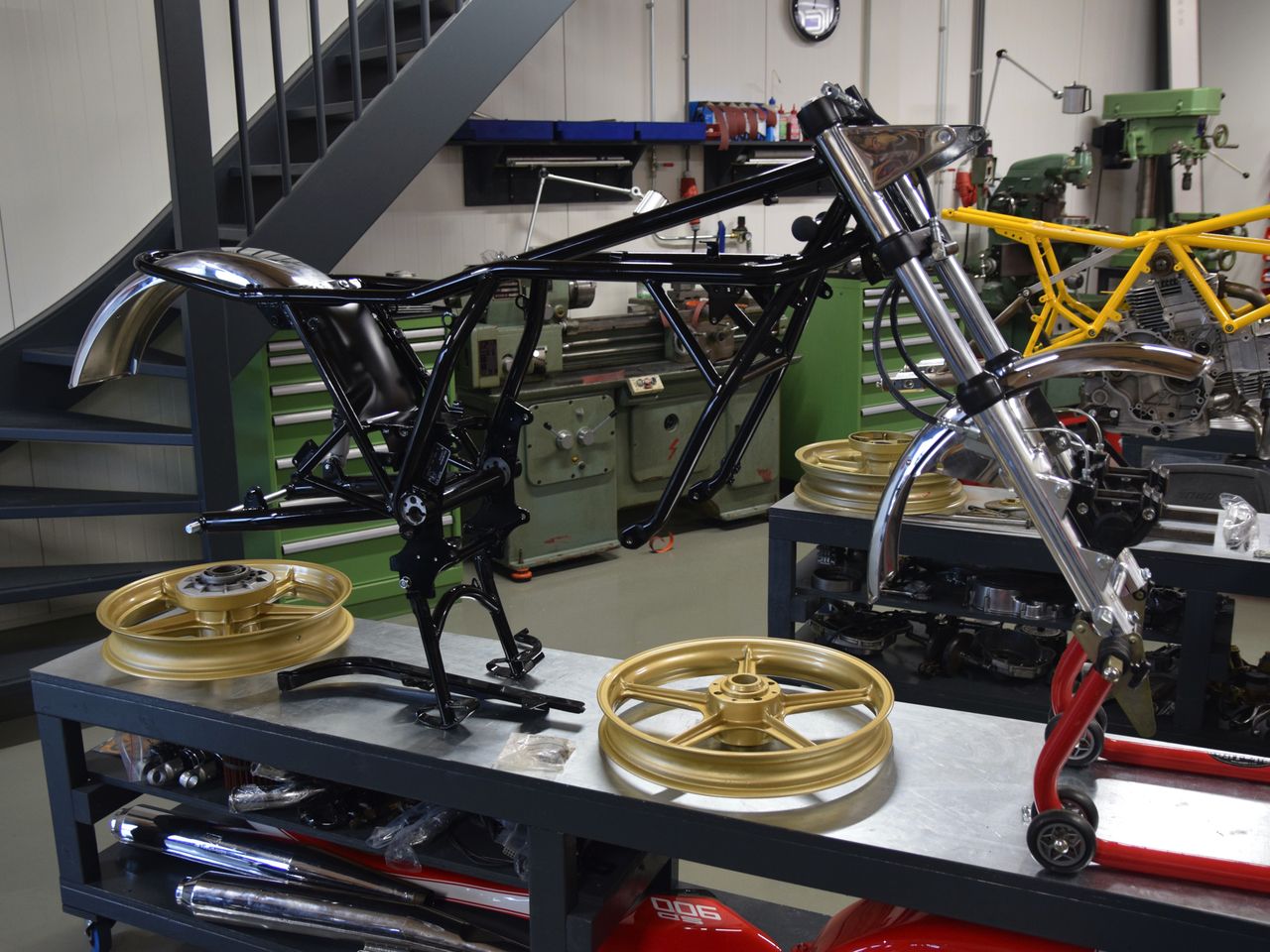
The righteous path
Of course, you don’t have to create a concours-winning Darmah. It even would make more sense to try to own the ultimate Ducati bevel-drive used for driving. This is especially true for collectors that already own one or more race-oriented Ducati models. We are happy to assist you with the restoration of your Darmah. We can advise you on originality, help you with technical issues and with parts.
What was true in the 1970s is still true today: the Darmah is still one of the most user-friendly classic Ducatis out there. I own a 1979 Ducati myself which is the most used bike in my collection. It has been across Europe on many week-long trips and it is an absolute joy to ride.
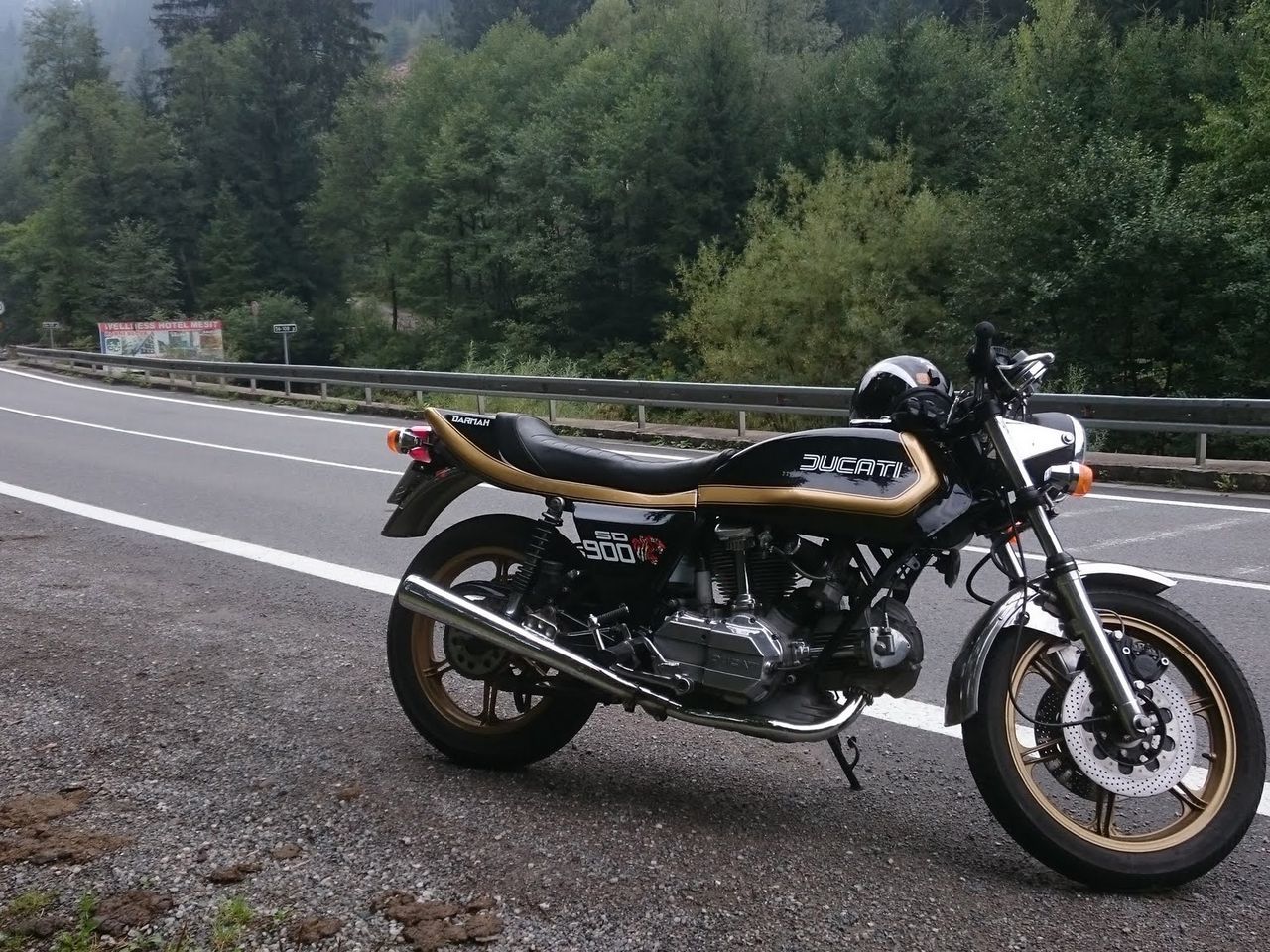
For any beautiful classic Ducati, the righteous path is of course twisty and covered with smooth asphalt. This is even more true for the Darmah!
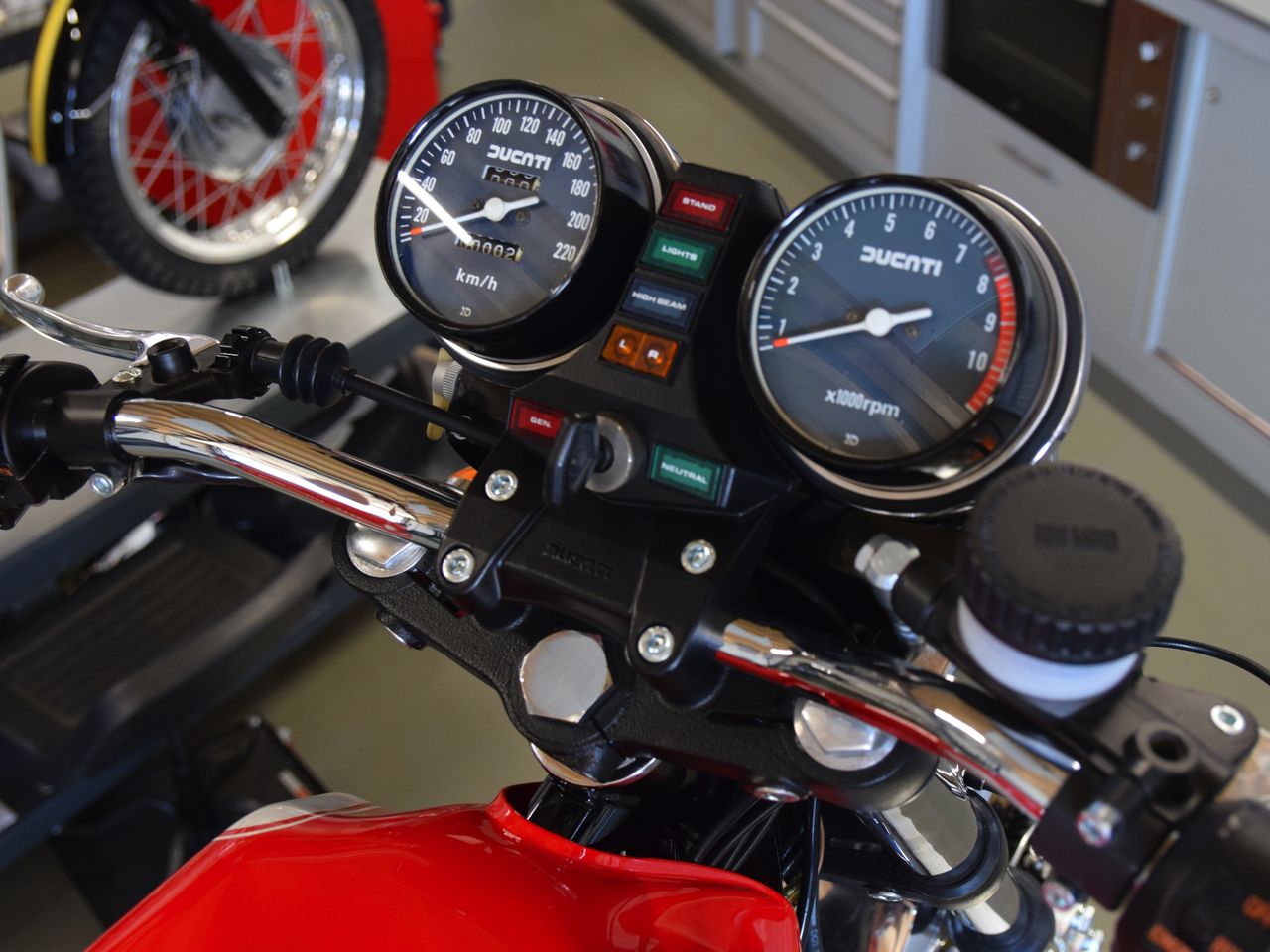
After decades spent in the shadow of the Super Sport, the Darmah is finally finding its own path. It does not need to pretend to be a 900 Super Sport. It does not need to compete with a Japanese superbike. And it certainly does not need to be turned into another café racer. The Darmah works best when appreciated for what it always was: the most usable expression of Ducati’s classic bevel-drive philosophy.
Was it the sensible bevel Ducati? Compared with a Super Sport, perhaps. Compared with almost anything else in the showroom in 1978, probably not. And nearly fifty years later, that may be exactly why we still care about it.