
How Cagiva Conquered Dakar and Saved the Italian Motorcycle industry
When enthusiasts think about the golden era of Italian motorcycles, names like Ducati and MV Agusta naturally come to mind. Yet few people realize that both brands owe part of their survival to a company that no longer exists in its original form: Cagiva.
Today, the Cagiva Elefant 900 I.E. Lucky Explorer is remembered as one of the most iconic adventure motorcycles of the 1990s. With its distinctive Dakar-inspired styling, Ducati L-twin engine, and rally-winning pedigree, it has become one of the most sought-after Italian classics of recent years. But to understand the Elefant, you first have to understand the remarkable story of the company that created it.
The Rise of Cagiva and the Castiglioni Vision
The story begins in Varese, northern Italy. In 1978, the Castiglioni family purchased the former Aermacchi motorcycle factory from AMF Harley-Davidson. The company name they created reflected its roots: CAstiglioni GIovanni VArese, or simply Cagiva.
Initially, Cagiva was known primarily for small-capacity motorcycles and off-road machines. However, Claudio Castiglioni, one of Giovanni’s sons, had ambitions that stretched far beyond producing commuter motorcycles. Claudio understood something many manufacturers overlooked. Motorcycles were not simply transportation. They were emotional objects. Riders did not fall in love with horsepower figures or technical specifications. They fell in love with racing victories, beautiful design, heritage, and character.
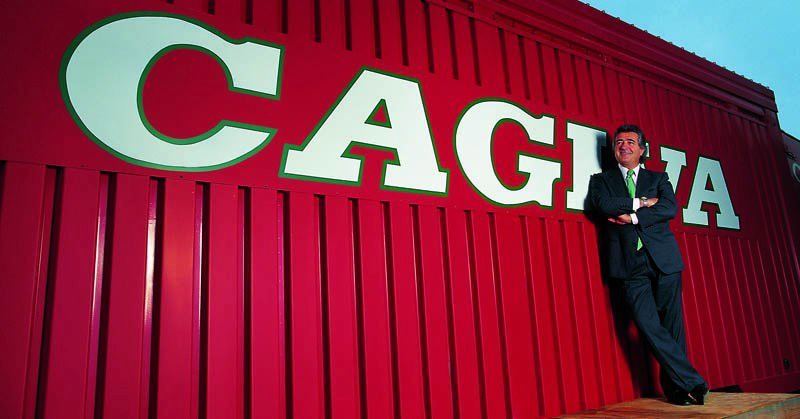
Throughout the 1980s, Claudio Castiglioni transformed Cagiva into the centre of an ambitious Italian motorcycle empire. The company acquired Ducati in 1985, Moto Morini in the same year, Husqvarna in 1987, and later secured the rights to the MV Agusta name.
At one point, Cagiva controlled an extraordinary collection of historic motorcycle brands. It was a bold strategy, financially risky but driven by Castiglioni’s determination to preserve Italian motorcycling. The acquisition of Ducati would prove particularly important.
By the early 1980s, Ducati was in serious financial trouble. Under state ownership, the Bologna manufacturer had suffered from years of underinvestment and poor management. Production was declining, the model range was ageing, and the company appeared destined for closure.
When Cagiva stepped in during 1985, many industry observers were surprised that a relatively small manufacturer from Varese could acquire one of motorcycling’s most famous names. Initially, there were discussions about integrating Ducati more closely into the Cagiva brand. However, Claudio Castiglioni quickly recognized the value of the Ducati name and allowed the company to maintain its own identity.
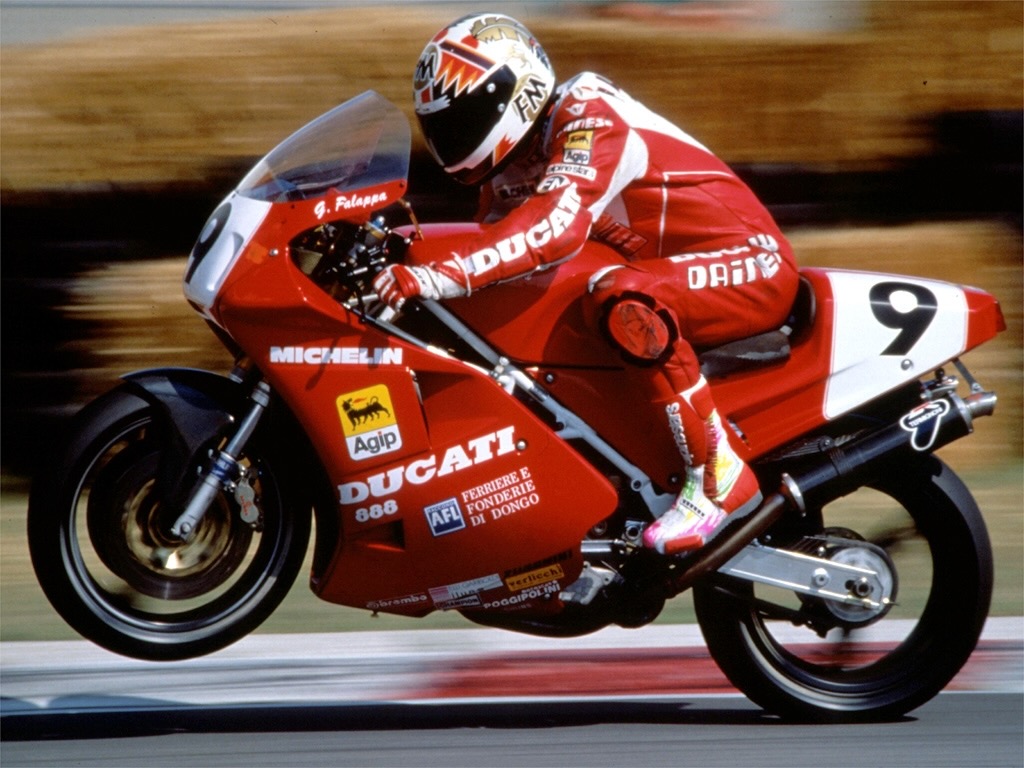
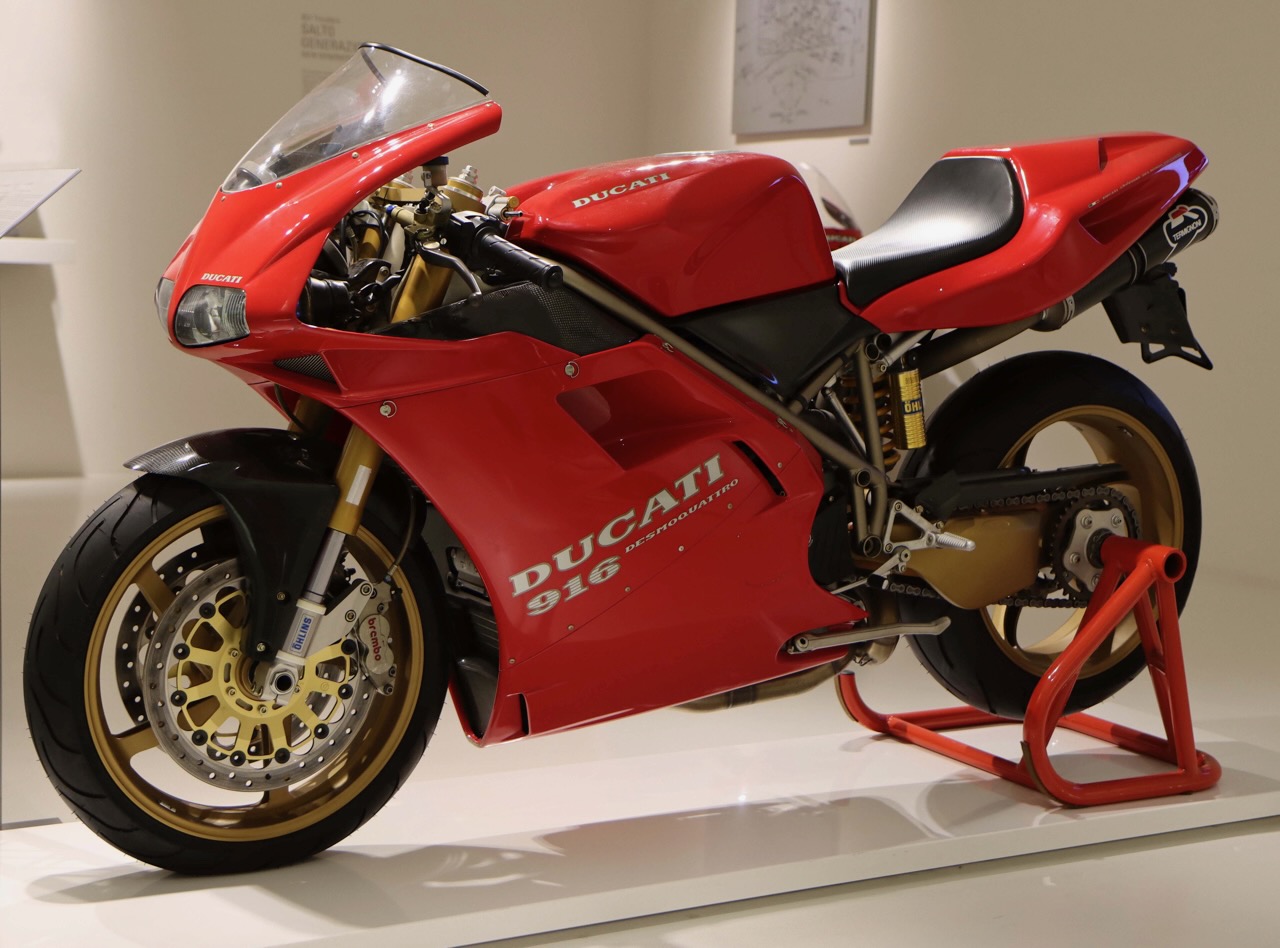
That decision would shape the future of Italian motorcycling. Under Cagiva ownership, Ducati developed the machines that would define the modern era of the brand. The Pantah-derived L-twin architecture evolved into the legendary 851 and 888 superbikes, eventually culminating in Massimo Tamburini’s masterpiece: the Ducati 916.
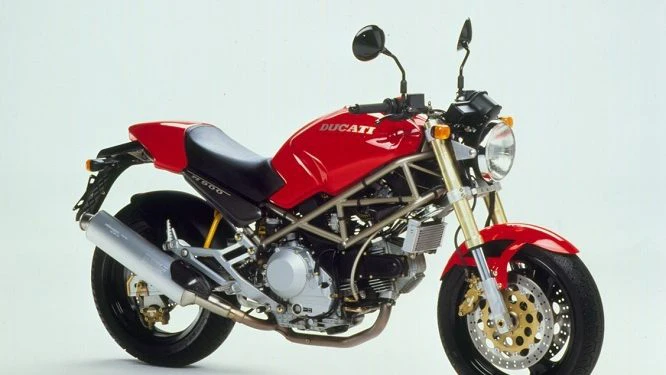
At the same time, Ducati introduced the Monster, a motorcycle that effectively created the modern naked-bike segment and became one of the company’s greatest commercial successes.
Without the Castiglioni family’s intervention, it is entirely possible that neither motorcycle would ever have existed. Yet the empire was expensive to maintain. Racing programs, new product development, and multiple struggling brands required enormous financial resources. By the mid-1990s, difficult decisions became unavoidable.
Ducati was sold to Texas Pacific Group in 1996, while Claudio Castiglioni focused his attention on reviving MV Agusta. That project ultimately resulted in the breathtaking MV Agusta F4, another motorcycle designed by Massimo Tamburini and widely regarded as one of the most beautiful superbikes ever produced.
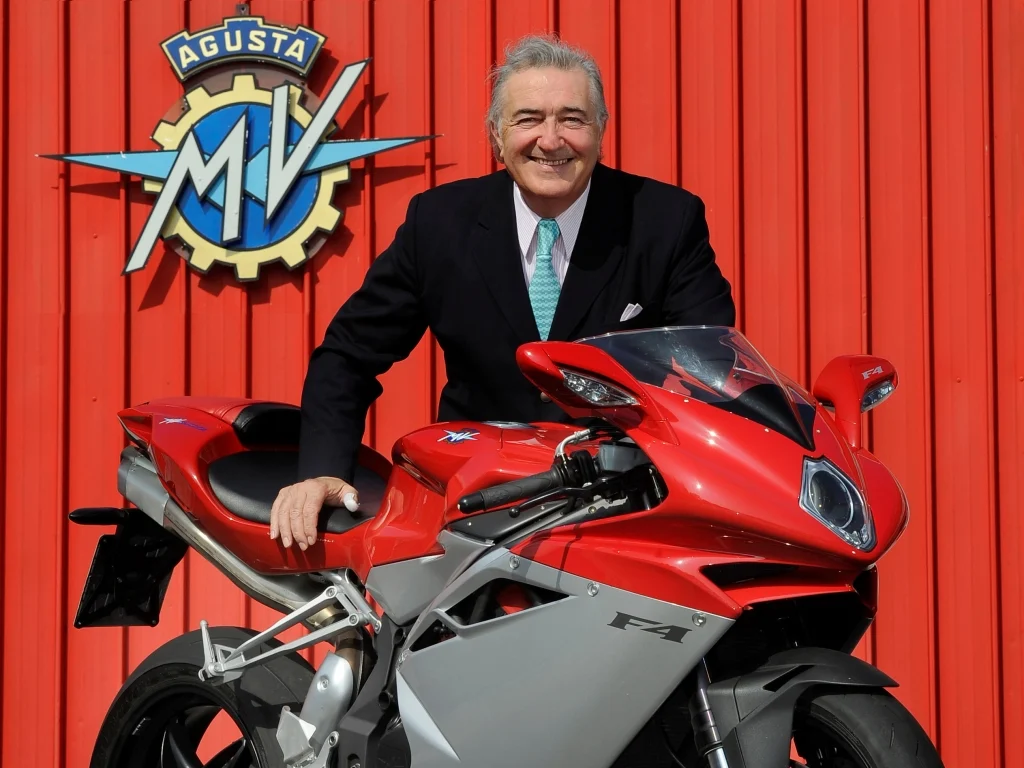
Although the Cagiva empire eventually fragmented under financial pressure, Claudio Castiglioni’s influence remains visible throughout the motorcycle industry today. Ducati survived. MV Agusta survived. And motorcycles like the Elefant remain lasting reminders of his vision.
The Elefant Goes Racing
For Claudio Castiglioni, racing was never simply about trophies. Competition created mythology. And mythology sold motorcycles. This philosophy became particularly evident during the 1980s, when Cagiva entered one of the most demanding forms of motorsport on earth: rally raid racing.
At the time, the Paris-Dakar Rally represented the ultimate challenge for both riders and manufacturers. Crossing thousands of kilometres through Europe and Africa, competitors faced deserts, rocks, navigation challenges, extreme temperatures, and mechanical attrition on a scale few other events could match.
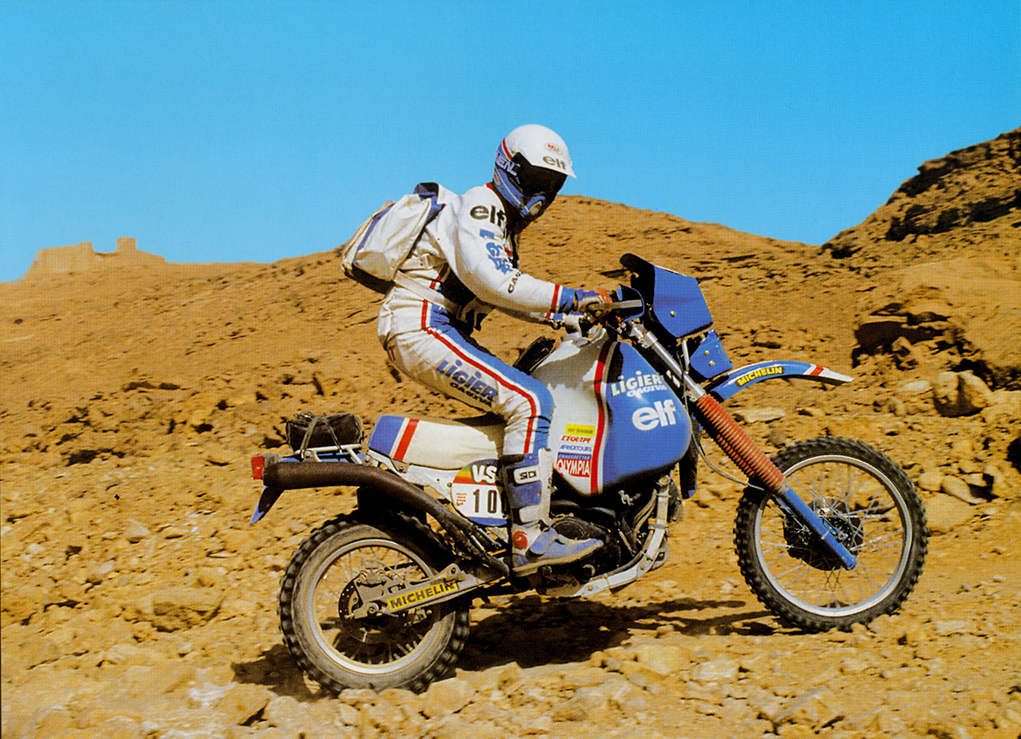
In 1985, Cagiva entered the Dakar with a factory-supported Elefant-based machine ridden by legendary French rally rider Hubert Auriol. The project showed promise immediately. Auriol secured a strong finish in Dakar and followed it with impressive results in the Pharaohs Rally, demonstrating that the Elefant concept could compete at the highest level.
The real breakthrough nearly came in 1987. Riding the powerful 860cc Elefant XD10 Cafona, Auriol became locked in a fierce battle with Honda’s Cyril Neveu for overall victory in the Dakar Rally. With only one stage remaining, Auriol was leading the event and appeared destined to secure Cagiva’s first Dakar win.
Then disaster struck. Auriol crashed heavily after hitting a hidden root, breaking both ankles in one of the most dramatic incidents in Dakar history. In extraordinary pain, he remounted his motorcycle and completed the stage before eventually being forced to retire. Although victory slipped away, the moment cemented both Auriol and the Elefant in rally folklore.
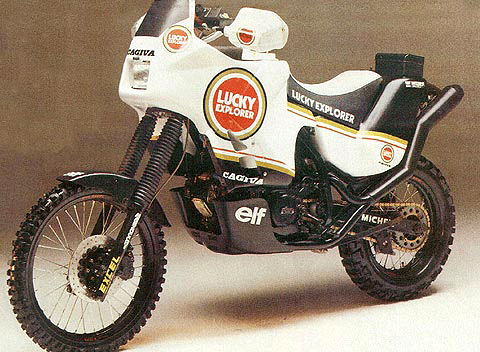
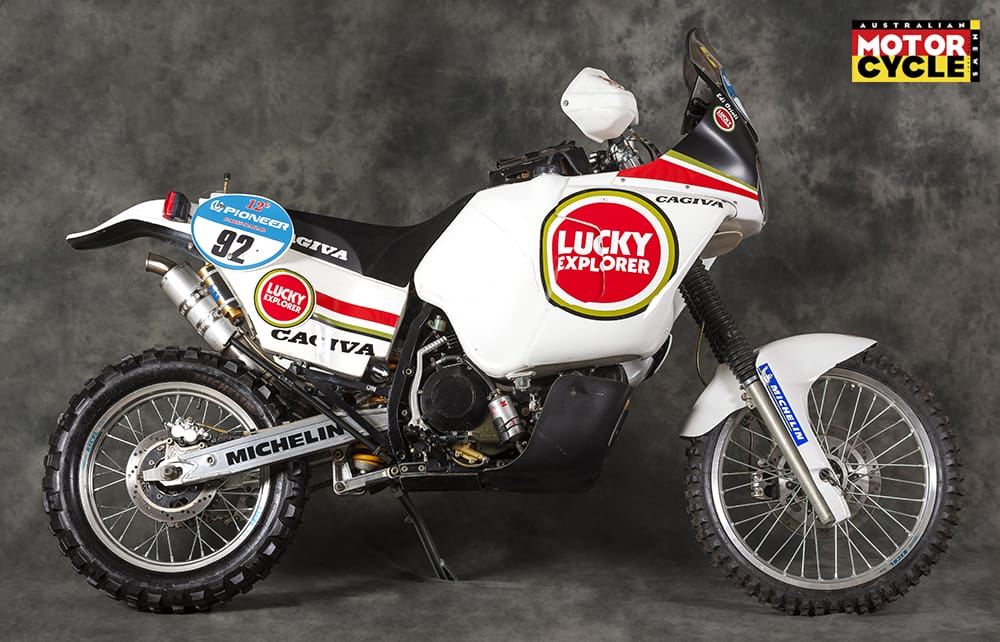
The breakthrough finally arrived in 1990. With Italian rider Edi Orioli aboard, Cagiva secured its first overall Dakar victory. The combination of a Cagiva chassis, Ducati-derived L-twin power, and Italian riding talent proved formidable. Orioli possessed an exceptional ability to read terrain and navigate difficult stages while preserving the motorcycle beneath him. His victory represented the culmination of years of development and determination.
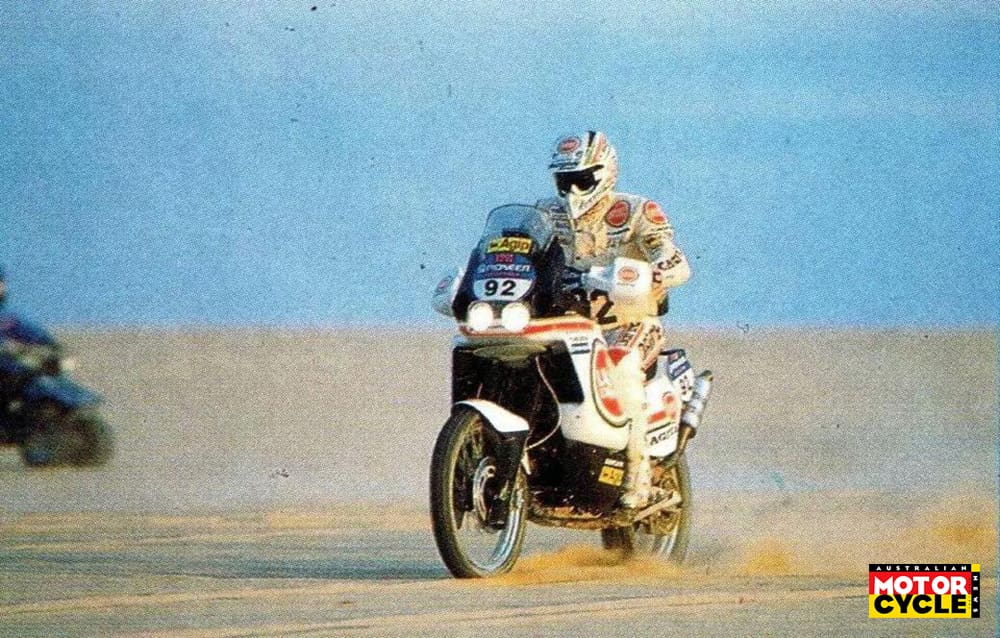
A second overall Dakar victory followed in 1994, once again with Orioli, confirming the Elefant’s status as one of the great rally motorcycles of its era. Even after those victories, Cagiva continued to campaign the Elefant in Dakar during the 1995 and 1996 seasons. Success became harder to achieve as competition intensified, but the motorcycle’s reputation was already secure. The Elefant had become a genuine Dakar legend.
The Evolution of the Cagiva Elefant
While racing success captured headlines, Cagiva was simultaneously developing a production motorcycle that could transfer some of that Dakar magic to ordinary riders. The Elefant name itself had been part of Cagiva’s identity for years. The elephant symbol represented strength, endurance, and reliability, all qualities that suited an adventure motorcycle perfectly.
The first Elefant prototype appeared in 1983. Powered by a 750cc Ducati L-twin engine and featuring a purpose-built chassis, it established the basic formula that would define the model for more than a decade.
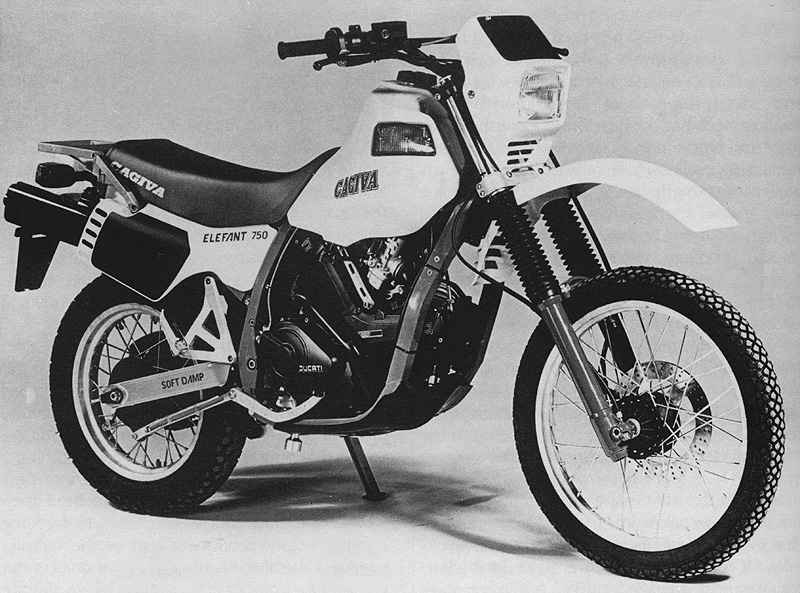
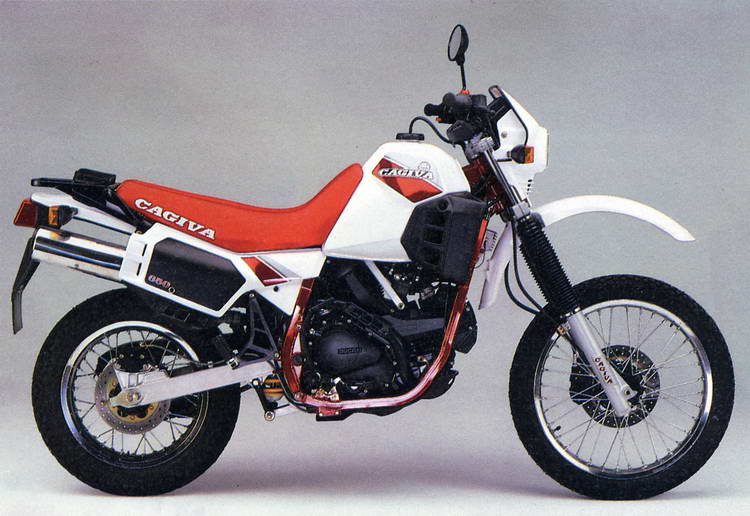
Production began in 1984 with the Elefant 350 and 650 models. These motorcycles combined Ducati-derived engines with long-travel suspension and genuine dual-purpose capability.
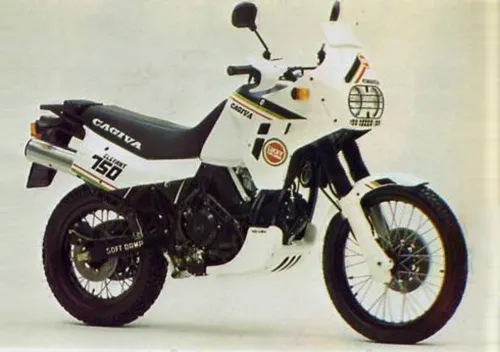
In 1987, the Elefant 750 Lucky Explorer arrived, introducing the famous sponsorship and colour scheme that would become inseparable from the model’s identity.
The ultimate evolution appeared in 1990 with the Elefant 900 I.E. Lucky Explorer. Powered by Ducati’s 904cc fuel-injected V-twin engine, the 900 I.E. represented the most sophisticated Elefant yet. Fuel injection was still relatively uncommon in adventure motorcycles at the time, and the system provided smooth throttle response and excellent torque delivery.

The bike was large, comfortable, and remarkably capable across a wide variety of terrain. It was never intended as a hardcore enduro machine. Instead, it excelled at the type of mixed-surface riding that adventure motorcycles are actually used for: combining paved roads, mountain passes, gravel tracks, and long-distance travel.
In 1992, cost considerations resulted in a return to carburettors, while the Elefant 750 rejoined the range in updated form during 1994.
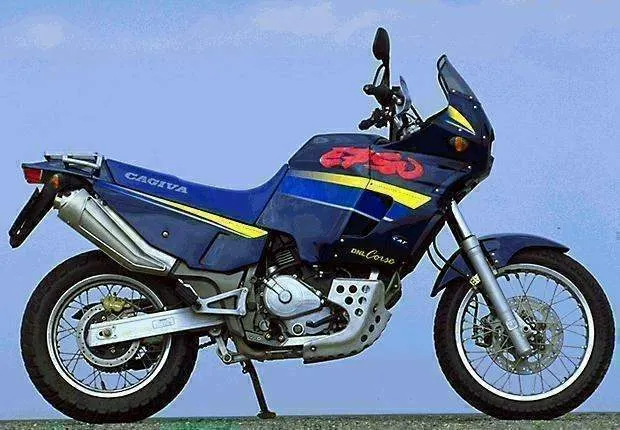
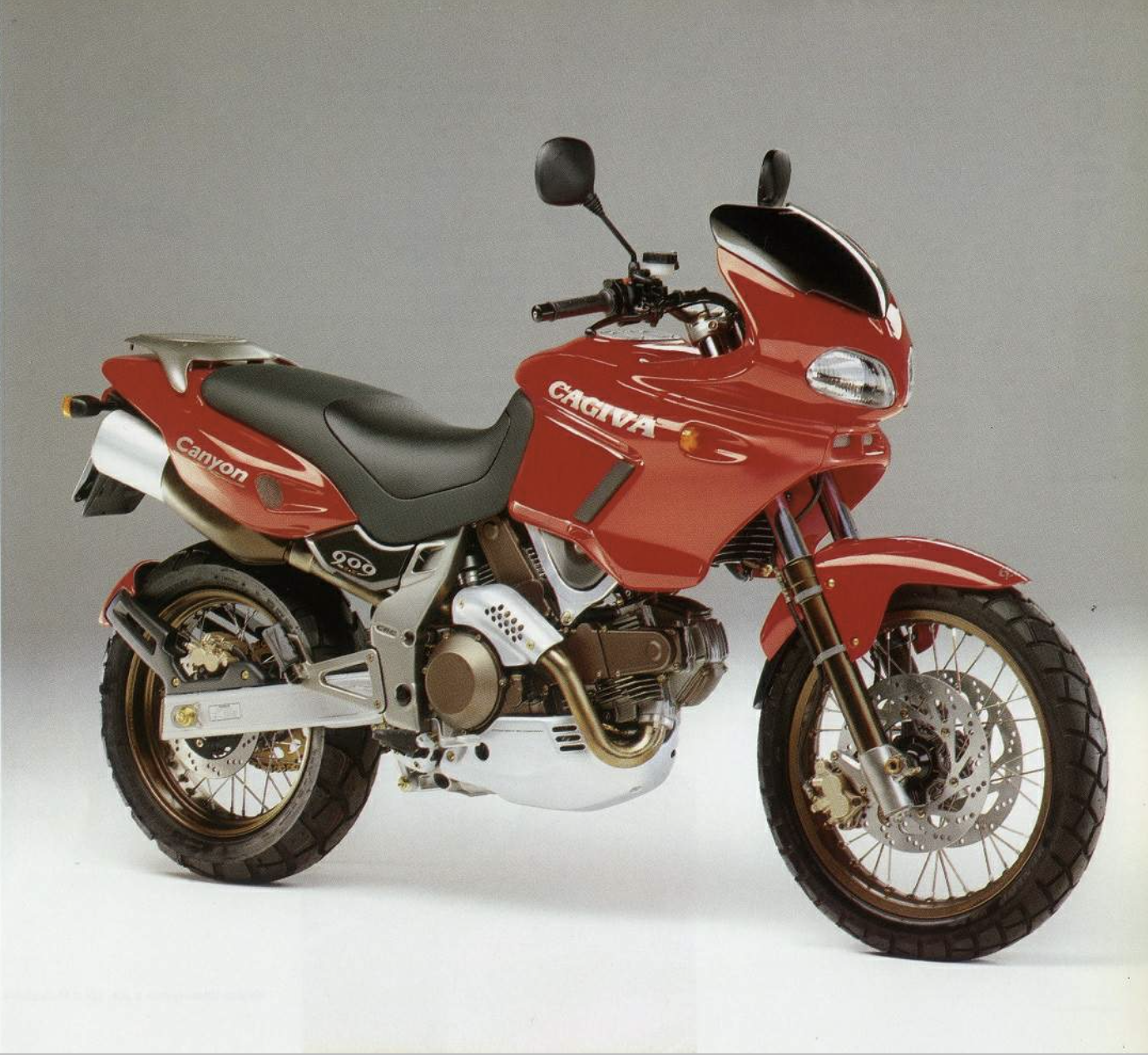
By 1996, however, the market was changing. Adventure motorcycles were becoming more road-focused, and Cagiva’s financial situation required a simplified model range.The Elefant evolved into the Gran Canyon 900, a more touring-oriented interpretation of the same basic concept. Production finally ended in 1998.
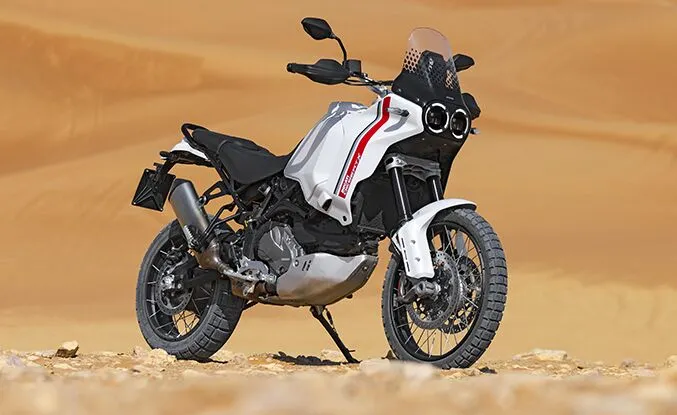
Yet the influence of the Elefant never truly disappeared. When Ducati introduced the DesertX in 2022, many enthusiasts immediately noticed the similarities. The rally-inspired silhouette, twin round headlights, tall fairing, and focus on genuine adventure capability all echoed the original Elefant formula.
More than thirty years after its introduction, the Elefant’s DNA remains visible within Ducati’s adventure range. And perhaps that is the greatest compliment of all.
The Cagiva Elefant was never simply a motorcycle. It was the product of a unique moment in Italian motorcycling history, born from Claudio Castiglioni’s ambition, proven in the deserts of Dakar, and remembered today as one of the most charismatic adventure motorcycles ever built.