Re-creating a Ducati TT2
When Ducati’s new Pantah platform emerged in 1979, it immediately formed the basis for new racing developments. With many successes in the 1980s, it proved to be great step forward and formed the basis for many Ducatis up to this very day. In this article, I will be exploring the historic background of the TT2 and show you how we have built one recently.
A NEW ENGINE FOR THE FUTURE
It is easy to take Ducati’s racing successes for granted today, but the early 1980s were a particular difficult era for Ducati. With a product line-up that was becoming outdated and with strong economic headwind, production fell to an all-time low. Management was focusing more and more towards production of diesel engines for sister company VM Motori. It was with this gloomy background that Fabio Taglioni still spearheaded the development of a new range of racing motorcycles based on the new Pantah engine.
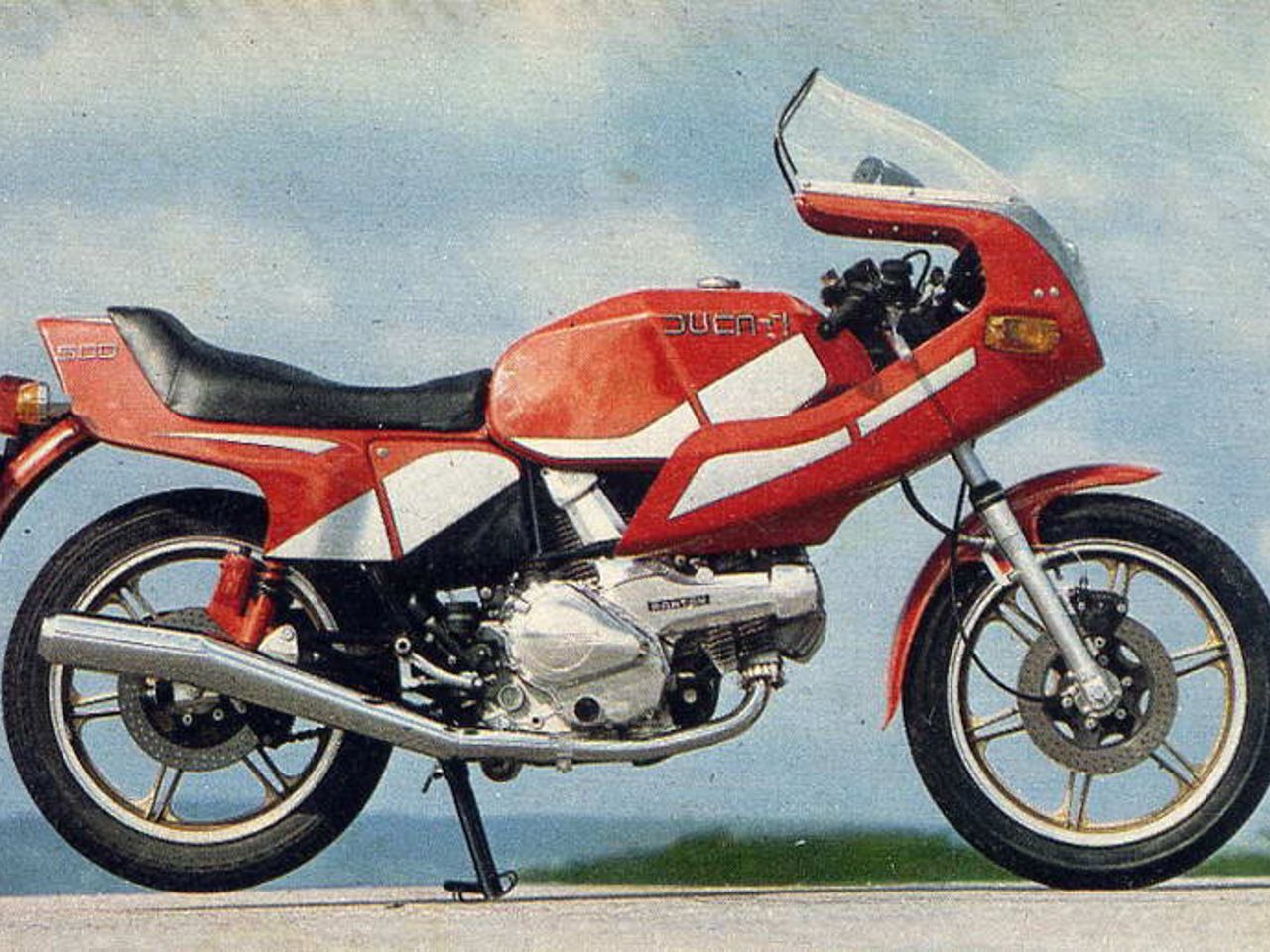
Already in 1973, Taglioni had envisioned the use of toothed rubber belts for driving the camshafts, not usual at all in the time. Belt-driven camshafts would be cheaper to produce and would prove to make engines run a lot quieter. Developments resulted in the Ducati 500 SL Pantah, introduced in 1979.
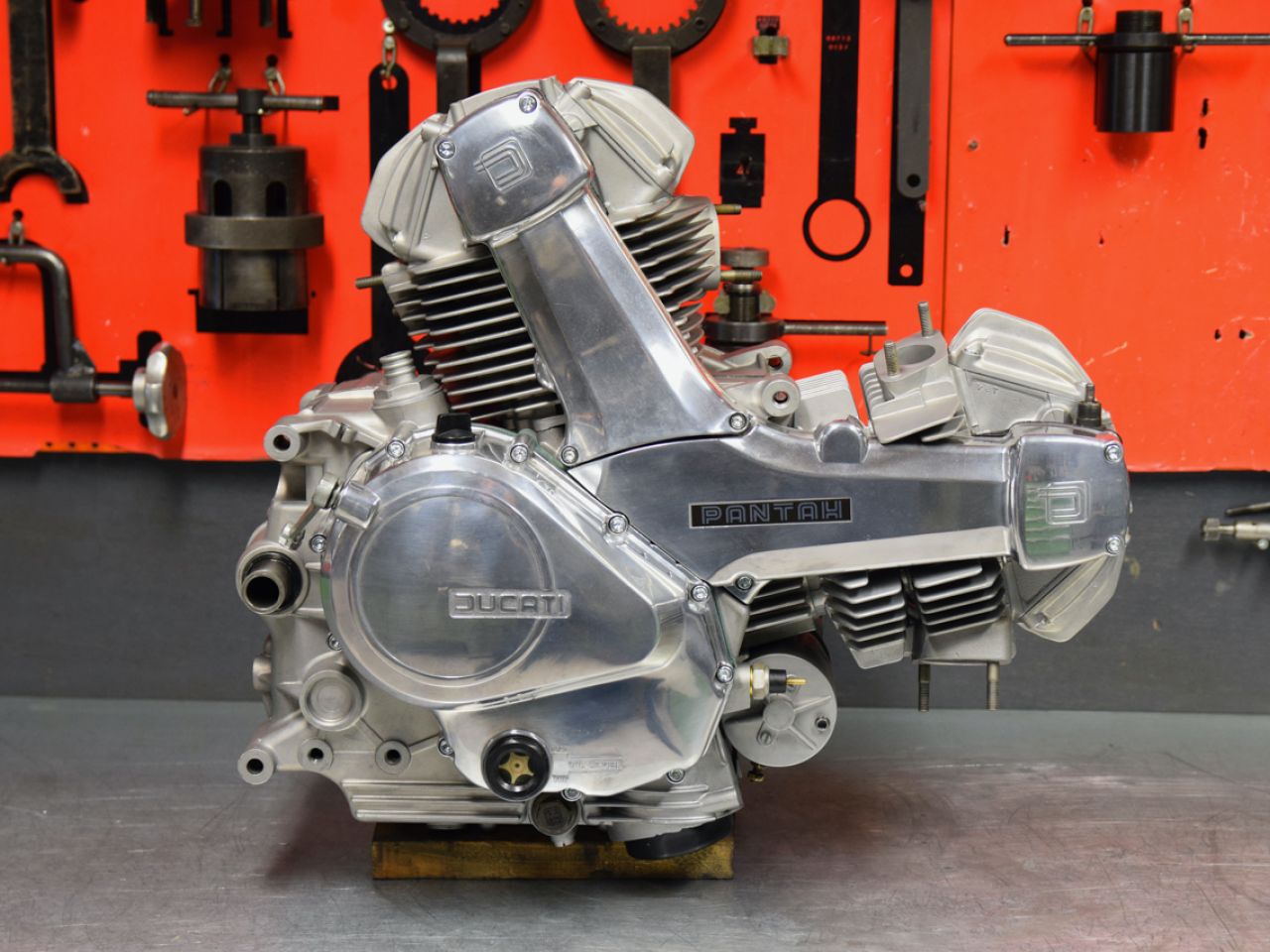
The engine’s basic layout was copied from the bevel drive twin with vertically split crankcases, a 90˚ angle, with the horizontal cylinder still inclined at an angle of 15 degrees. The design incorporated left side gearshift as a standard as well as a starter motor now located underneath the horizontal cylinder. The cylinder heads incorporated Ducati’s famous desmodromic valve actuation.
IMMEDIATE RACING SUCCESS
In true Ducati fashion, the new Pantah engine formed the immediate basis for racing. It soon became apparent that the new engine had several advantages over to the earlier bevel-drive engine. Taglioni, being the genius engineer he was, aimed at keeping the engine very compact and light weight. The belt driven camshaft actuation was a much simpler and lighter in design than the bevel gears used before which increased reliability as well. The 60˚ valve angle, much narrower than on the bevel drive twins, increased the gas flow which meant a more effective power output. And with the swingarm pivot position now part of the crankcase, the wheelbase could considerably be shortened.
The racing department, headed by Franco Farnè, decided to enter the new Pantah into the Italian Junior TT2 Championship for the 1980 season. A total of four racing bikes were prepared based on the standard 500 SL Pantah but increasing the bore to get a displacement of 583cc. A 2-into-1 exhaust system was developed, along with racing camshafts increasing the power output to a respectable 70bhp.
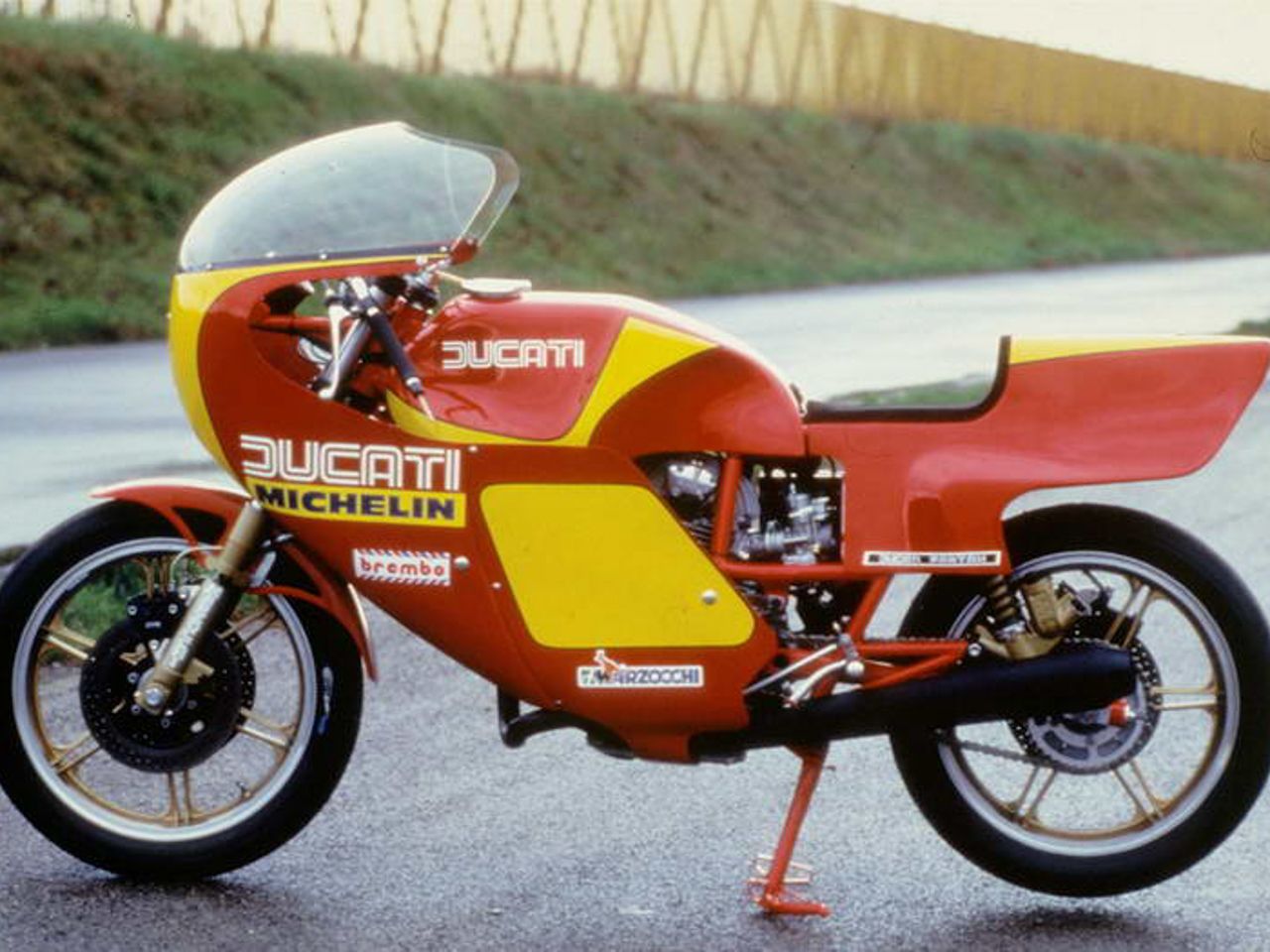
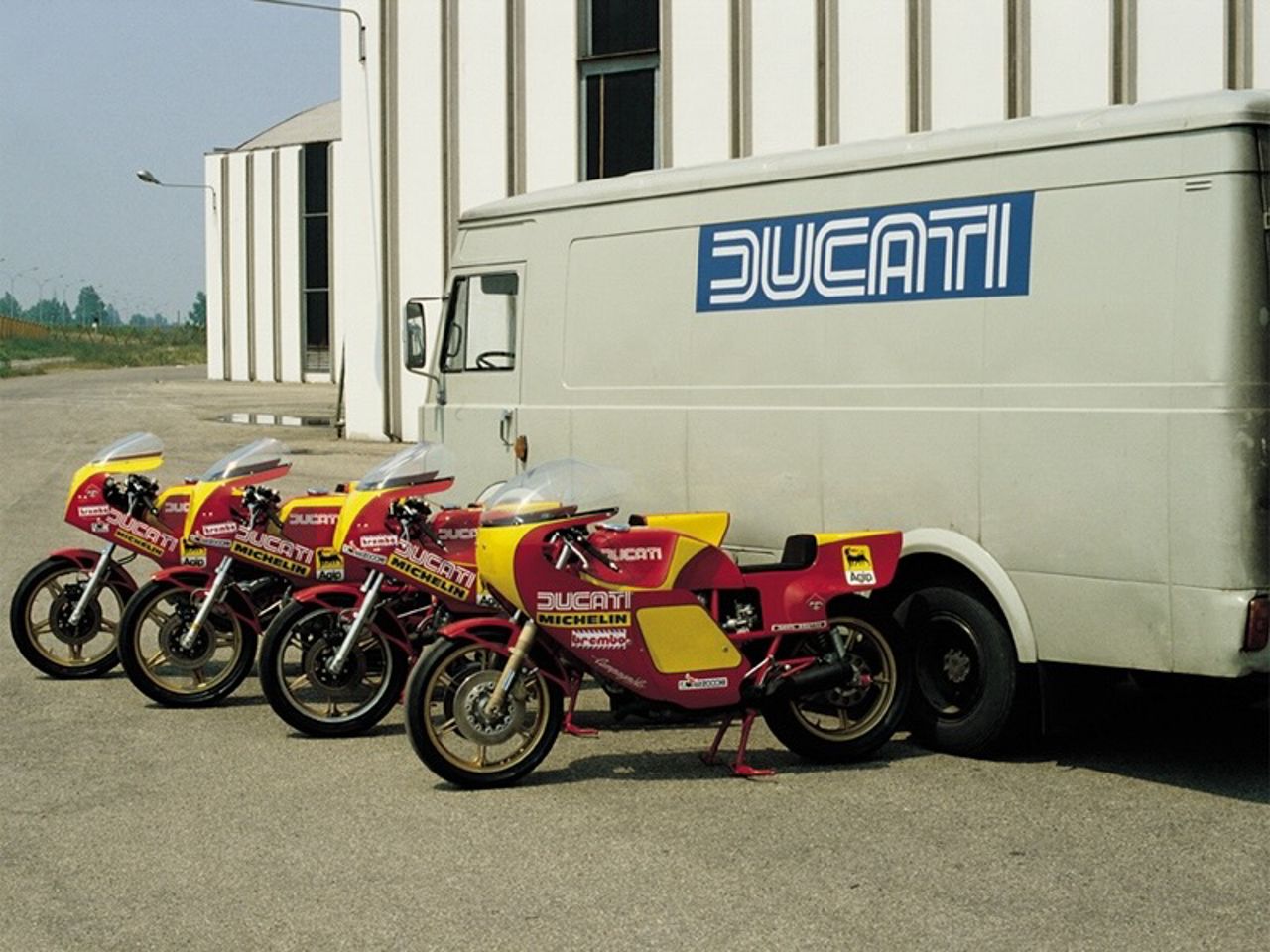
The 1980 Ducati 600TT as raced by Guido del Piano in the Italian Junior TT2 championship. A total of 4 bikes were constructed based on the standard 500 SL Pantah.
Success was incredible with Guido del Piano winning the 1980 championship outright. A total of 12 races were won by Ducati with runner-up riders Vanes Francini and Petro Menchini also very successful.
A TRUE RACING BIKE DEVELOPED
The ease with which the 600TT dominated the racetrack in 1980 convinced Ducati to further develop the new engine into a proper racing bike. After all, the 600TT was still largely based on the standard 500SL Pantah and had a rather heavy and wide frame and very limited tuning. What if a true racing bike was developed around that new engine?
Taglioni was aware that power output was still lacking behind that of Honda and Yamaha. So, he aimed at creating the ultimate light weight and nimble chassis to get the most out of a 600cc, highly tuned version of the Pantah engine. The result was the Ducati TT2 ready for the 1981 season.
A set of standard Pantah engine cases formed the basis but with Gilnisil cylinders with high compression pistons fitted to forged con rods. Bore and stroke were set at 81x74mm, creating 598cc. Larger valves, racing camshafts and a set of 40mm Dell’Orto carburettors made for a total of 76bhp at 10,750rpm. Many components were lightened and some engines received magnesium covers to lower the weight even further.
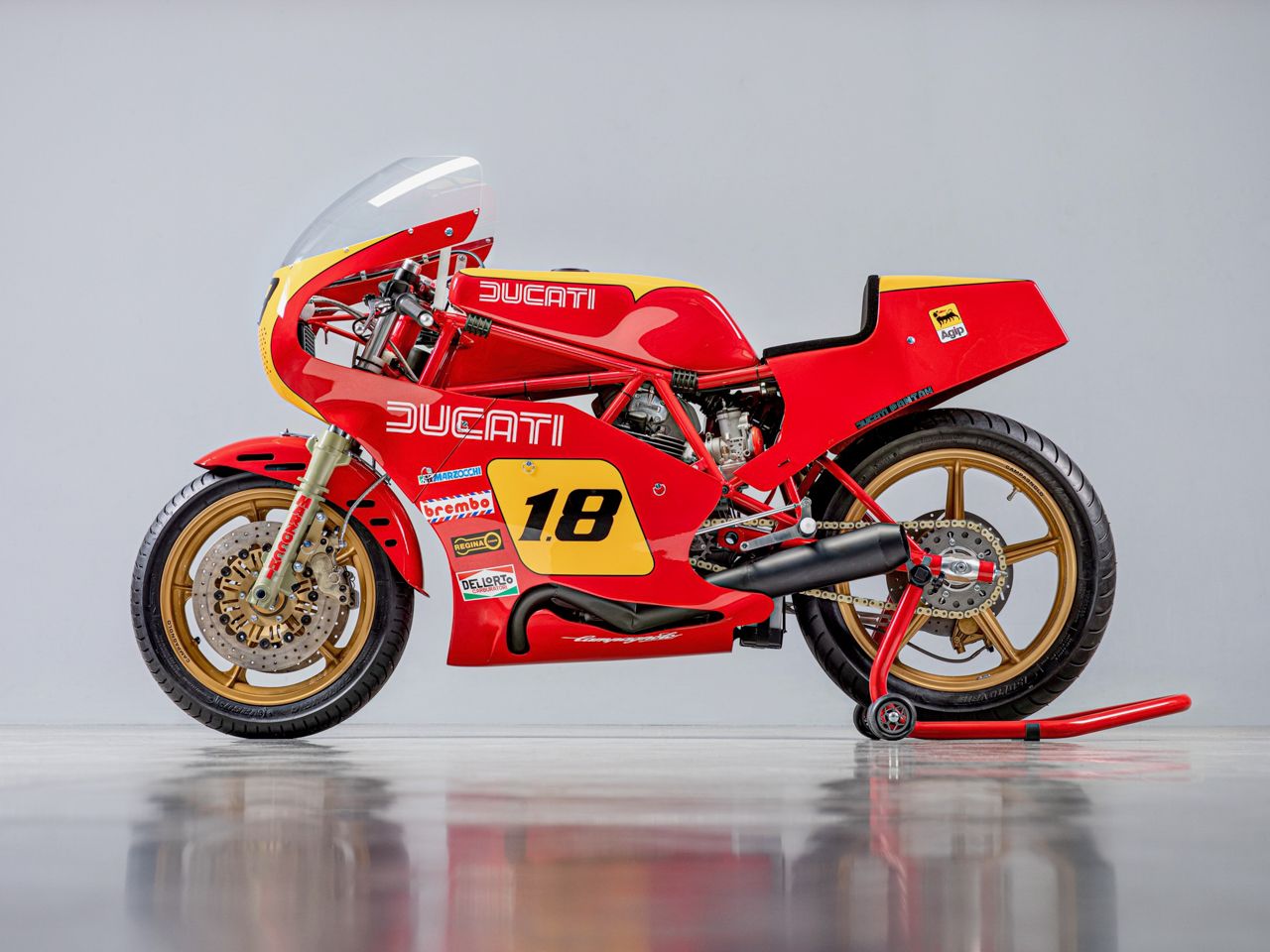
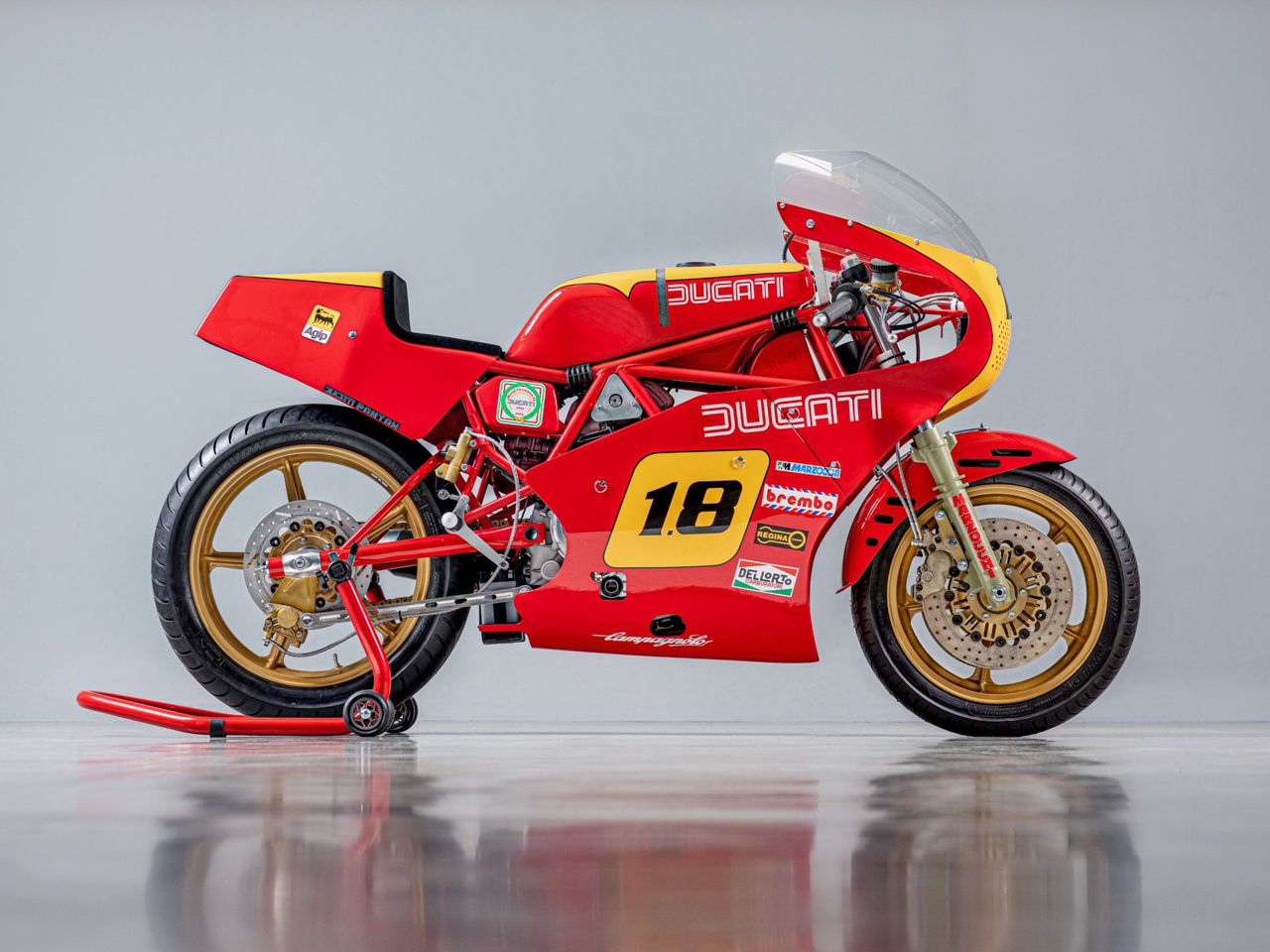
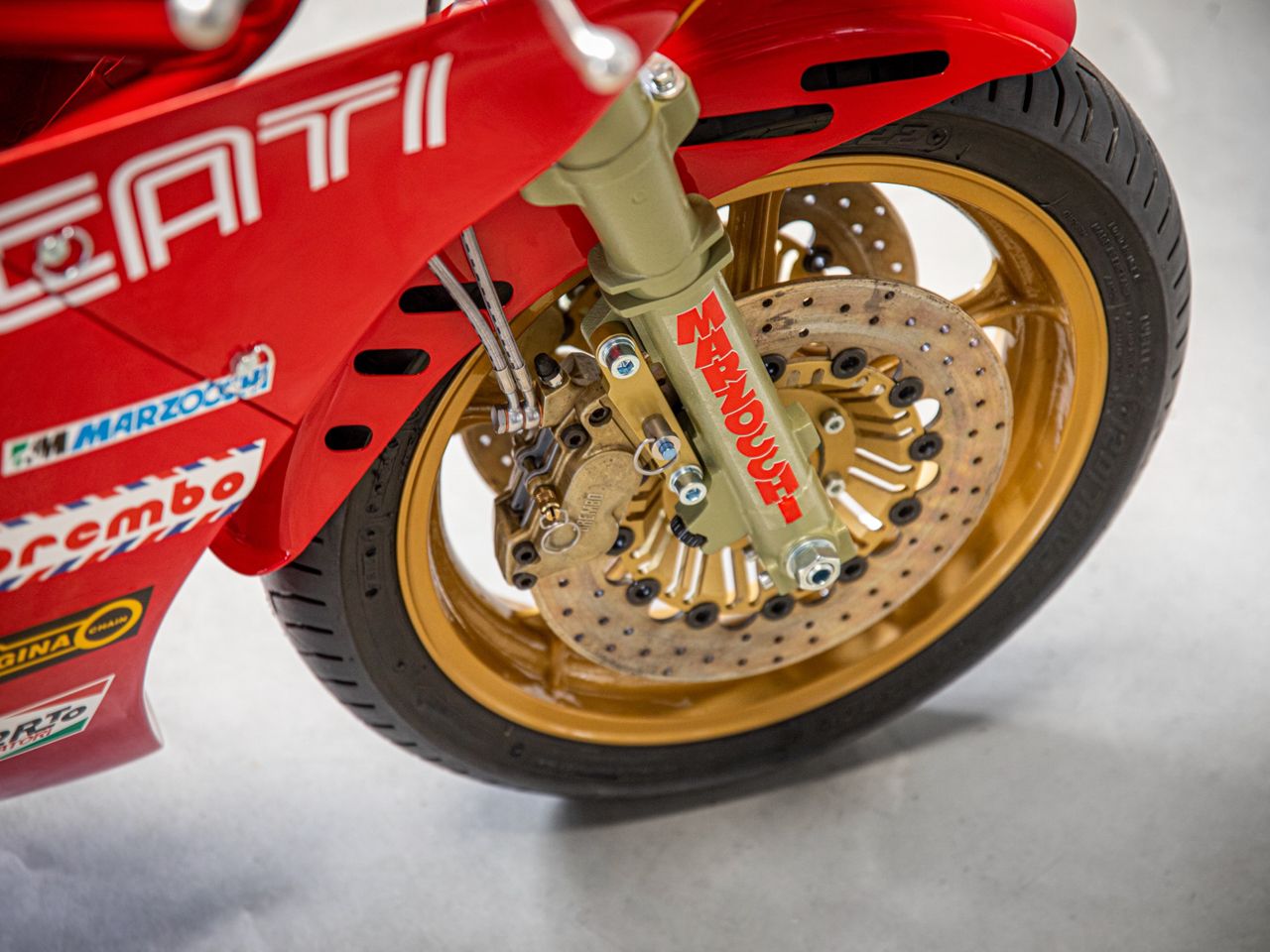
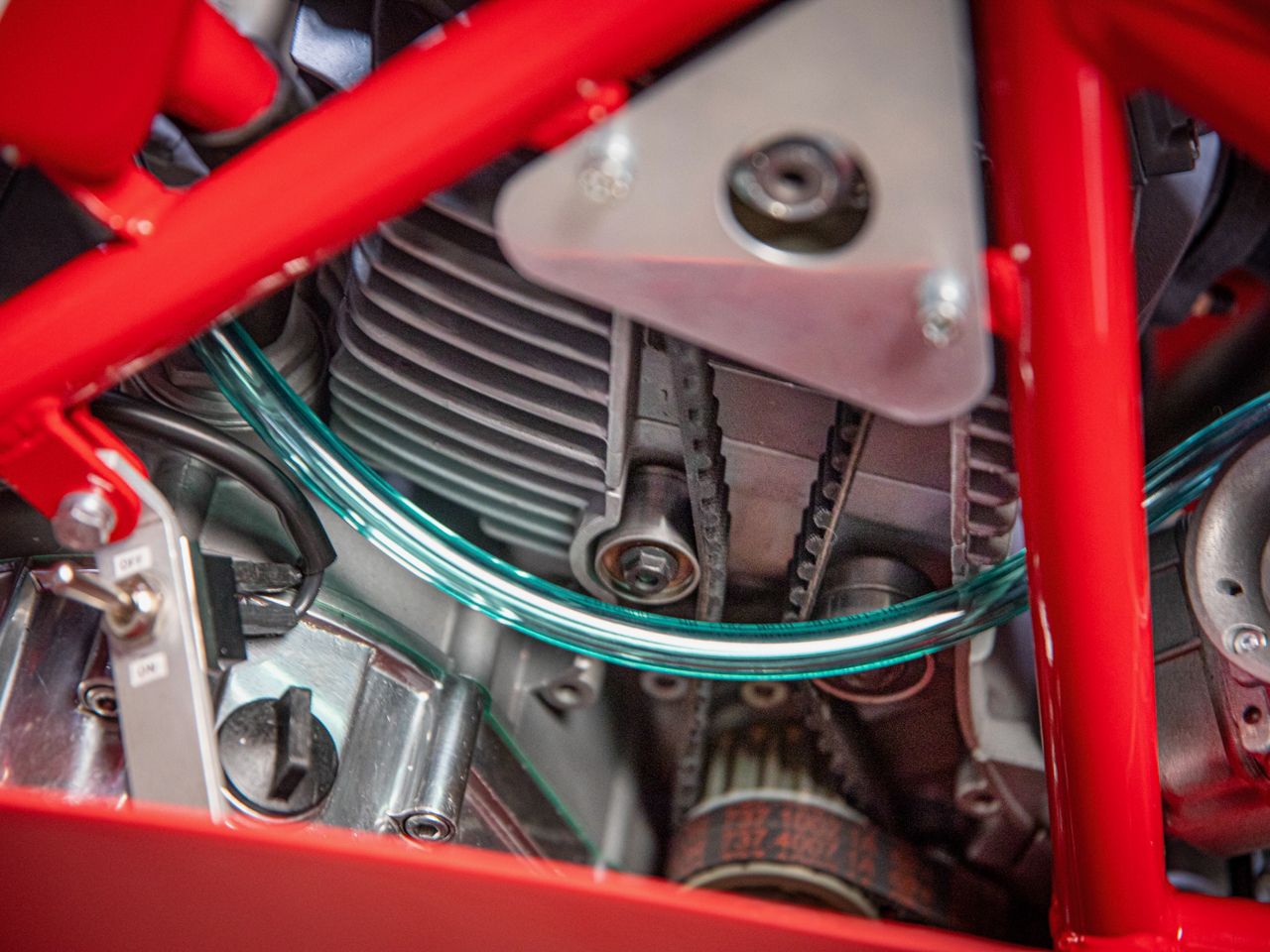
The truly spectacular development was the bike’s rolling chassis: Verlicchi created a very narrow and strong trellis frame using chrome-moly tubing and weighing only 8kg. It fitted so tight around the engine that the cam belts had to be exposed. A Paioli mono-shock connected the triangular steel swingarm to the frame and a fully adjustable Marzocchi front fork was fitted with magnesium fork legs. A set of 18” magnesium Campagnolo wheels with fully floating Brembo brake discs finished the racing package.
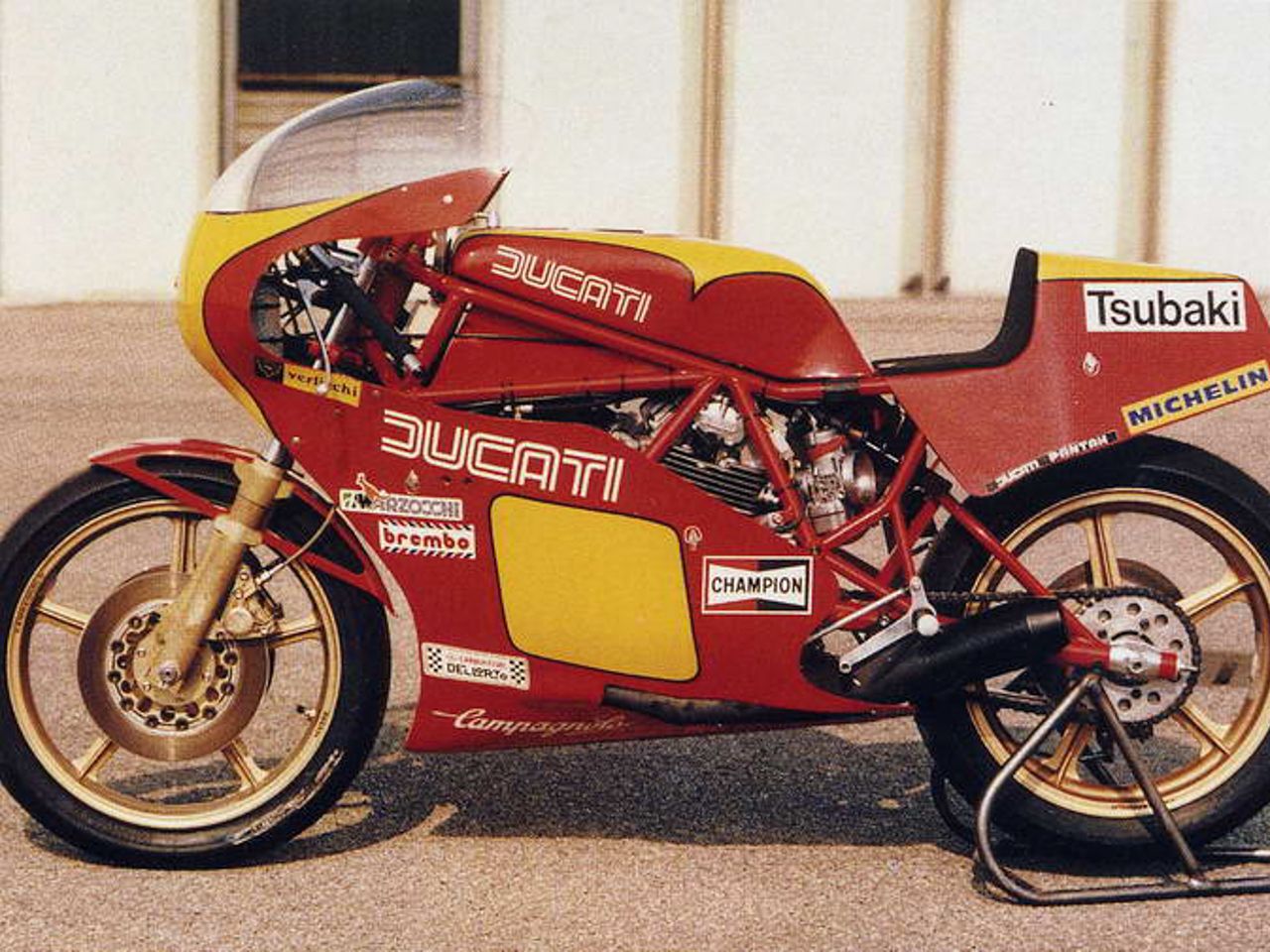
A 1981 Ducati TT2 works racing bike with the Borgo Panigale factory buildings in the background.
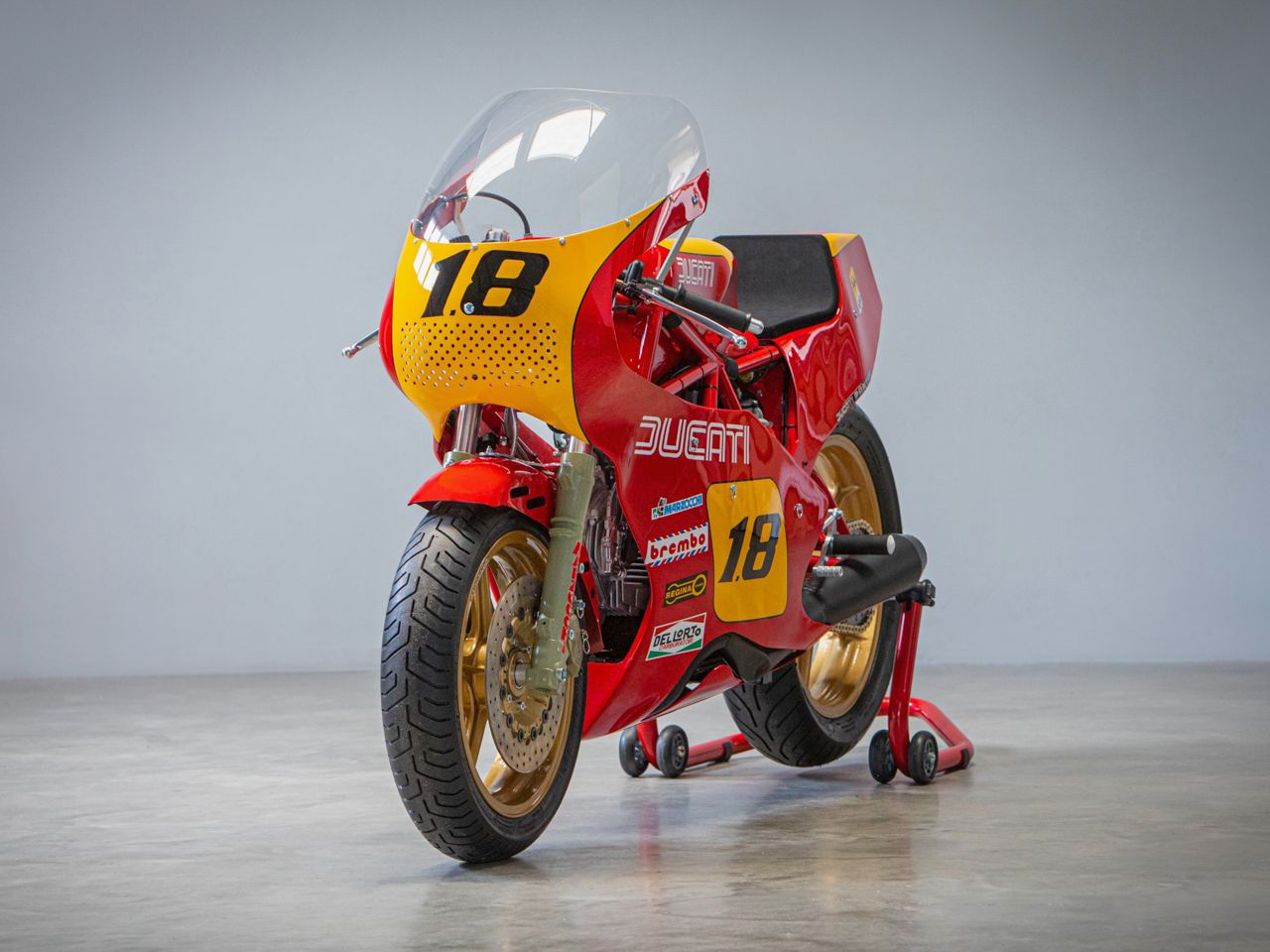
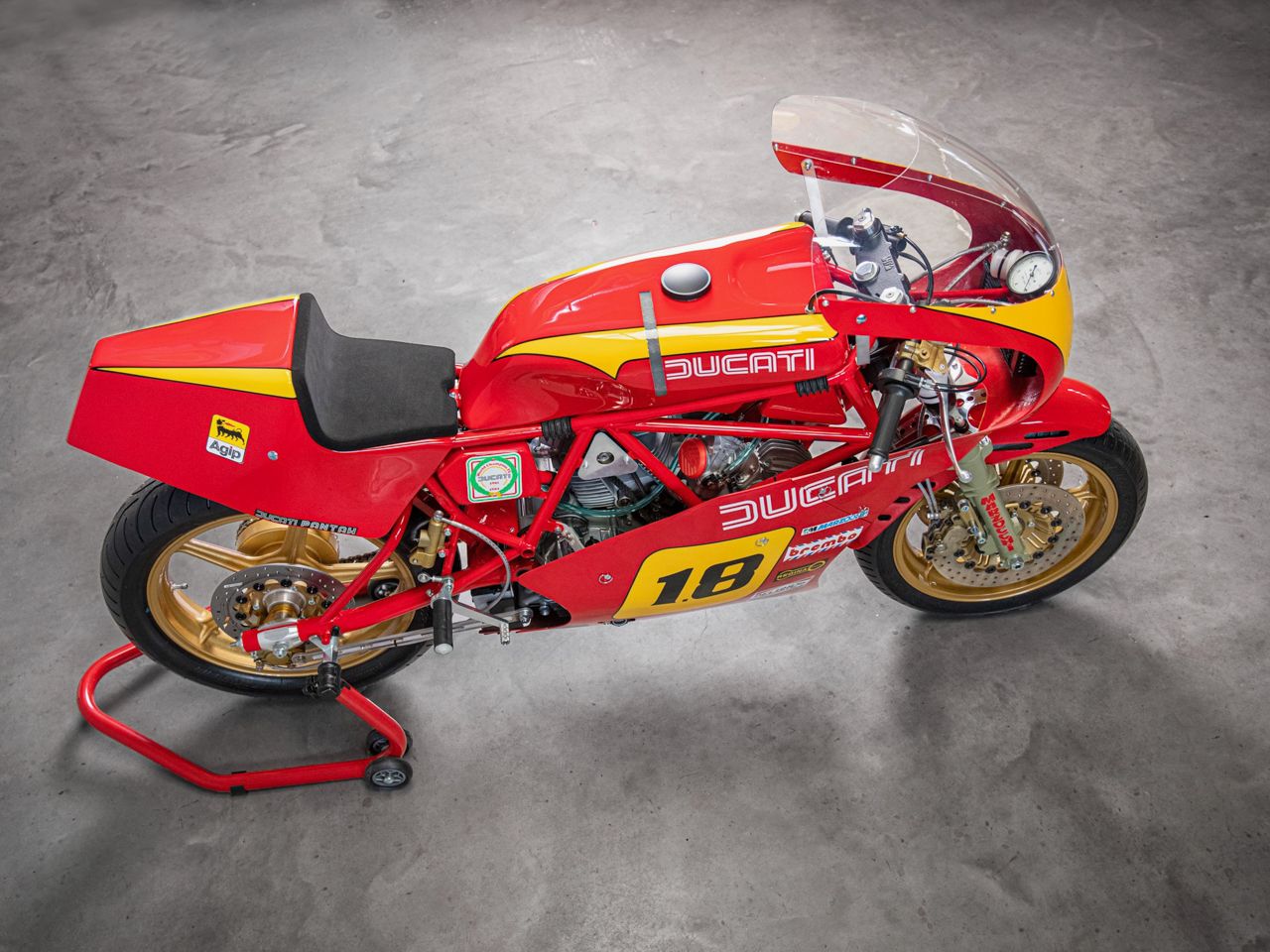
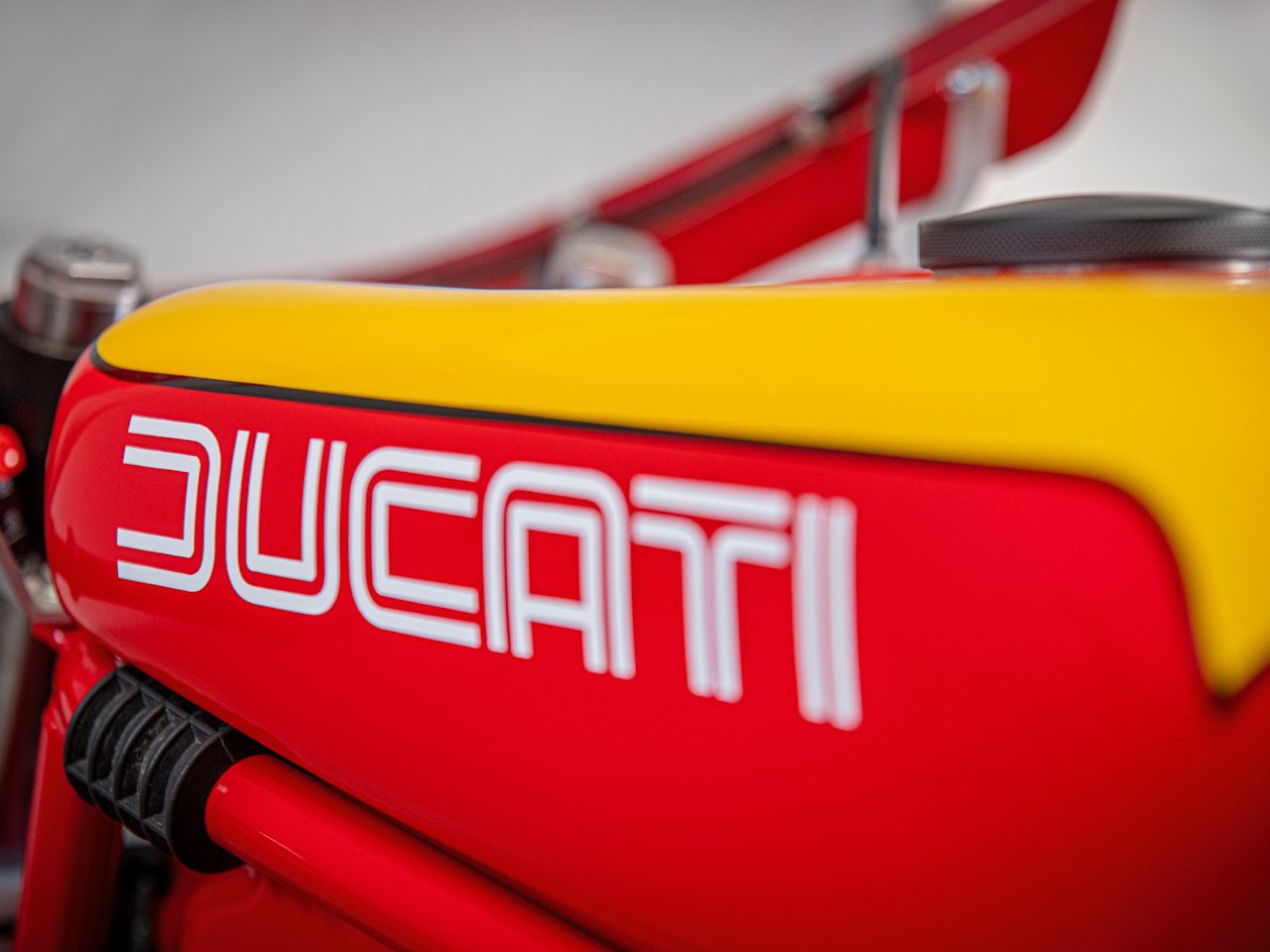
Weighing in at a total of 130kg, the TT2 was a highly purposeful racing bike with no compromise made. With its red and yellow fiberglass bodywork, the bike looked to be the ultimate racer in 1981.
FORMULA TT RACING
Perhaps we should give you some background to the Formula 1, 2 and 3 racing series. After 1973, Giacomo Agostini refused to compete in the Isle of Man TT because of safety concerns. He was joined by many other riders and by 1976, the IoM TT was no longer part of the official FIM Grand Prix calendar.
This prompted the ACU (the governing body of the IoM TT) to set up a racing series that included racing on the Isle of Man. This became the Formula TT racing series that ran between 1977 and 1990 with three categories:
TT Formula 1: four stroke 1000cc and two stroke 500cc.
TT Formula 2: four stroke 600cc and two stroke 350cc.
TT Formula 3: four stroke 400cc and two stroke 250cc
Next to the Formula TT World Championship, there also was a national Italian racing series that adopted the same rules from 1981 onwards. As the Formula TT races were among the few where four stroke motorcycles could still be competitive, Ducati was keen on entering this series in the late 1970s and early 1980s.
THE 1981 SEASON
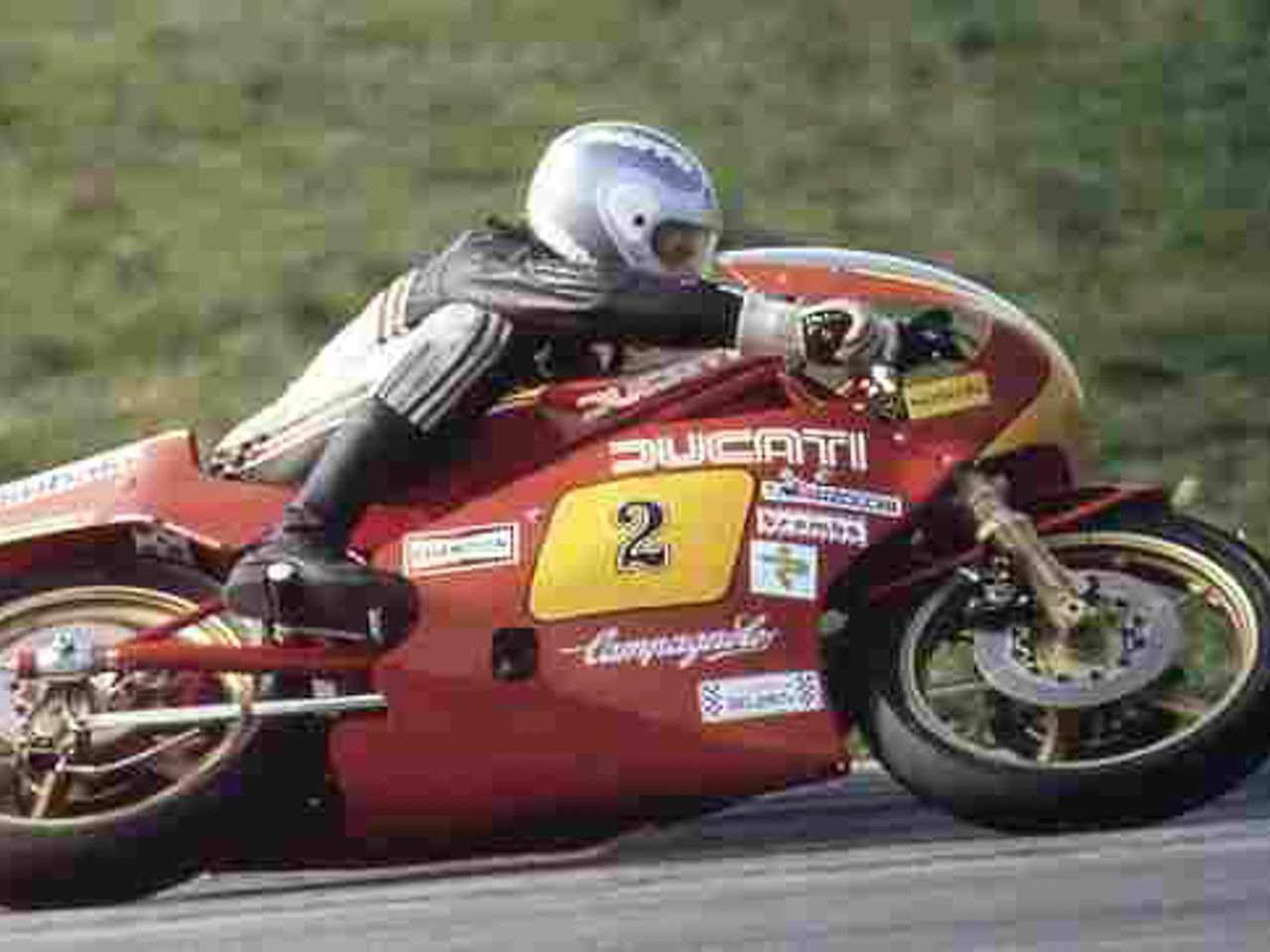
With the TT2 ready, it was time for the debut race of the 1981 season at Misano on 29 March. Massimo Broccoli rode it to instant victory and went on to win that year’s Italian TT Formula 2 championship.
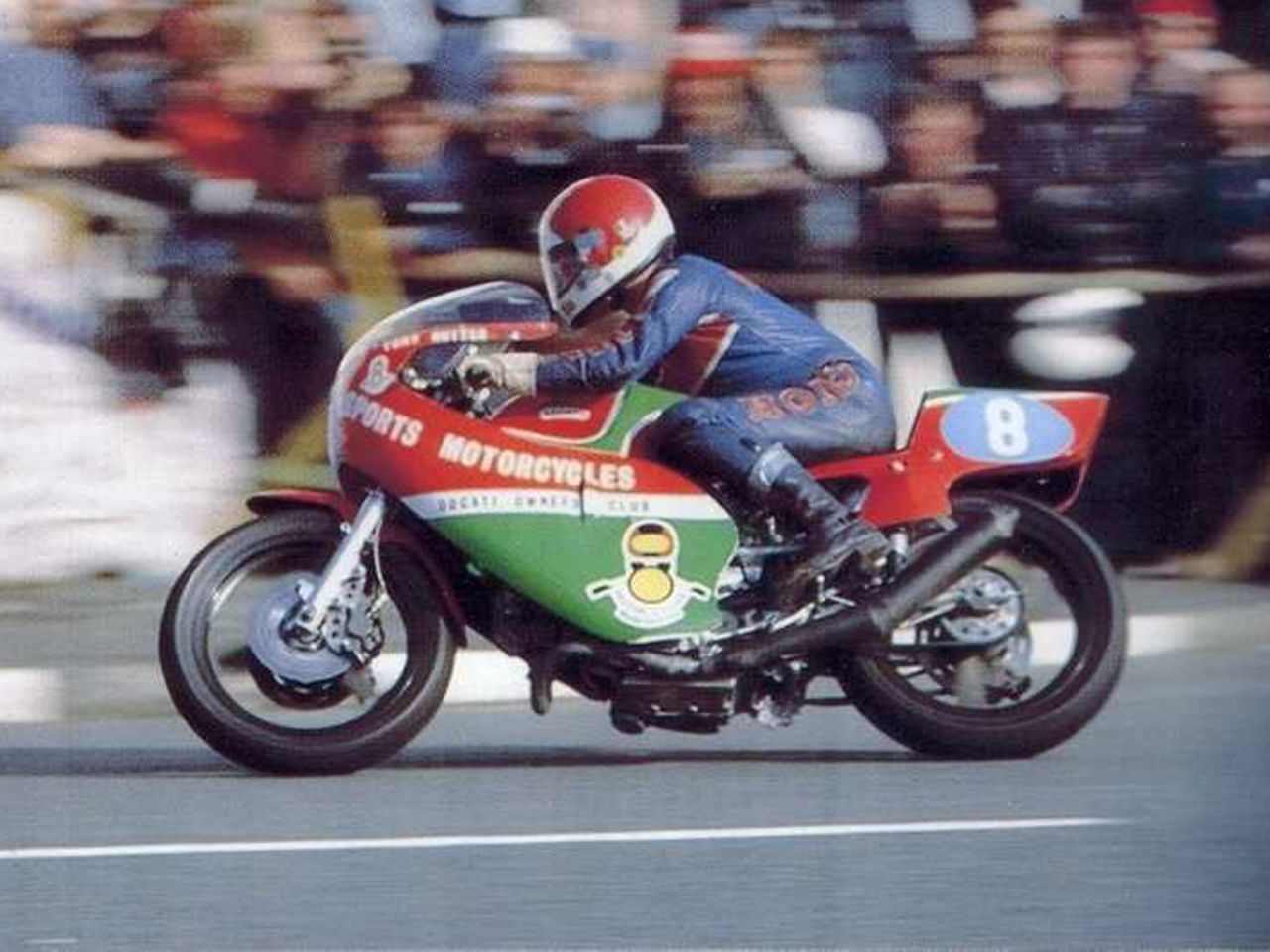
Sports Motorcycles, the Manchester based race shop managed by Steve Wynne, wanted to enter the TT2 into the TT Formula 2 World Championship with Tony Rutter as rider. Ducati initially gave very little support, and it was with a hastily constructed 600 Pantah that Tony Rutter managed to win the Isle of Man F2 race. Why Ducati did not supply Sports Motorcycles with a proper works TT2 remains a mystery, but they went on to improve their behaviour. For the second and final race of the season at the Ulster Grand Prix, Ducati supplied two TT2 racing bikes. Tony Rutter came second in that race but was able to secure the championship title for 1981.
1982 ONWARDS
There were minor improvements made to the TT2 for 1982; slightly larger 41mm Malossi carburettors increased the power output only slightly. The rolling chassis of the works racing bikes was further changed with a 16” magnesium Campagnolo front wheel with the rear wheel still the same 18” version. Not all riders favoured this set-up, so we see both configurations (18” front and rear and 16”/18”) from 1982 onwards.
Next to the works racing bikes supplied to factory riders, Ducati also introduced the TT2 as a catalogue racer for privateers. Specifications were very close to the works racing bike, but it still featured 18” wheels front and rear and had slightly less aggressive set of camshafts and 36mm carburettors. The catalogue TT2 was available during 1982 and 1983 (with some mild changes) and a total of around 50 were built.
The TT2’s palmarès grew steadily during 1982 to 1986. The Italian TT Formula 2 championship was won by Walter Cussigh in 1982 (by winning all 5 rounds!) and again in 1983. The same championship was won by Fabio Barchitta riding a TT2 in 1984.
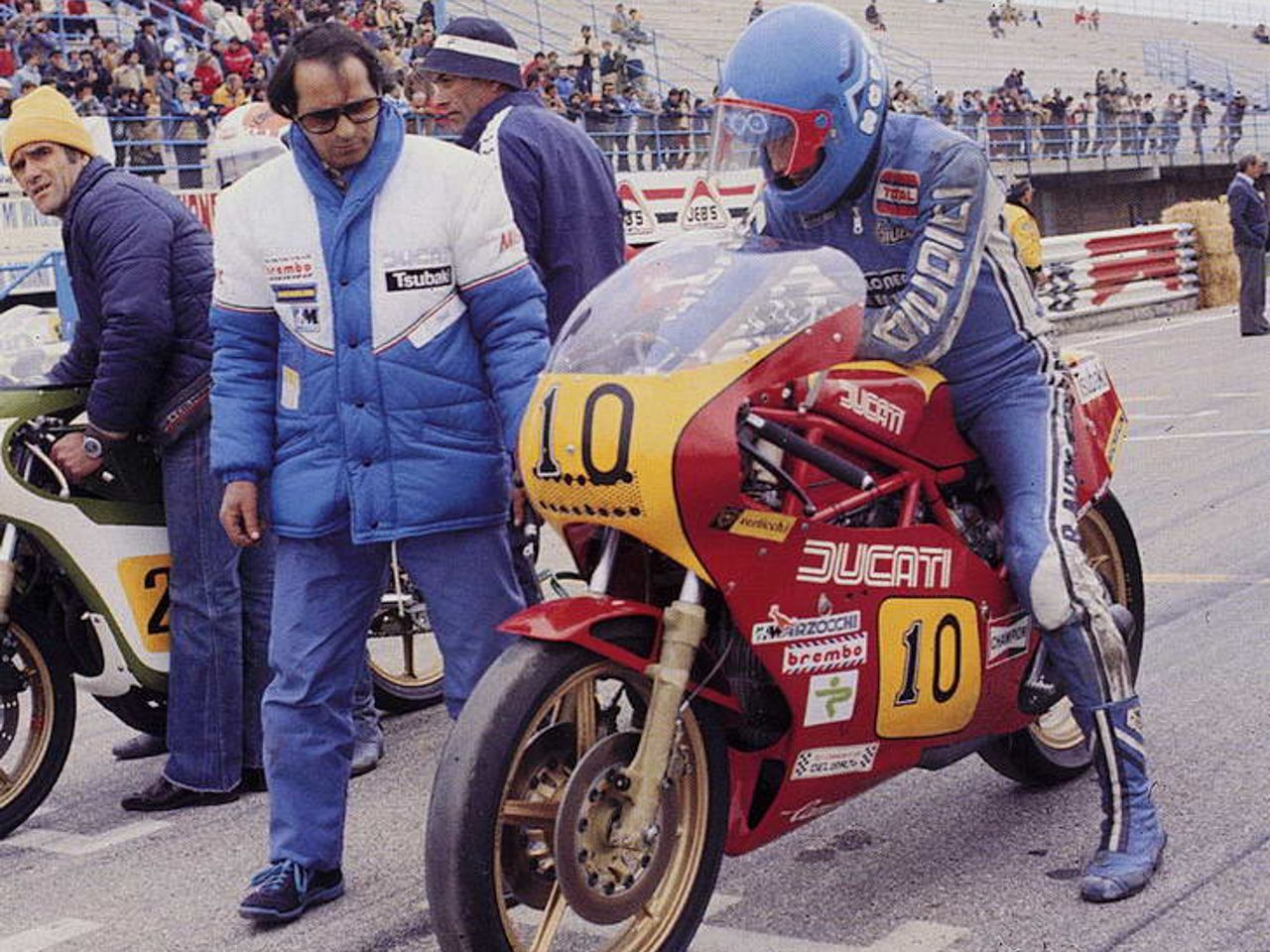
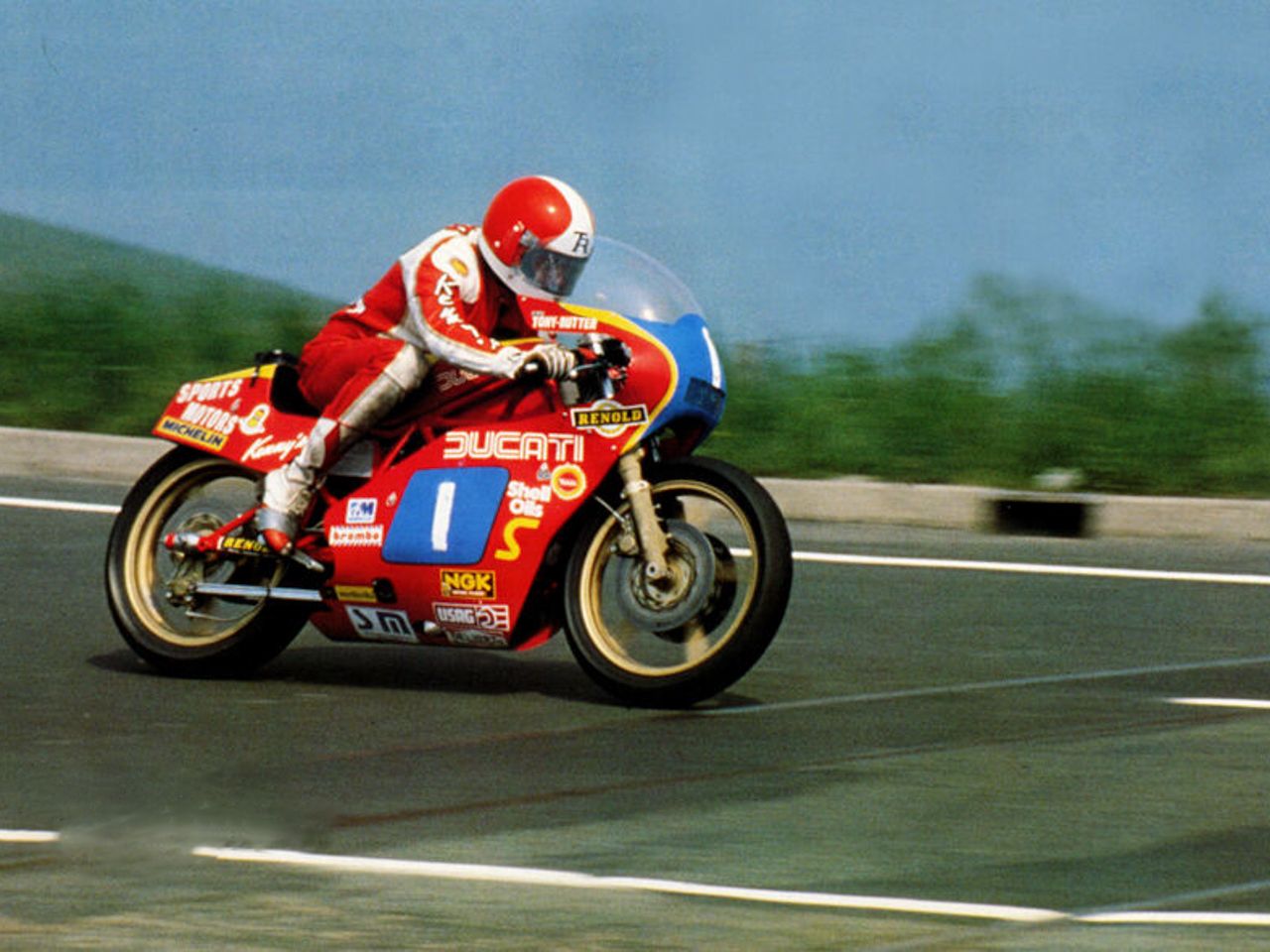
The World TT Formula 2 series was dominated by Tony Rutter. In 1982 he won all 3 rounds securing the championship. In 1983 he won the Isle of Man race and came second at the Ulster Grand Prix and the TT in Assen, enough to secure the title again. 1984 saw Rutter second at the Isle of Man, first at Vila Real, second at Ulster and fifth in Brno, again securing the title. Despite winning the 1985 Isle of Man TT Formula 2 race, he was not able to get enough points for the title that year.
By 1985, Formula TT racing was increasingly dominated by two stroke machines. In order to be competitive, Ducati had to resort to endurance racing once again which was done with the 750cc development of the TT2: the TT1. The final victory of the great TT2 was in the hands of Greame McGregor at the Jerez World TT2 championship race in 1986.
The early 1980s proved to be a very successful period of racing for Ducati, despite the company going through one of its darkest eras. The TT2 was the beacon of hope to which the people at Ducati could cling to. Eventually, the take-over by Cagiva in 1986, made it possible to develop new and competitive racing bikes that went on to dominate the World Superbike Championship that was established in 1988.
BUILDING A BRAND NEW DUCATI TT2
It was in late 2019 that we were contacted by a known client of ours. A true racing enthusiast, he had some good experience racing Ducatis back in the 1990s but gave up his hobby when family and work demanded more attention. We had previously restored a 1976 Ducati 750 Super Sport for him but now he wanted to go racing again. What ultimate racing bike could we build him?
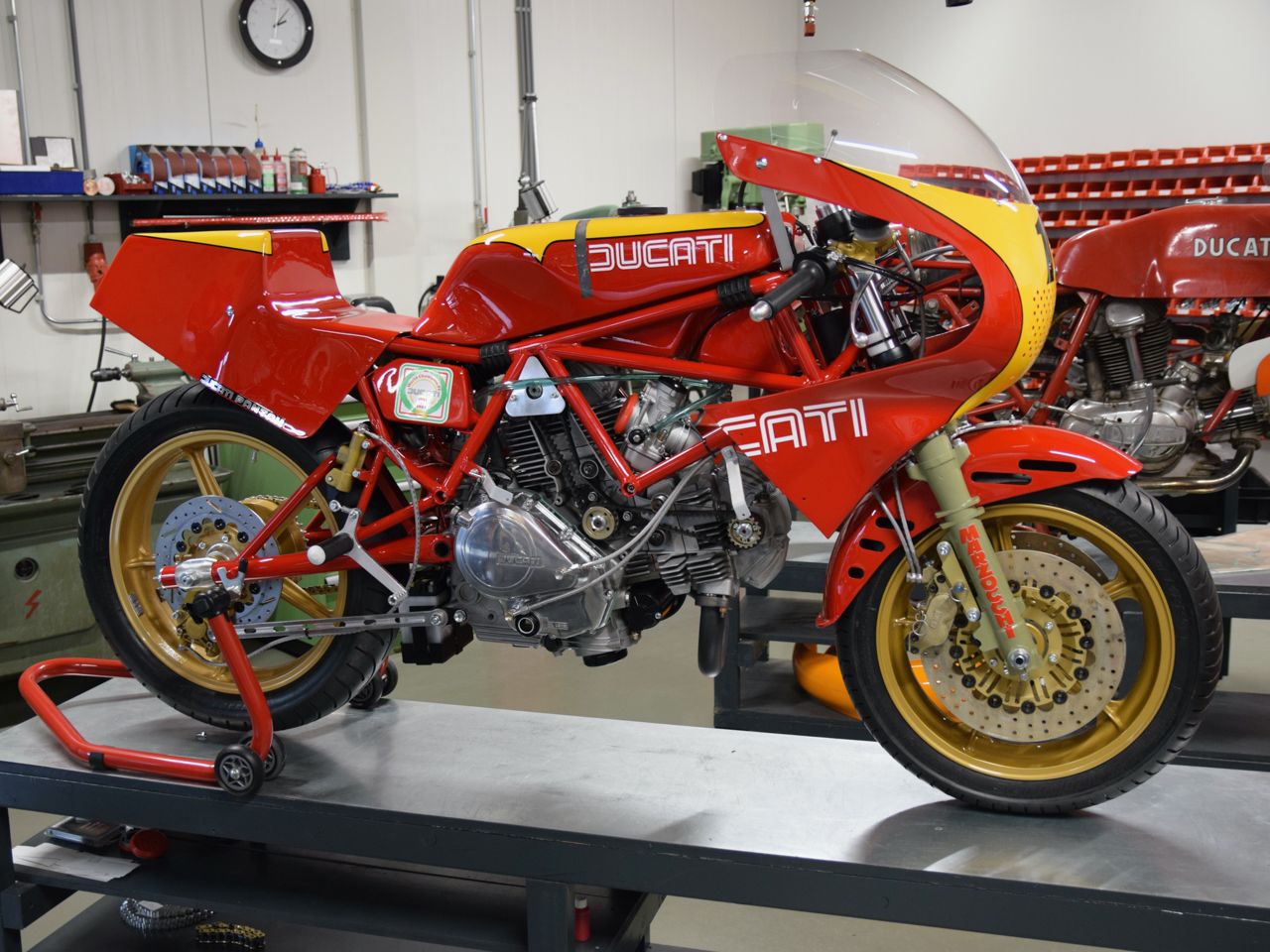
Discussing his wishes over some coffee, soon lead to the idea of building a TT2. Especially the low weight and nimbleness was appealing to our client. We decided to come up with a detailed plan to construct his ultimate racing Ducati. Going through books and pictures, we thought about re-creating one of the most iconic TT2s out there: the bike ridden by Guido del Piano in the Italian TT2 championship in 1982.
We especially liked the configuration of this bike: the Marzocchi M1R front fork, Brembo P4 gold line callipers with quick release and many other items. It was soon decided for us to re-create this bike for our client.
SEARCHING AND MAKING PARTS
Many hours were spent on eBay and with contacting many people in our network to find the needed parts. We were able to find an original Marzocchi M1R front fork, a set of Brembo P4 quick-release callipers and an original 3.50×16” Campagnolo front wheel. We soon found out that the new TT2 frames that are currently available are not the original design and made to take the slightly larger 900cc Desmodue engine. We however wanted to stay closer to original and eventually were able to find an older Pierobon-made frame to the correct specifications.
After a few months of searching, we had most of the parts on the work bench to start the build. We had two 600cc Pantah engines in stock: one was used to construct the rolling chassis while the other one formed the basis for the actual racing engine. The rolling chassis was first completely constructed.
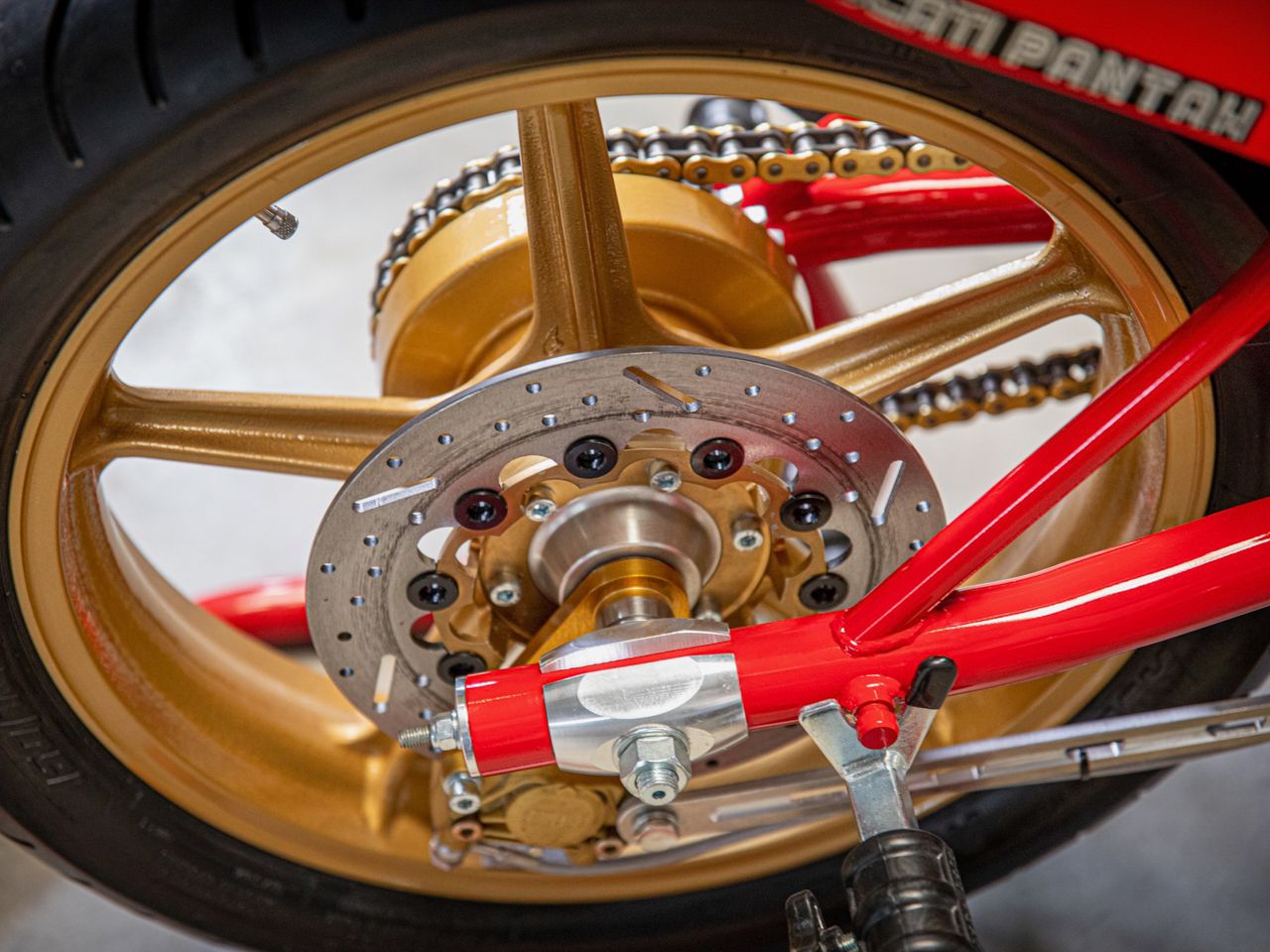
Working together with Marvic in Italy, we were able to construct a 3D model for the original Campagnolo rear wheel with the correct sprocket carrier. The first of these rear wheels was specially made for this project.
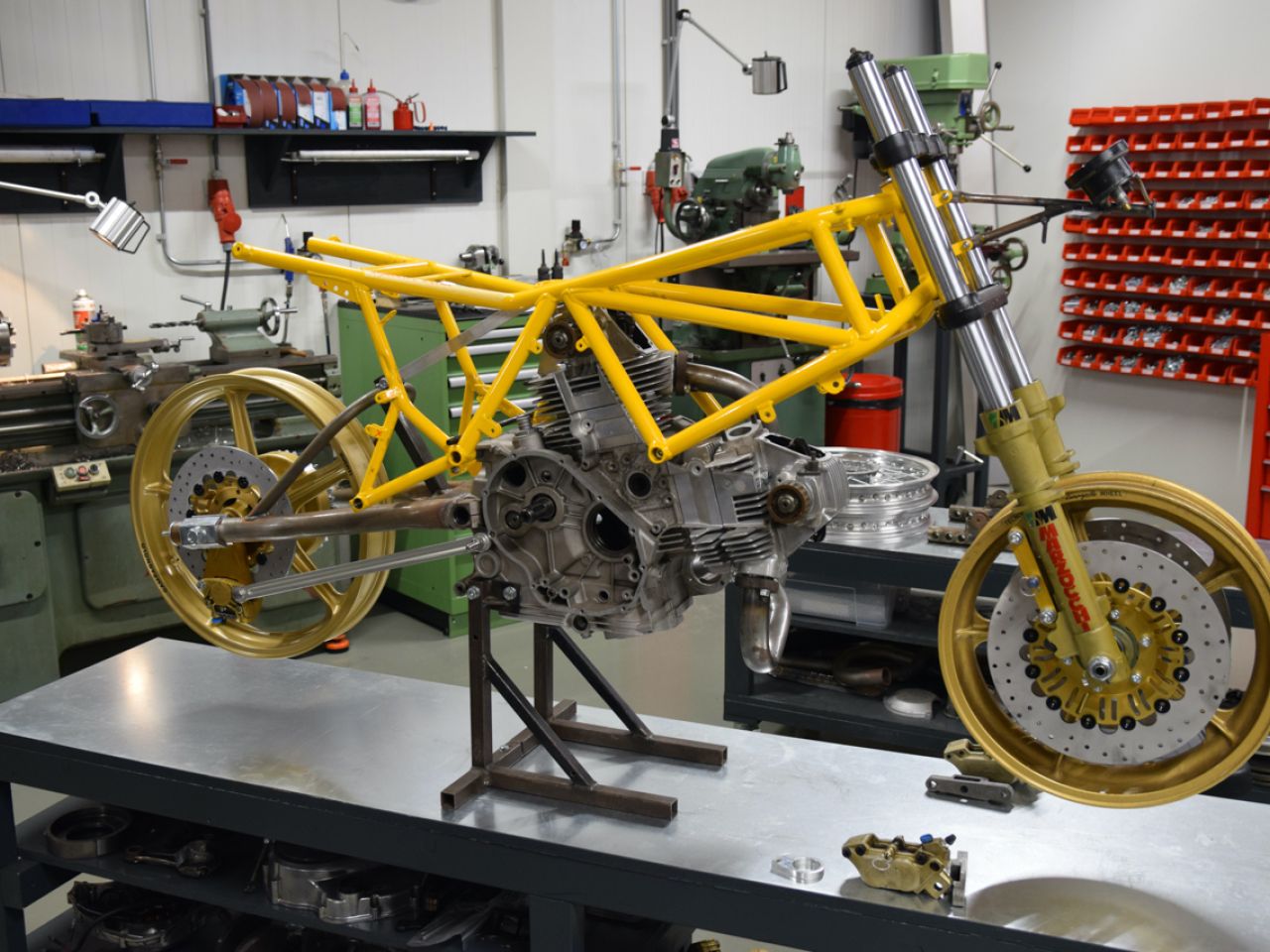
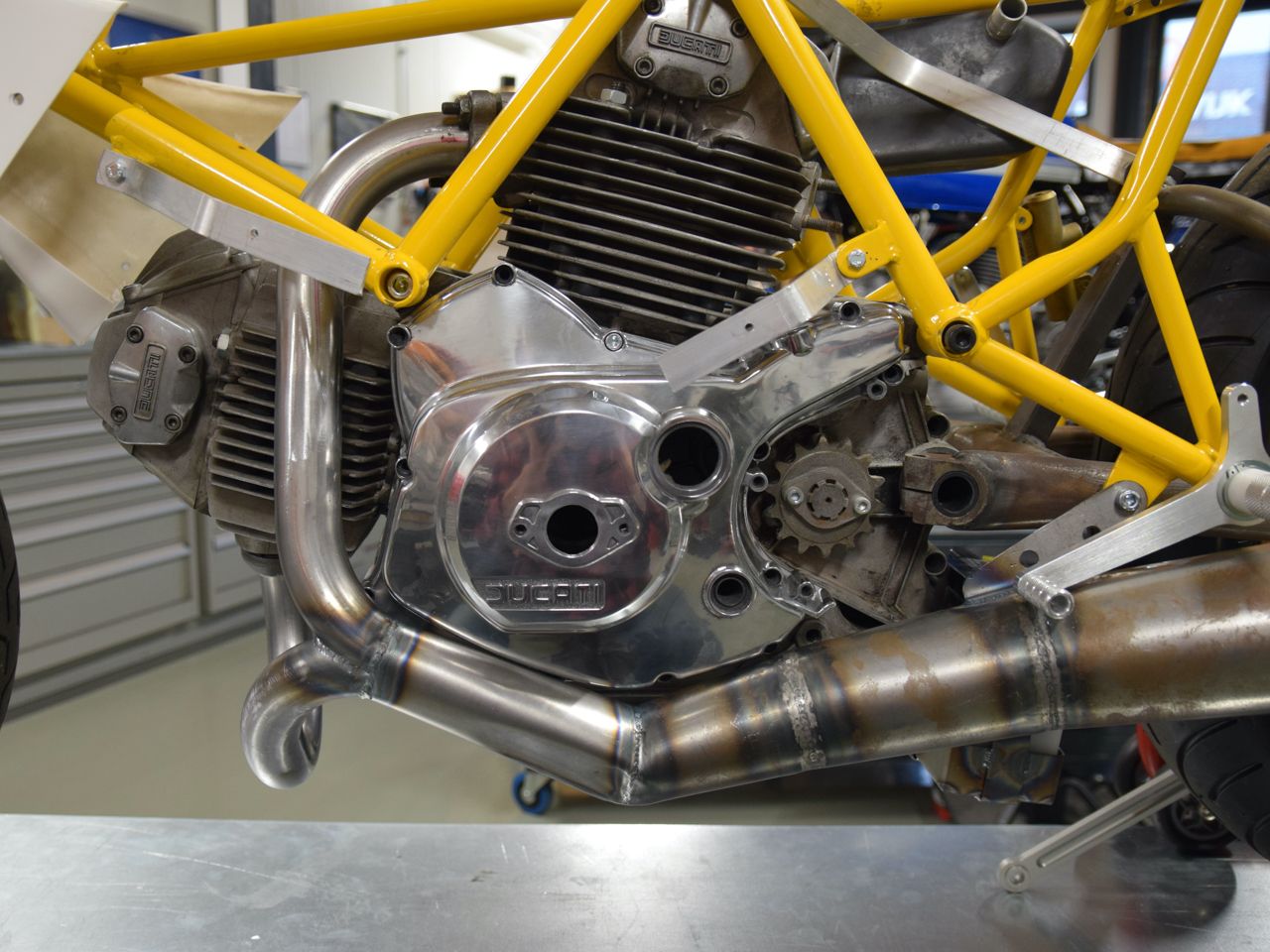
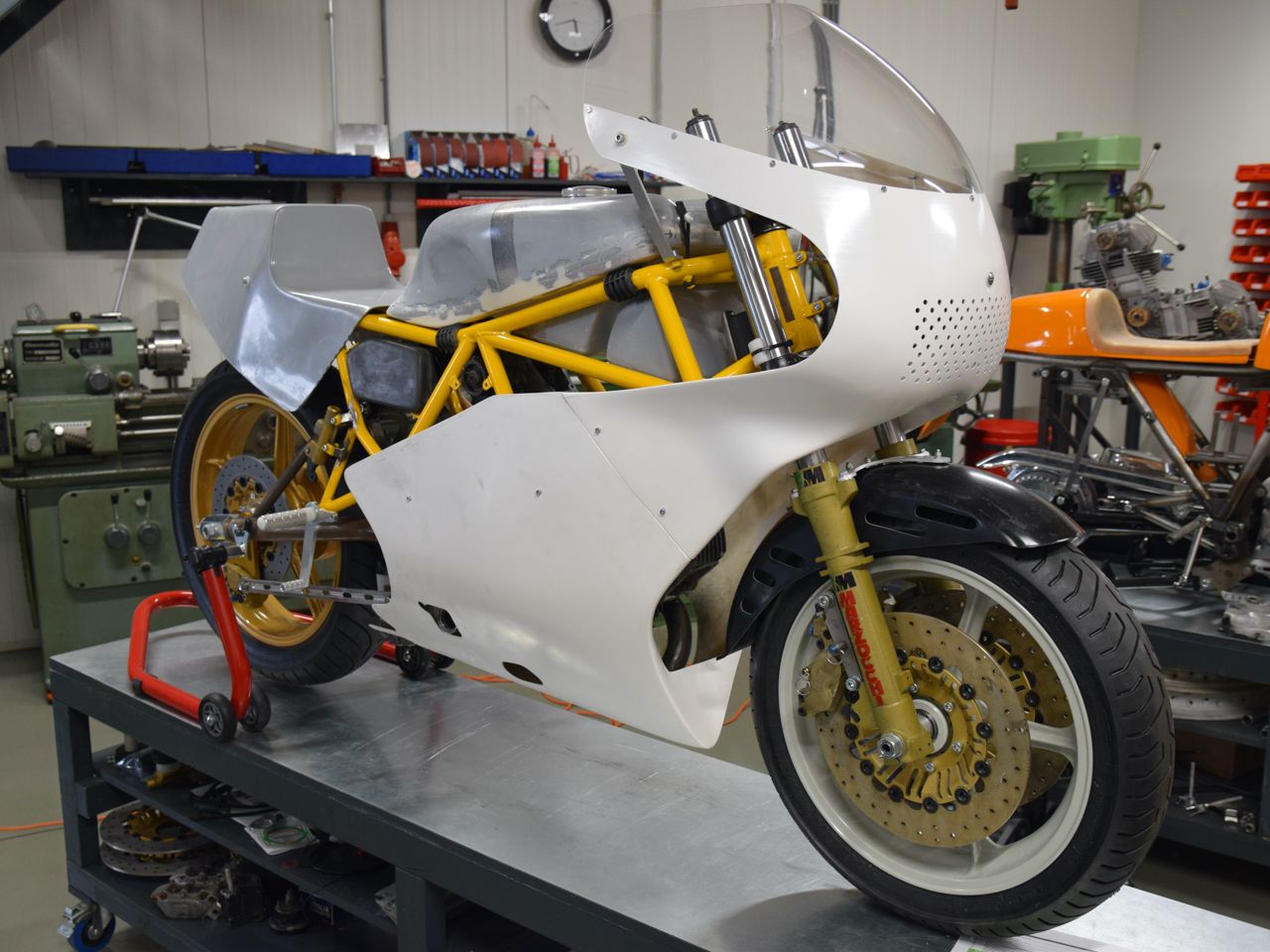
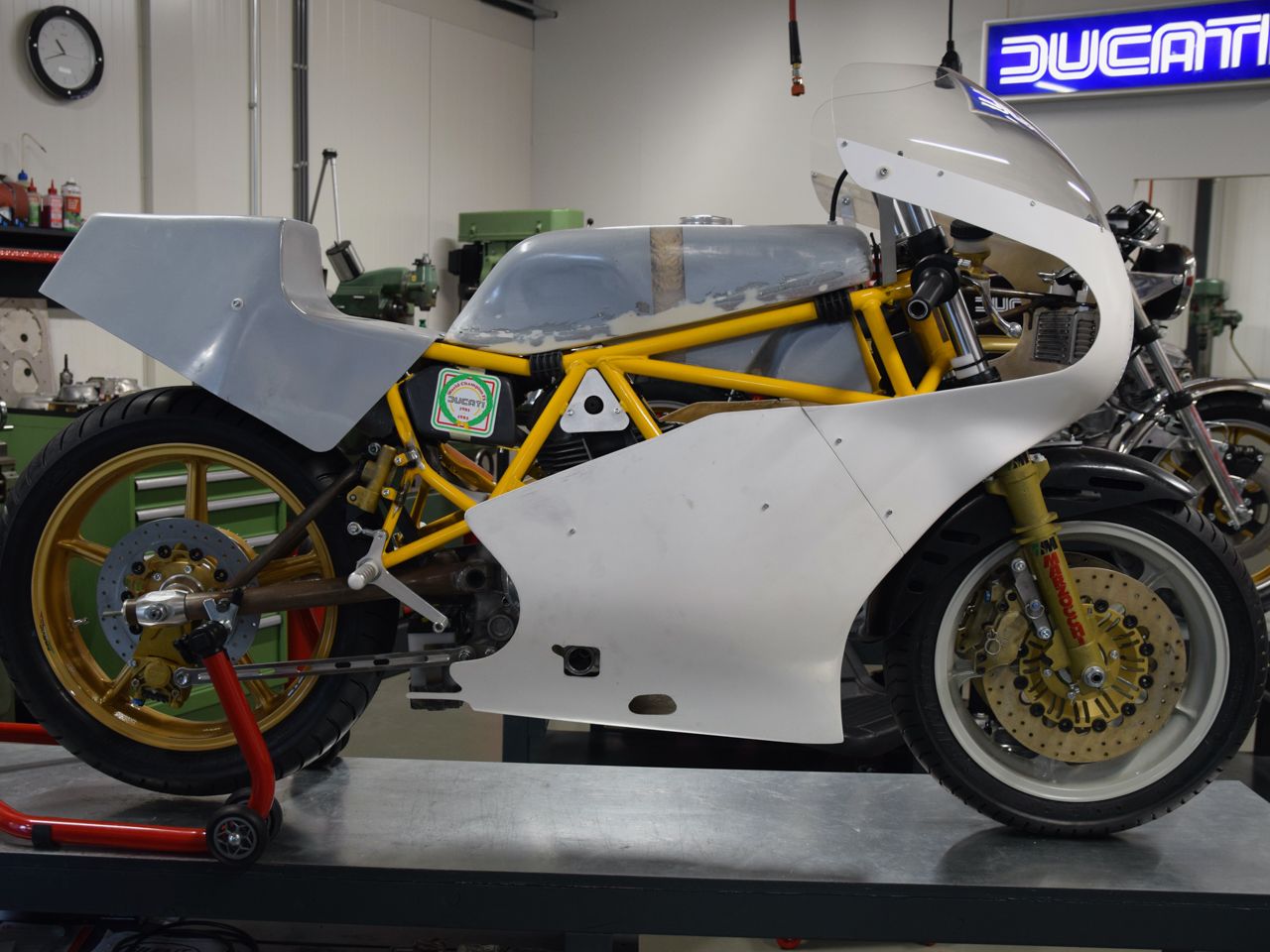
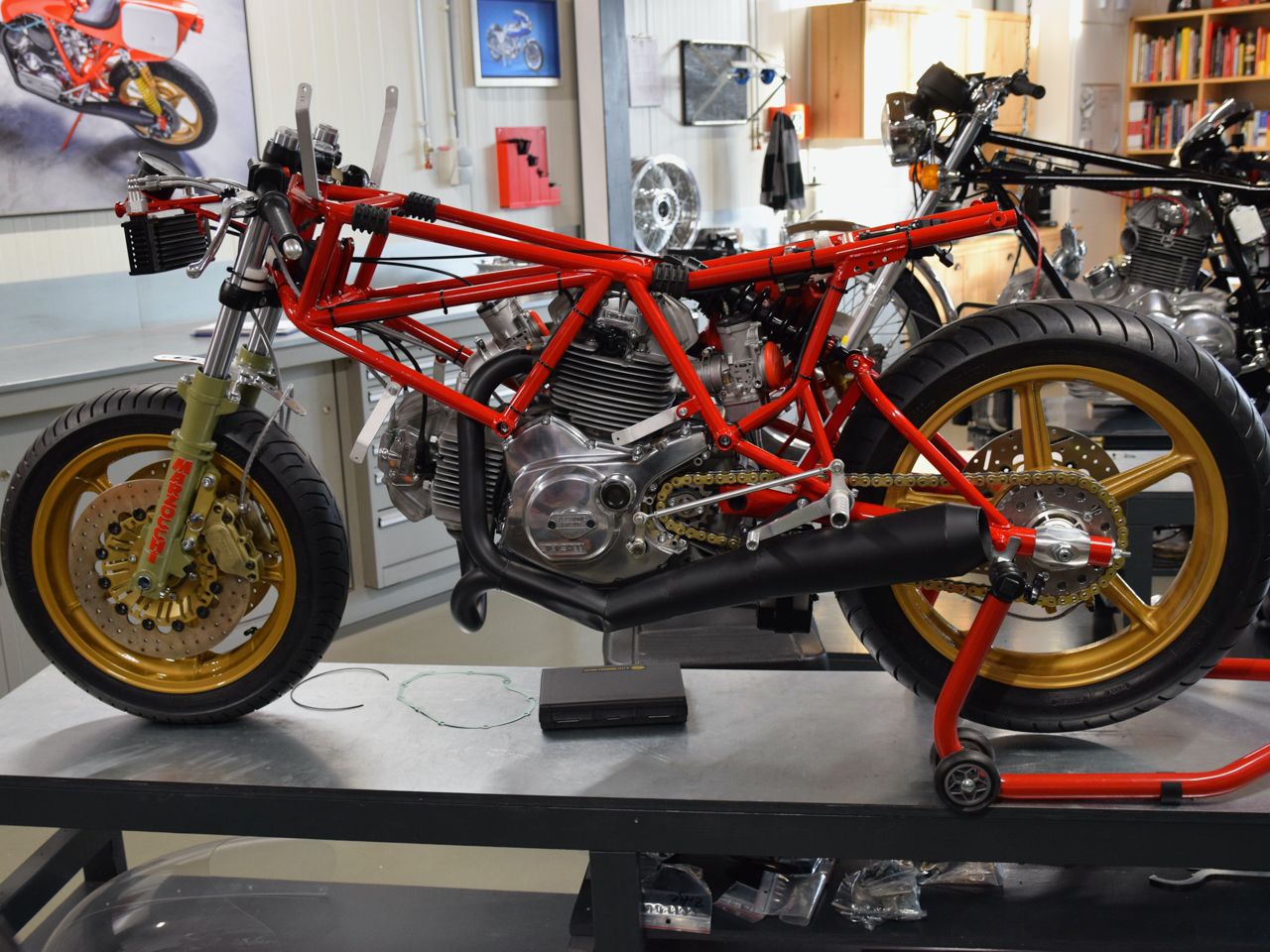
The TT2’s rolling chassis coming along: rear wheel, exhaust system and fuel tank are specifically made for this project. Other parts are sourced from all over the world: original Marzocchi M1R front fork, Campagnolo front wheel and Brembo P4 callipers with quick-release.
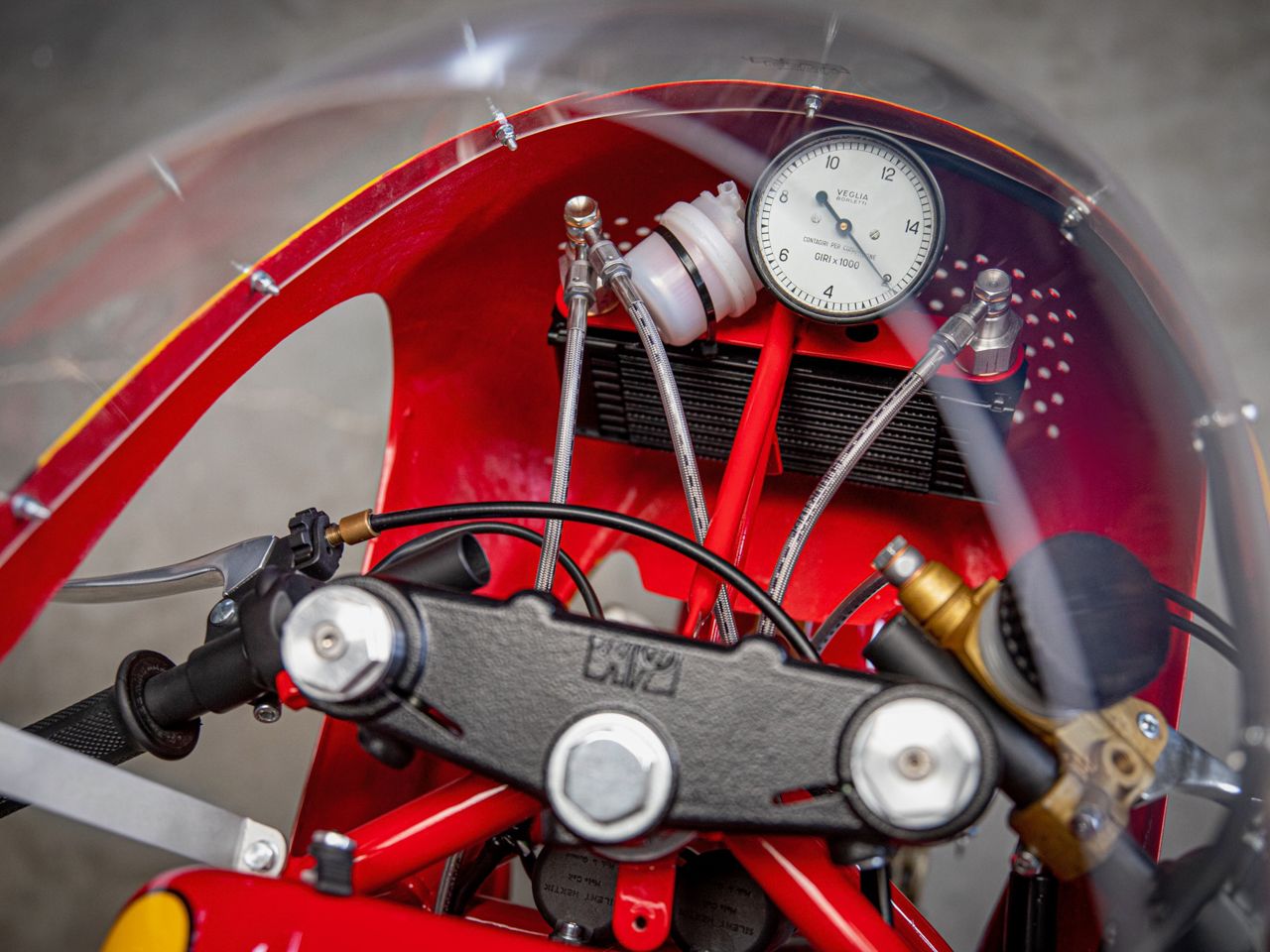
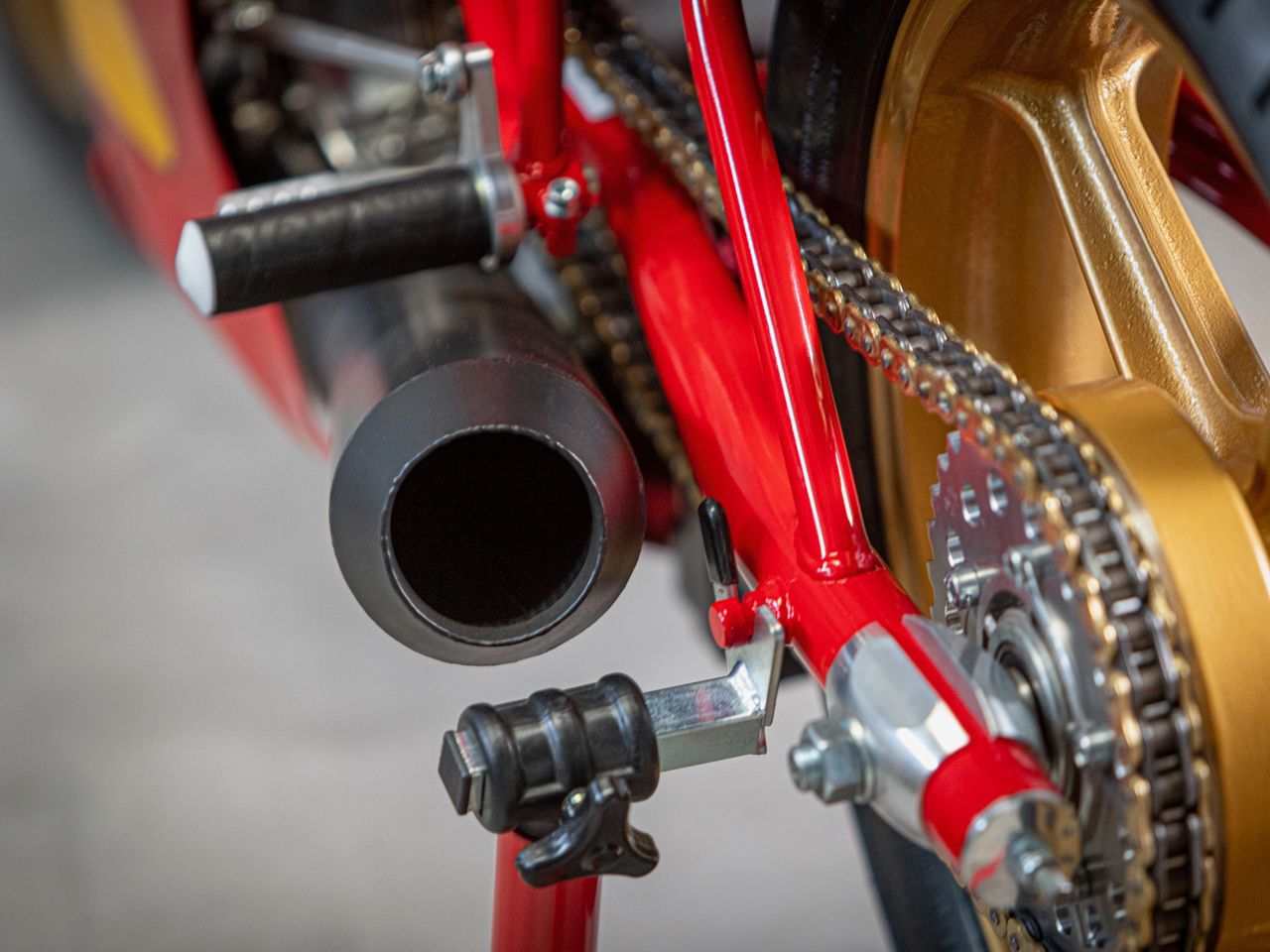
There are many companies around the world that supply ‘ready-to-fit’ TT2 parts. However, we soon found out that many of these parts are far from being correct or up to our standards. Eventually, we ended up altering many parts, getting them closer to the original specifications. In other instances, like with the 2-into-1 exhaust system, we eventually started from scratch and constructed it for this project specifically. Wheel spindles, bolts and nuts were machined to be as light as possible.
ENGINE BUILD
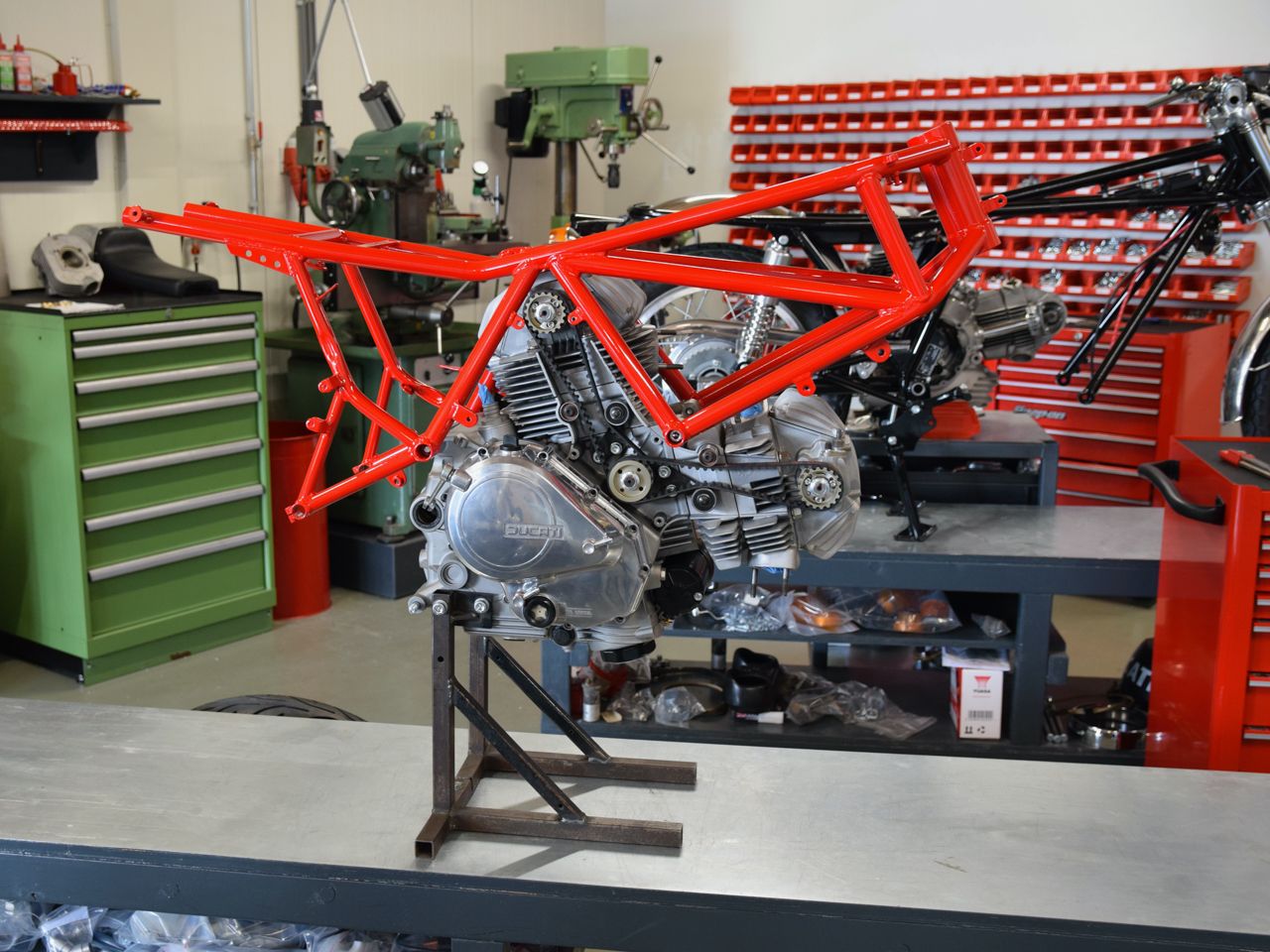
While the rolling chassis was coming along, we focused on building the TT2 racing engine. A set of standard 600SL Pantah cases, cylinders and cylinder heads were taken from stock. The first job was to lighten and dynamically balance the crankshaft with new Carrillo con-rods and Pistal high compression pistons. We then focused our attention to other internal parts: the gear selector was lightened, as well as many of the drive gears and the straight-cut primary gears and clutch basket.
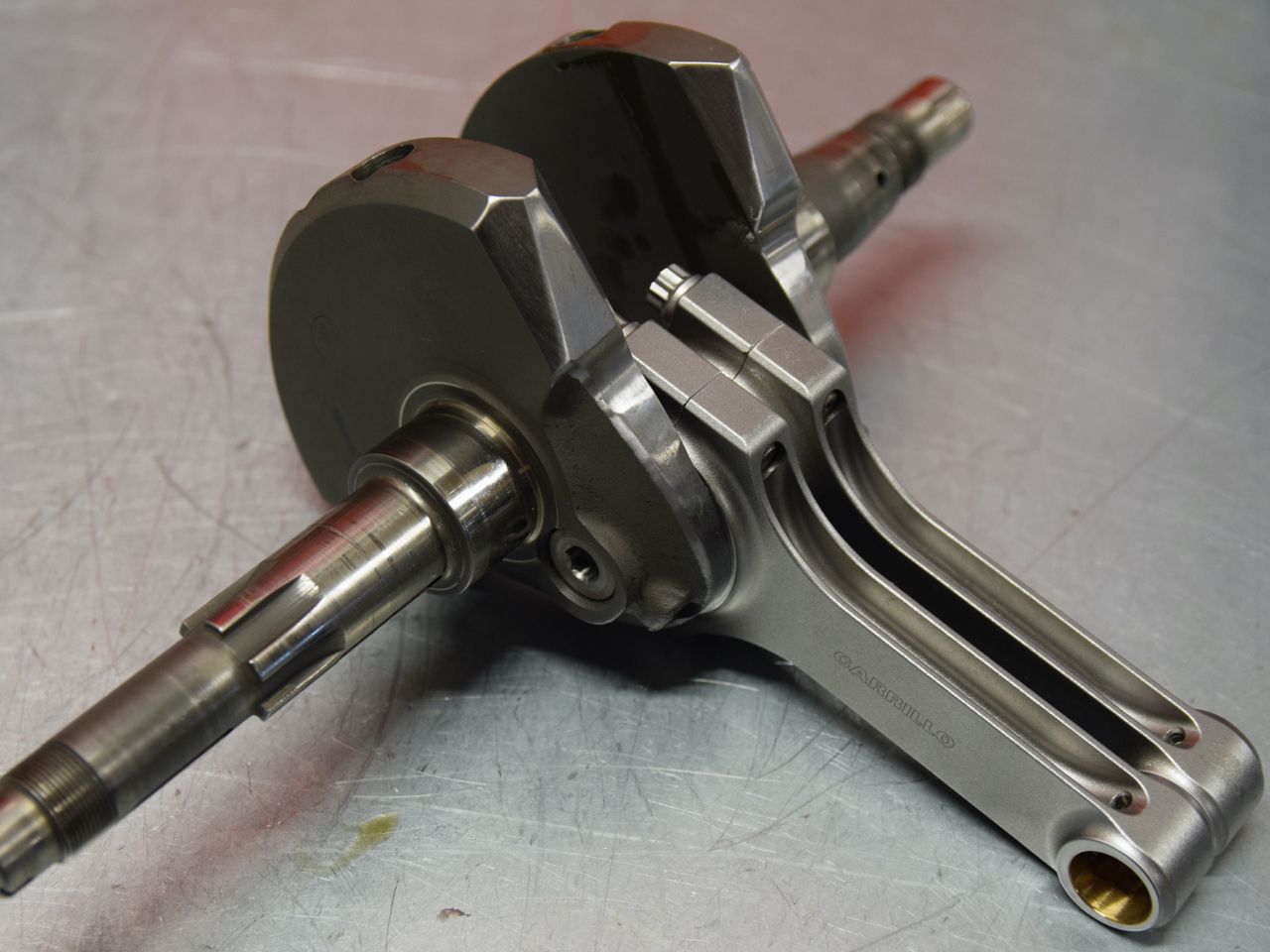
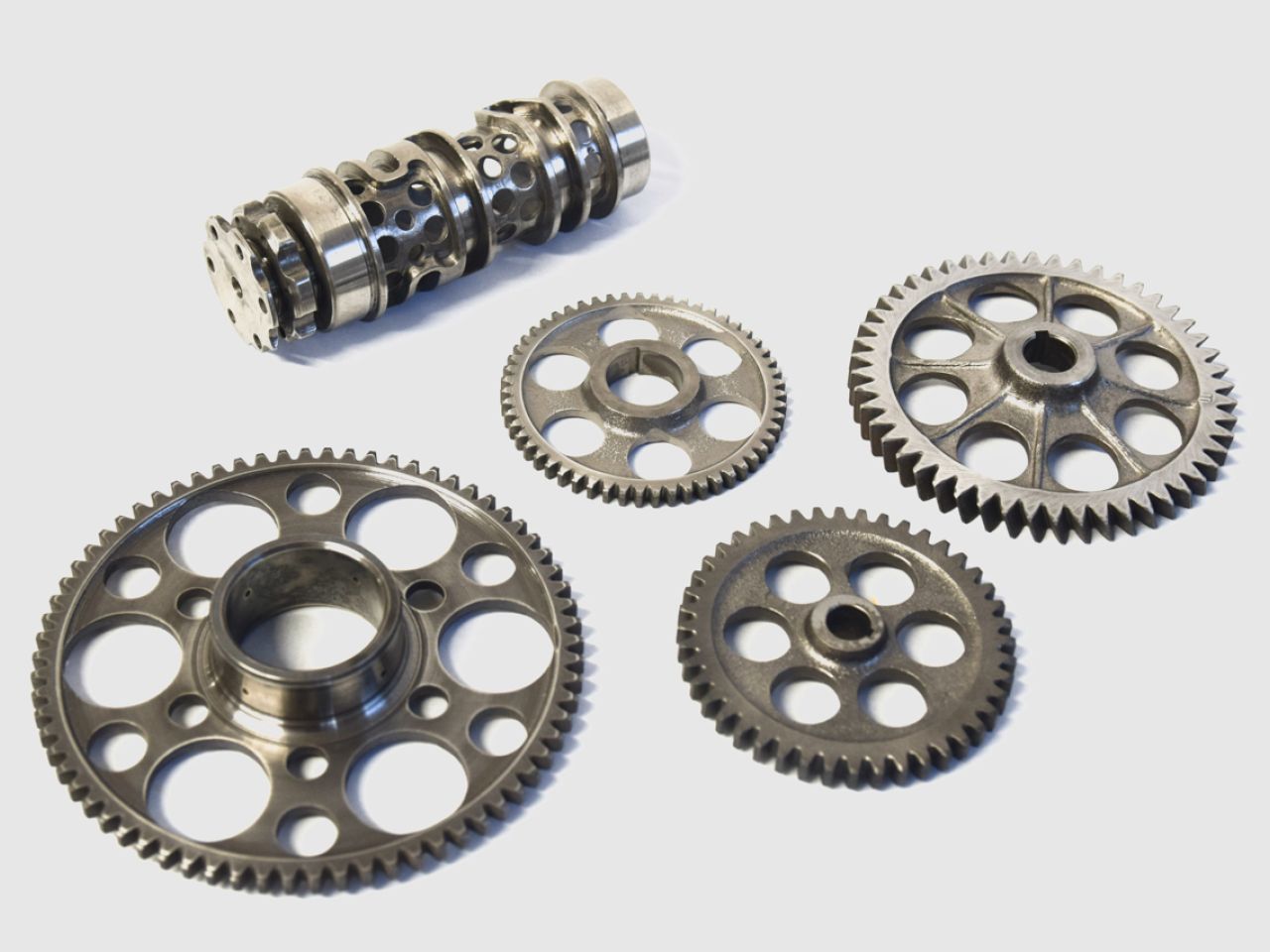
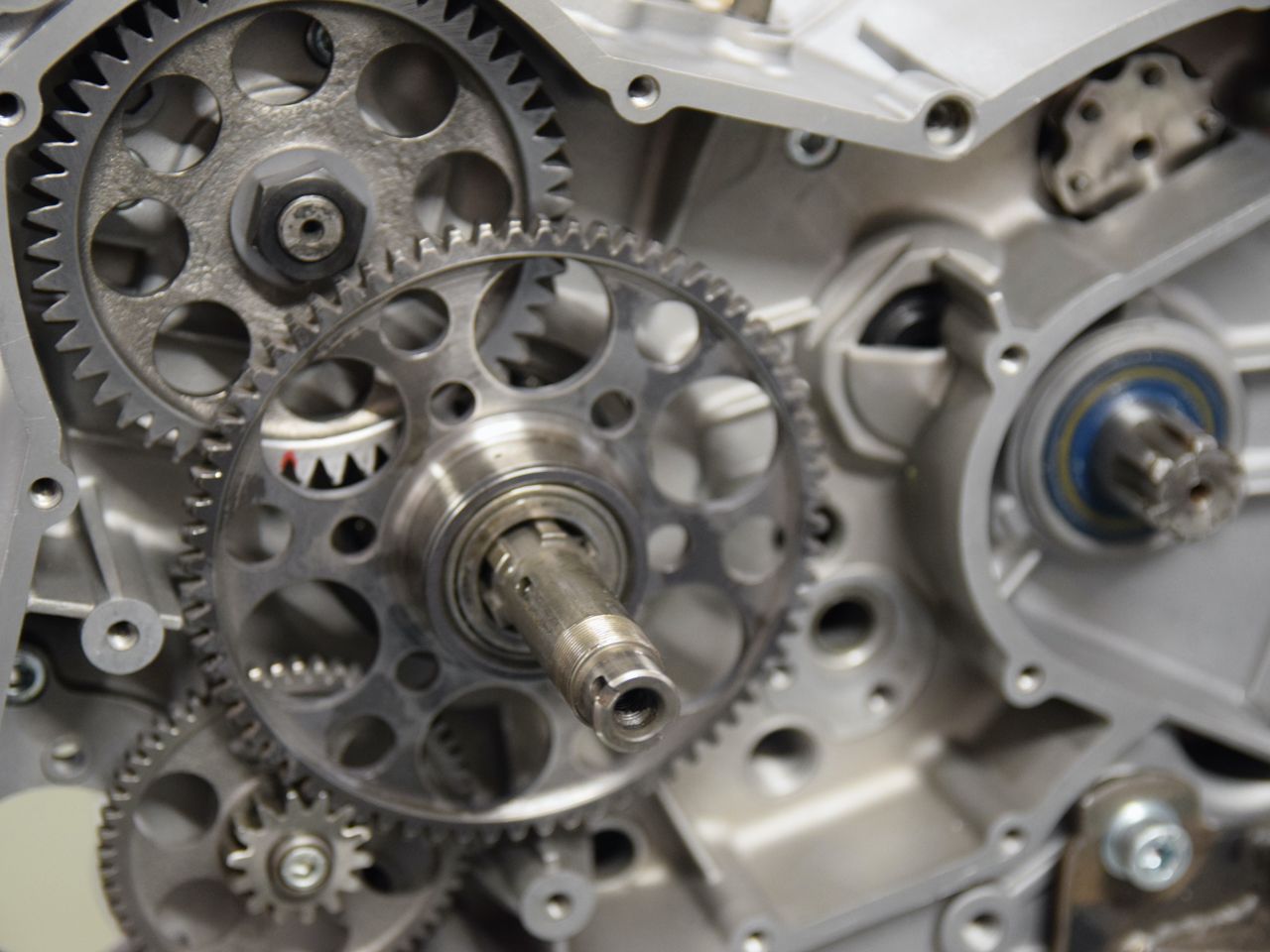
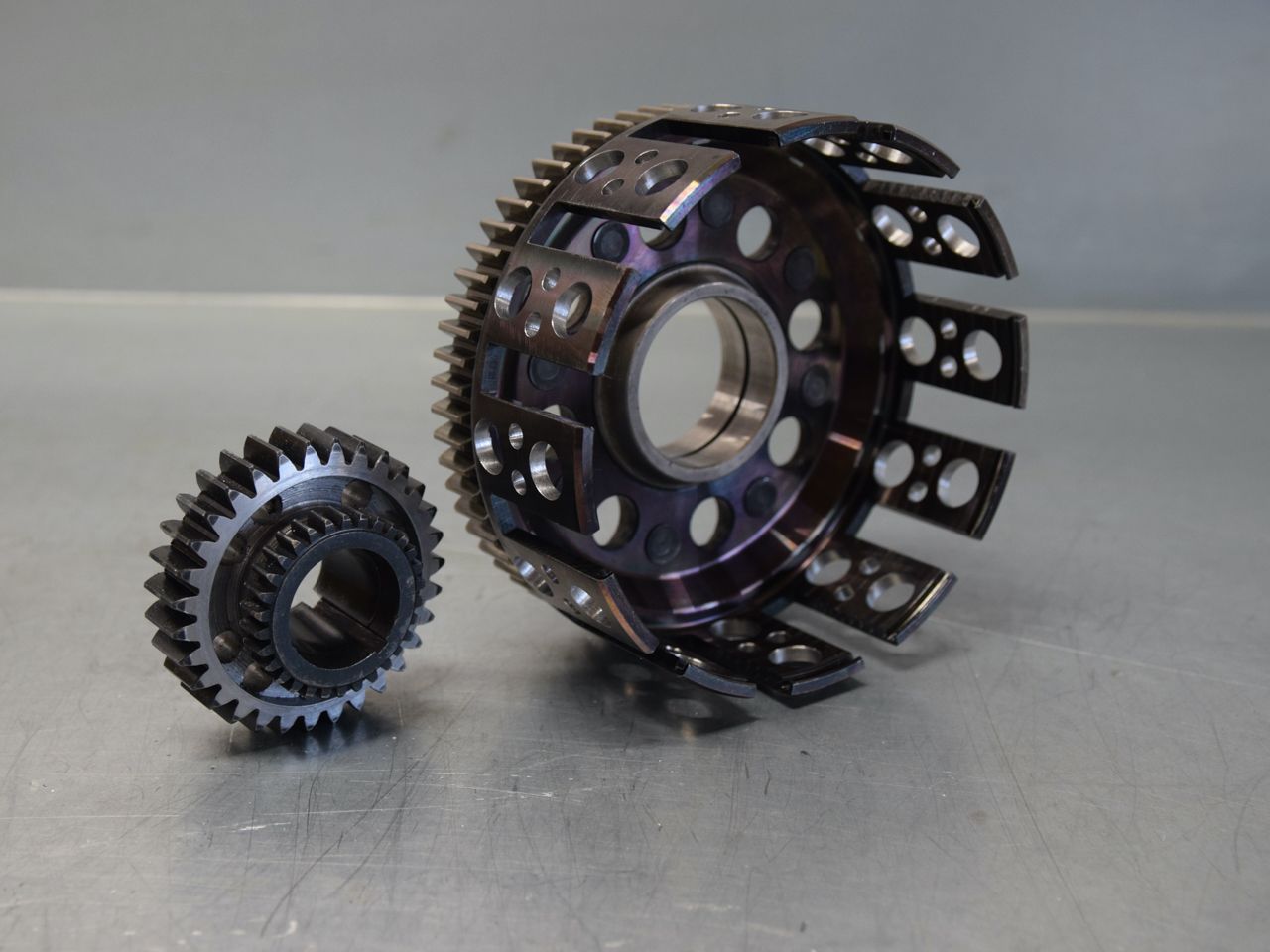
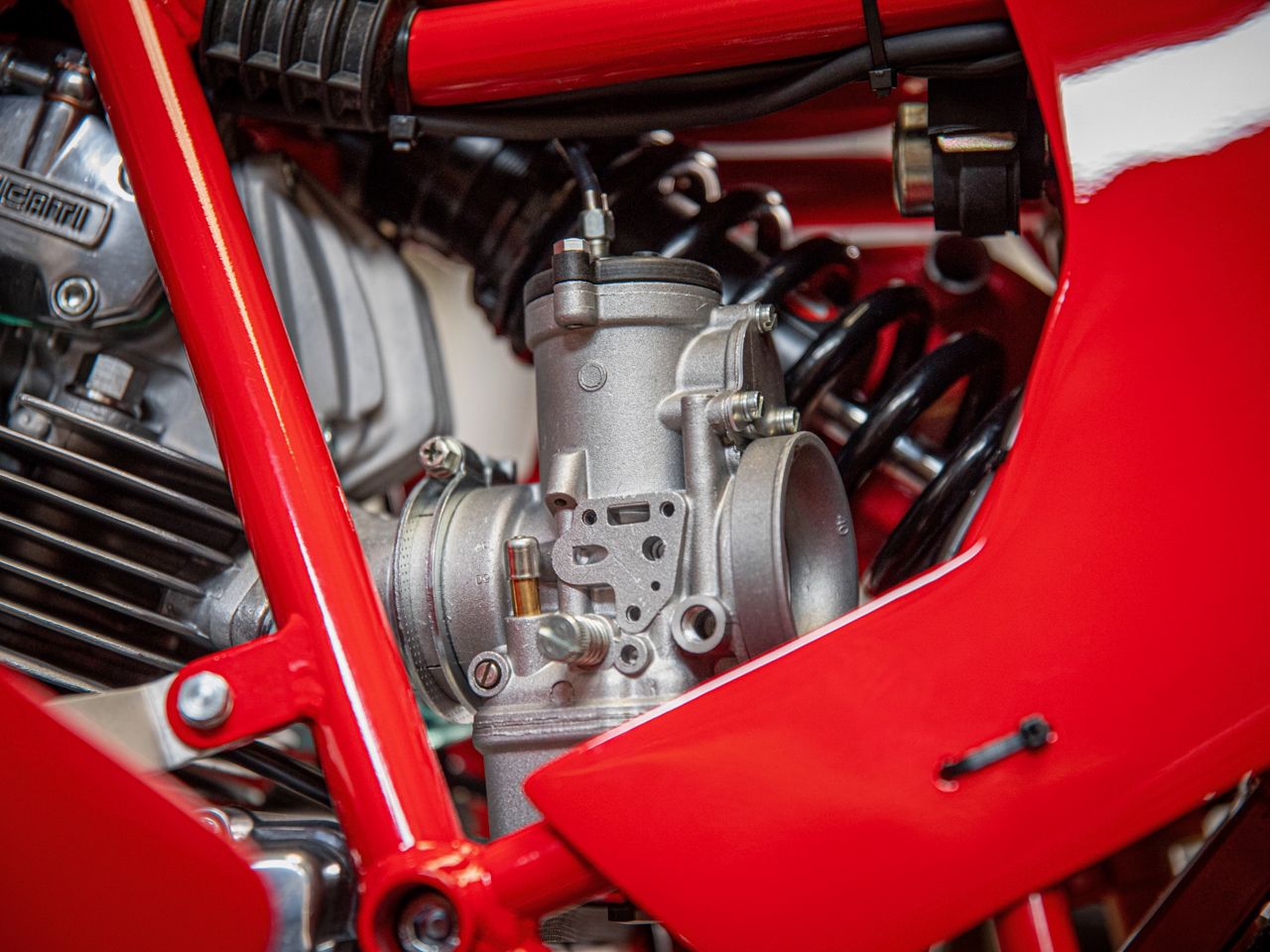
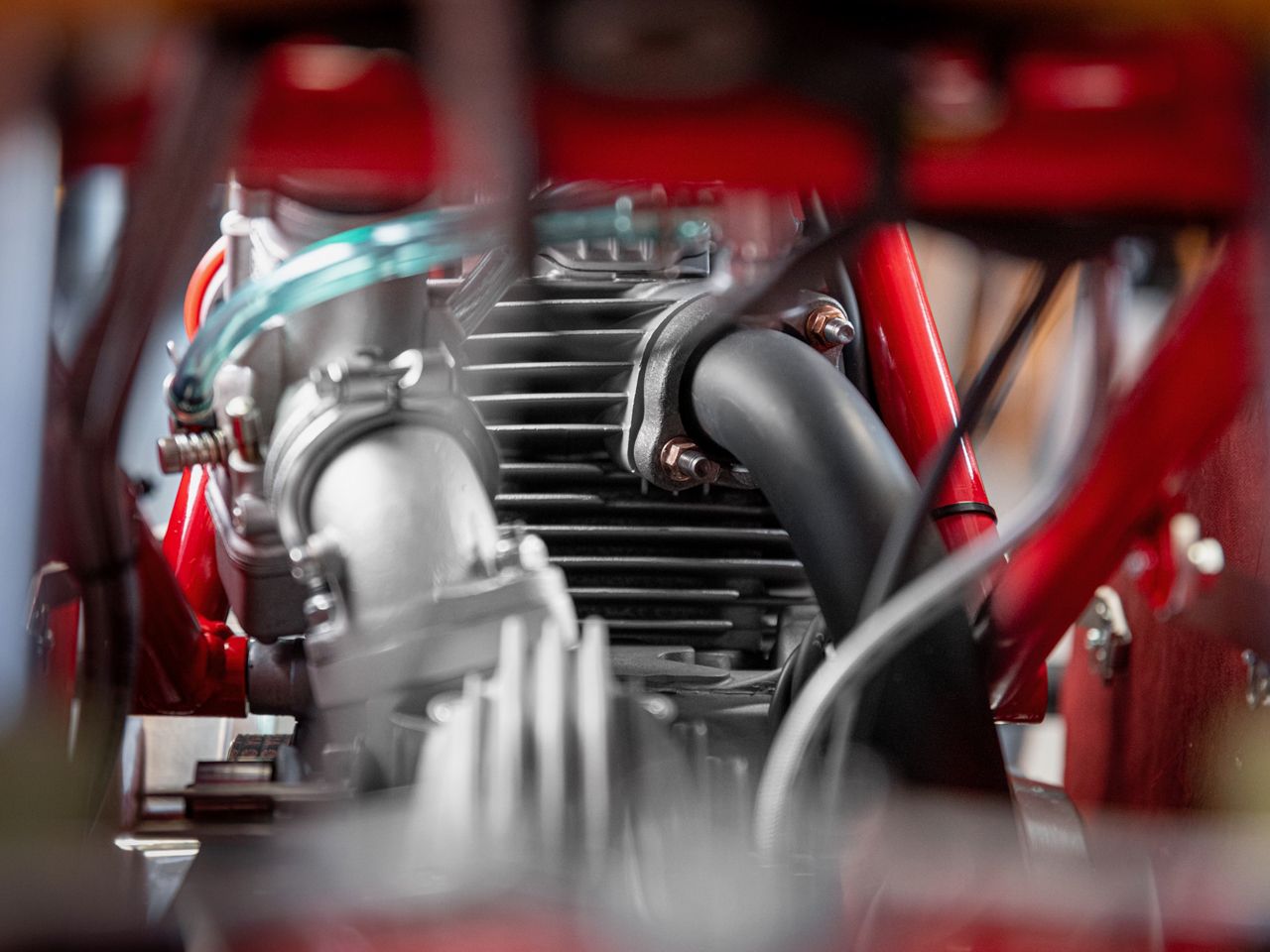
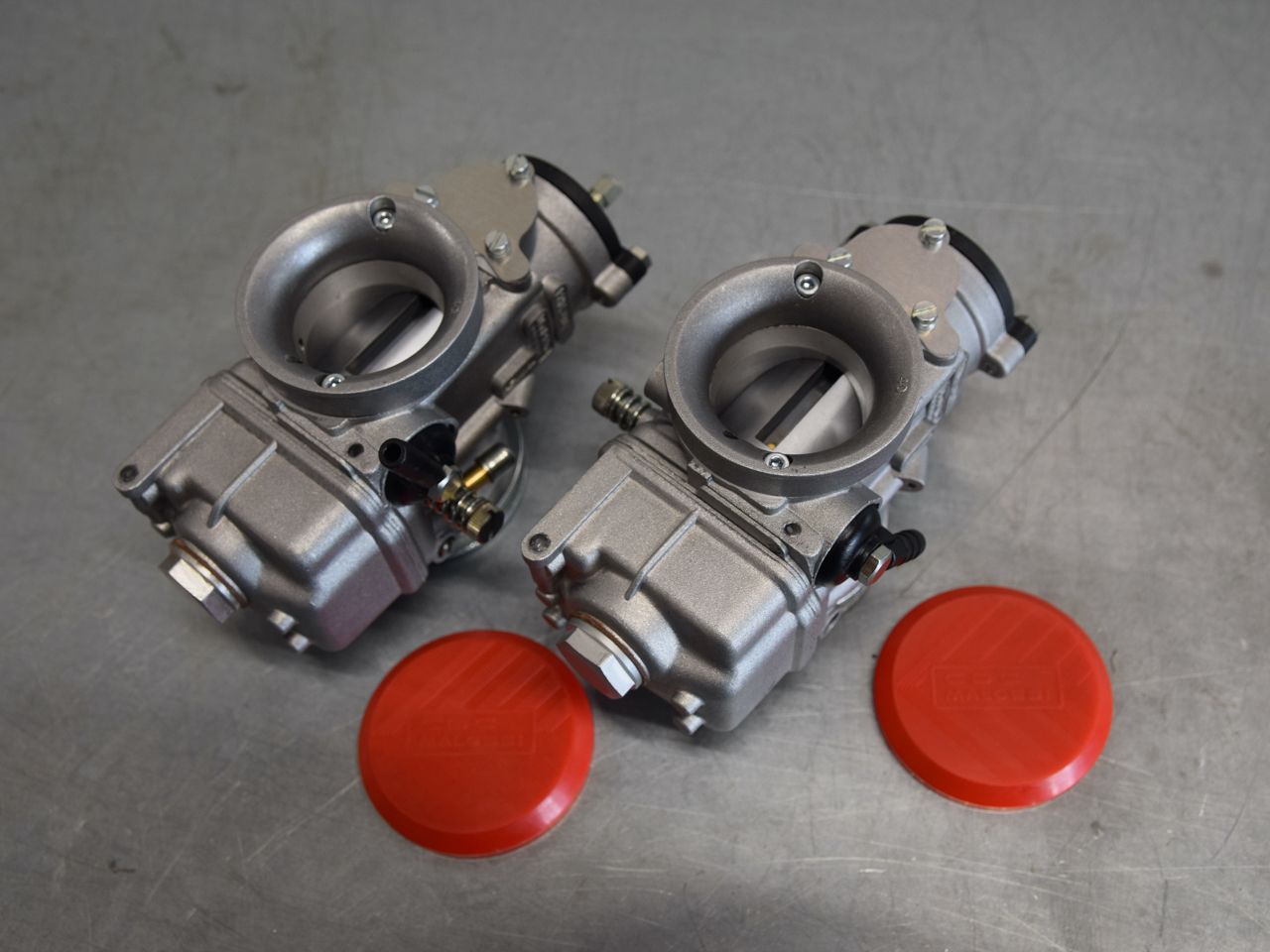
A pair of performance camshafts were sourced together with adjustable belt pulleys to get the valve timing perfect. A set of Dell’Orto PHM40 carburettors were machined to take the short bellmouth and the inlet manifolds had to be specifically made to get the carburettors tucked behind the frame tubes. With the engine finished and parts back from painting and other surface treatment, the final build took place over the course of 2022. Weighing in at just 134kg (including fluids), it became apparent that we chose the right path for this build.
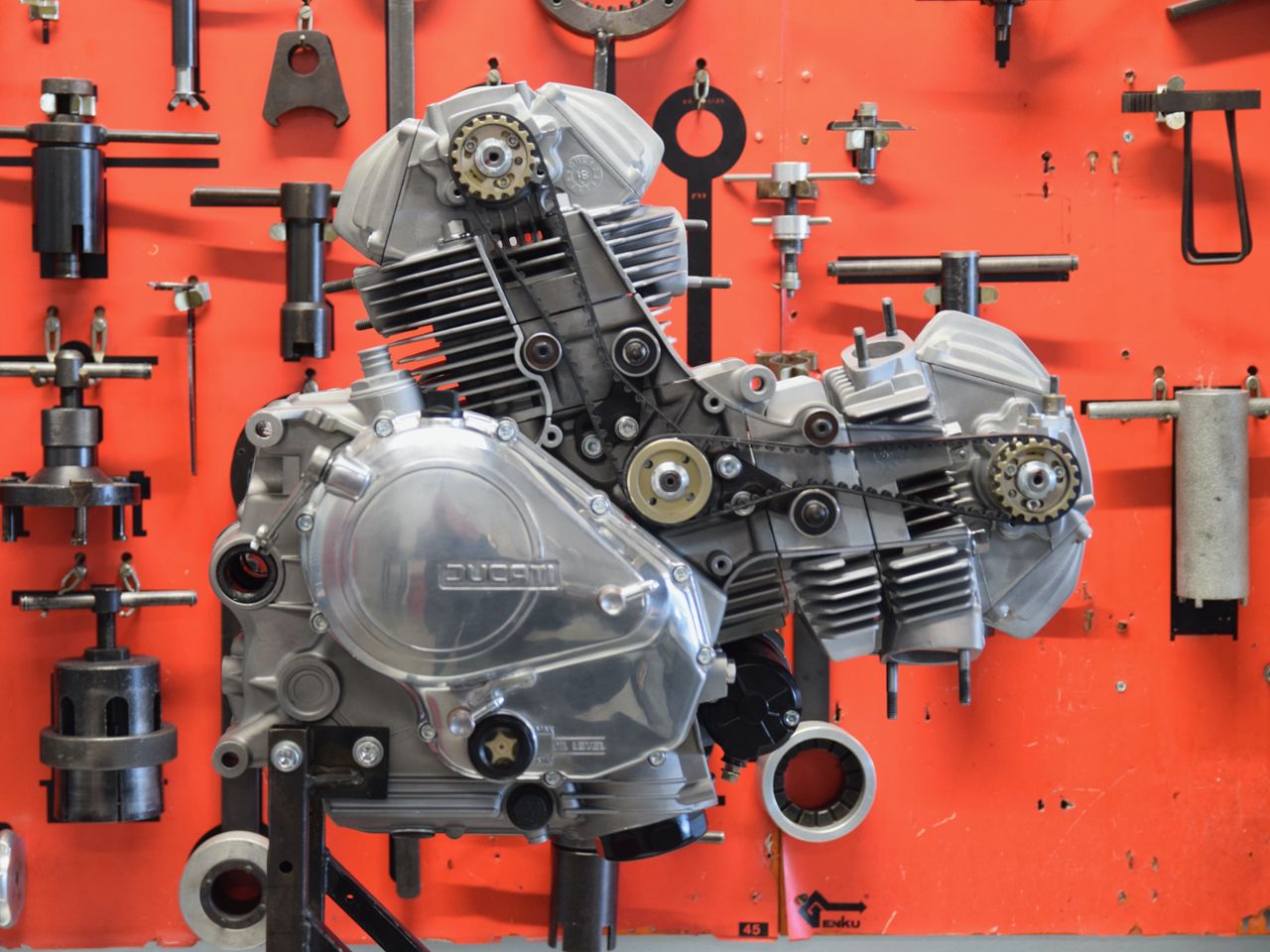
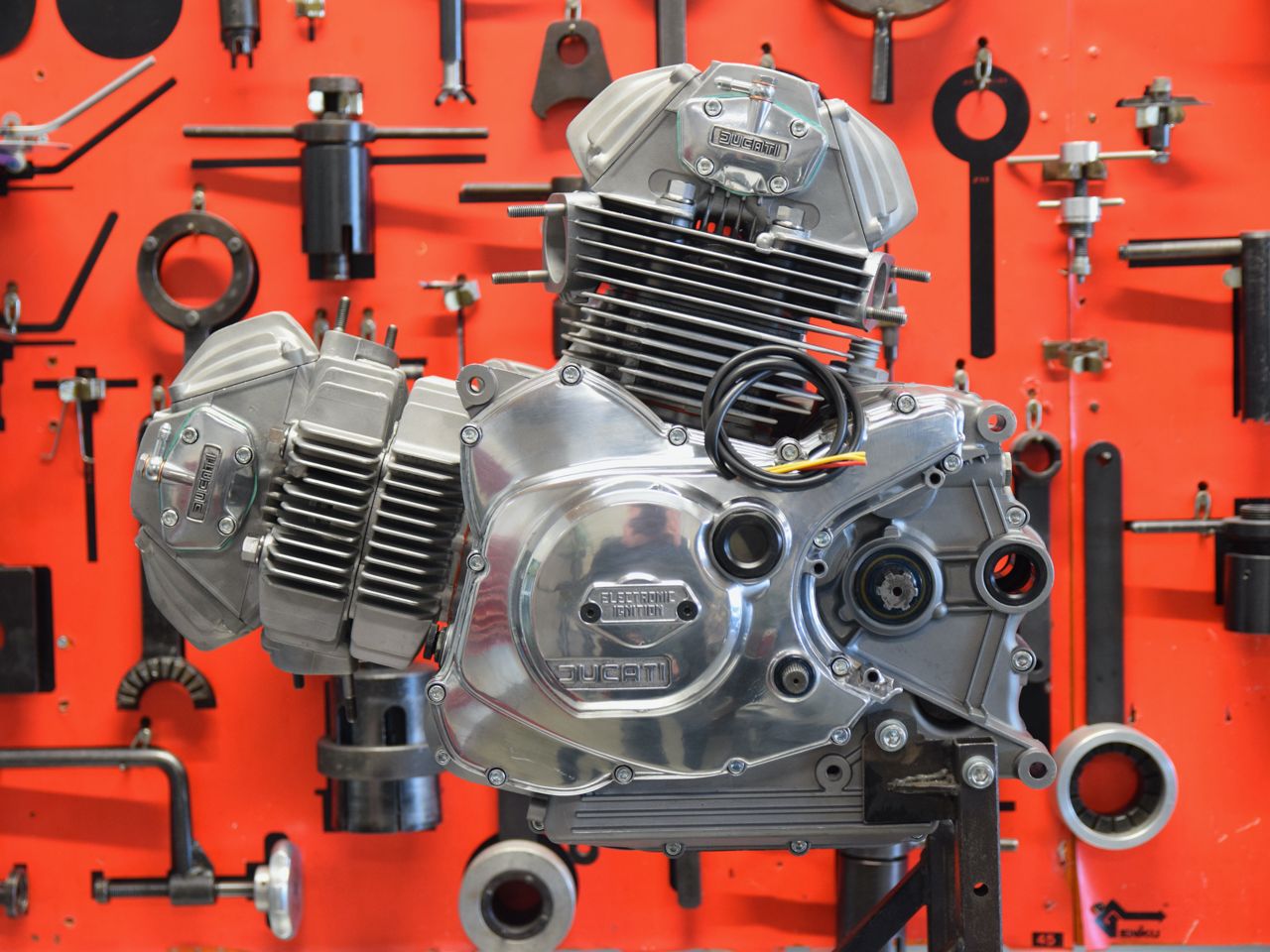
The finalized TT2 racing engine ready to be fitted to the frame.
An initial dyno test enabled us to run in the engine a little bit before we tuned the engine further. We recently did our first real-life test on the circuit of Mettet in southern Belgium where the bike performed verry well. Now that the engine is run-in and we have the first test results, we will do another full-power dyno run to adjust it perfectly. Watch our video to see the bike in action!
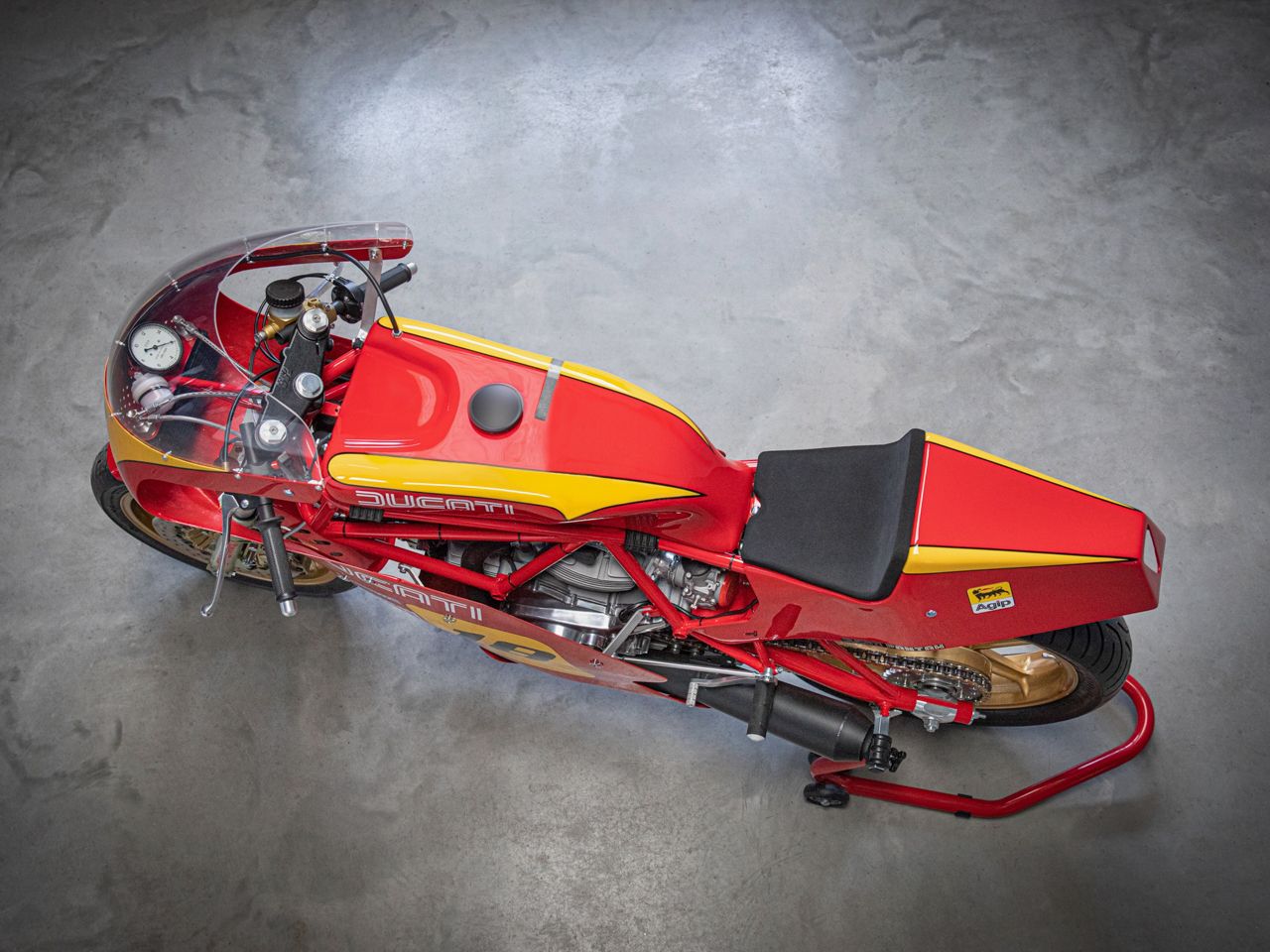
Building the ‘Del Piano TT2’ was a big project for us. A lot of time went into it, but we are very pleased with how the bike turned out. It is a true re-creation of how the TT2 was developed in 1981, not a modern interpretation based on later technology. We hope to have paid homage to one of the greatest racing bikes ever to have come out of Borgo Panigale.
The following photographs have been made by our trusted photographer Ernst Klip: