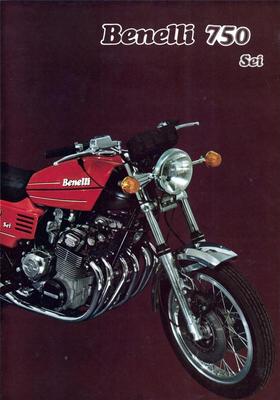
Benelli 750 Sei: Six Italian Cylinders That Shocked the World
The Benelli 750 Sei was the world’s first production six-cylinder motorcycle. But behind those six cylinders lies a much bigger story: one of racing success, Japanese competition, Alejandro de Tomaso’s enormous ambition and an Italian motorcycle manufacturer fighting to remain relevant in a rapidly changing world. We recently had the opportunity to ride a beautifully restored example and tell the complete story.
From racing success to an uncertain future
Benelli is one of Italy’s oldest motorcycle manufacturers. Founded in Pesaro in 1911 by Teresa Benelli to secure a future for her six sons, the company grew from a small repair workshop into one of the country’s most respected motorcycle manufacturers.
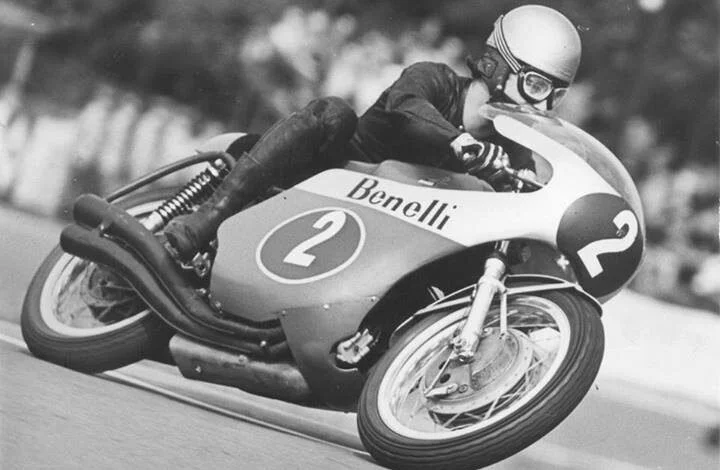
Competition quickly became part of Benelli’s DNA. Tonino Benelli established the family name on the racetrack during the 1920s and 1930s, while after the Second World War riders including Tarquinio Provini and Renzo Pasolini continued to demonstrate Benelli’s engineering capabilities at the highest levels of motorcycle racing.
During the 1960s, European consumers increasingly traded their motorcycles for affordable cars. At the same time, Honda, Yamaha, Suzuki and Kawasaki arrived with modern production methods, competitive prices and a level of reliability that put enormous pressure on traditional European manufacturers. Then, in 1969, Honda introduced the CB750 Four. The rules had changed.
Enter Alejandro de Tomaso
By the end of the 1960s, Benelli was in financial trouble. In 1971 the company was acquired by one of the most fascinating, ambitious and controversial characters in the Italian automotive industry: Alejandro de Tomaso.
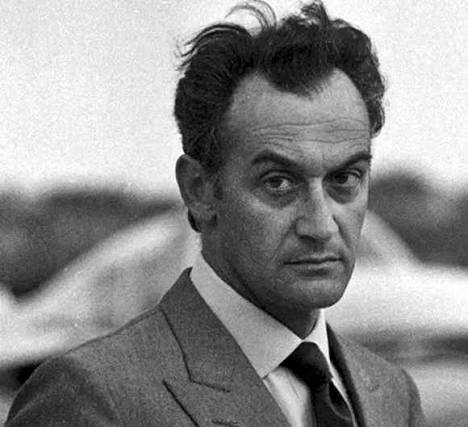
Born in Argentina, De Tomaso had arrived in Italy during the 1950s, initially pursuing a career as a racing driver. In 1959 he founded De Tomaso Automobili and went on to create cars such as the Mangusta and Pantera. His ambitions, however, extended far beyond sports cars.
Over the following years, De Tomaso assembled an industrial empire that would include Benelli, Moto Guzzi and eventually Maserati.
He was a divisive figure. Admirers saw a visionary willing to invest in struggling Italian manufacturers when few others would. Critics pointed to his management methods and questioned whether his ambitions frequently exceeded the resources available to realise them.
Whatever your opinion of De Tomaso, one thing is difficult to dispute: he wanted his companies to matter. And Benelli was about to make the motorcycle world pay attention.
First copy Honda. Then beat them at their own game.
De Tomaso understood the threat from Japan perfectly well. His initial response, however, wasn’t exactly a glorious demonstration of Italian originality. Benelli introduced the 500 Quattro, whose engine architecture bore more than a passing resemblance to Honda’s successful CB500 Four.
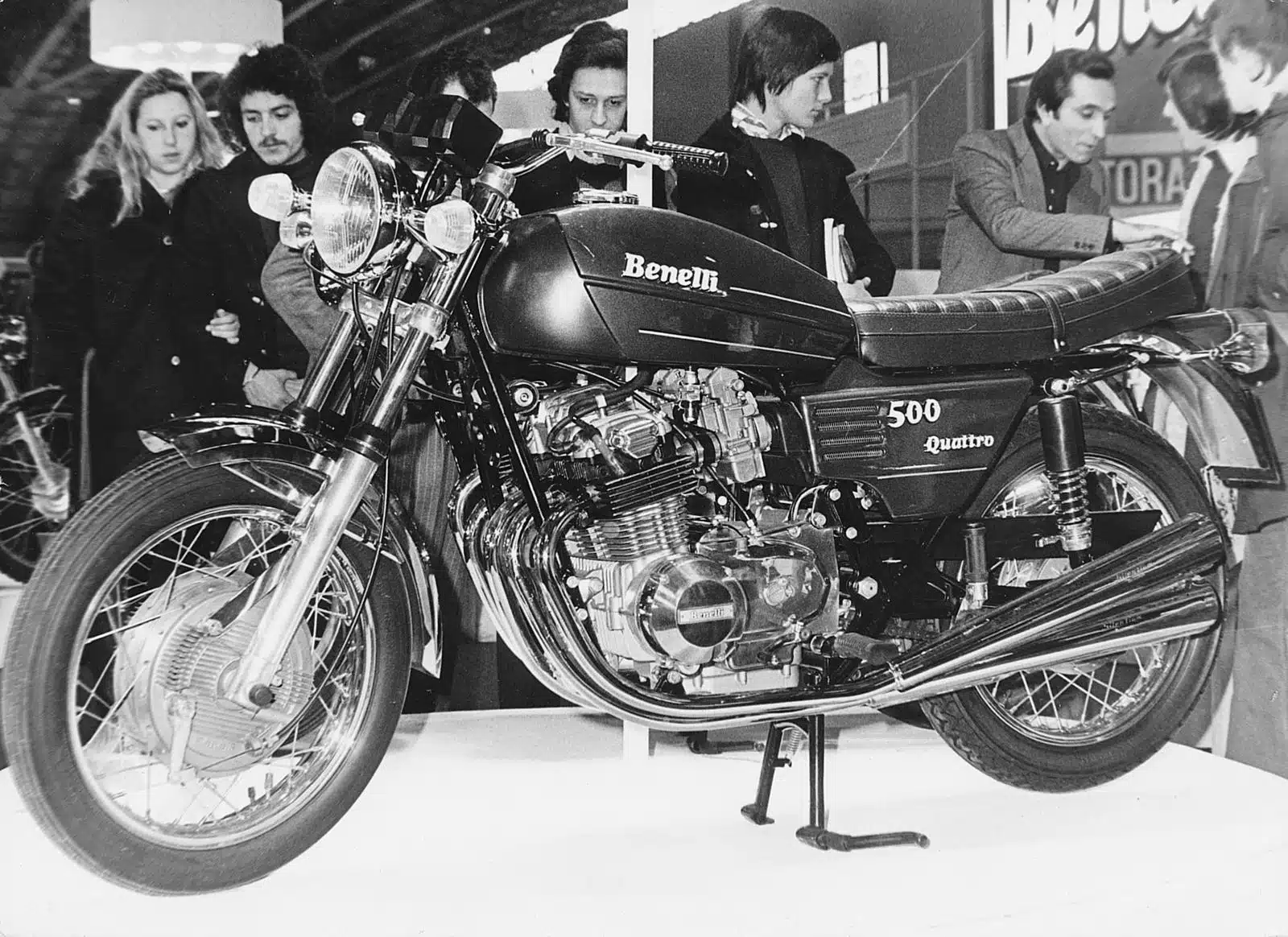
But it was pragmatic. Developing an entirely new engine required time and money that Benelli didn’t have. The Quattro gave the company a modern four-cylinder motorcycle relatively quickly. Then somebody had a much better idea. Why stop at four?
Benelli took the basic architecture and added two more cylinders. Capacity grew to 747cc and the result was an air-cooled inline six with a single overhead camshaft, fed by three Dell’Orto carburettors. A controversial starting point had suddenly become something genuinely extraordinary. The Benelli 750 Sei was born.
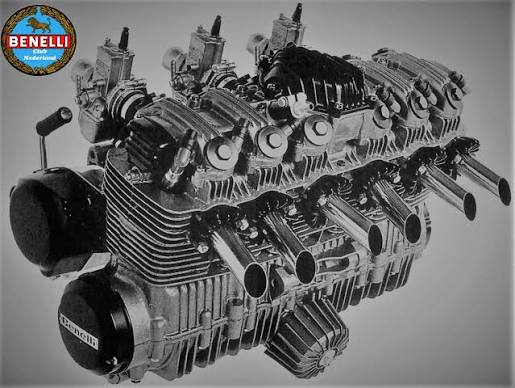
Six cylinders, Six exhausts: One statement
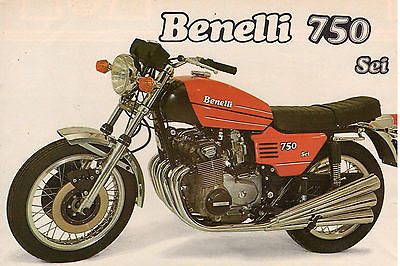
The prototype was presented in 1972, with series production following in 1974. At a time when a four-cylinder motorcycle was still something to talk about, Benelli arrived with six. And it made absolutely no attempt to hide them. The wide engine dominates the motorcycle, while six individual exhaust headers lead into six silencers. Even standing still, the Sei is mechanical theatre.
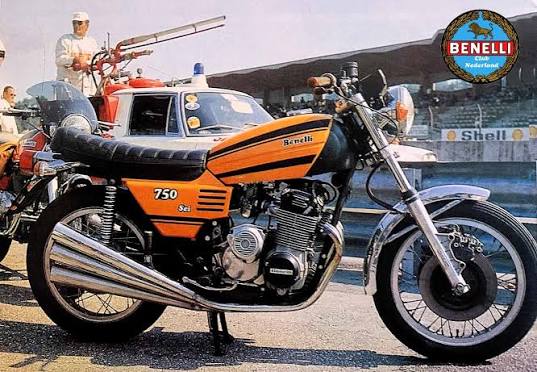
But the purpose of those extra cylinders wasn’t simply spectacle. The Sei’s defining characteristic is refinement. Six relatively small cylinders allowed Benelli to produce an exceptionally smooth engine with progressive power delivery and very little of the vibration associated with many large motorcycles of the period. It wasn’t necessarily the fastest motorcycle you could buy. Nor was it particularly light or inexpensive.
That wasn’t really the point. The Sei was a gentleman’s motorcycle: sophisticated, comfortable and effortlessly different. De Tomaso had wanted Benelli to make a statement. Six cylinders certainly did the job.
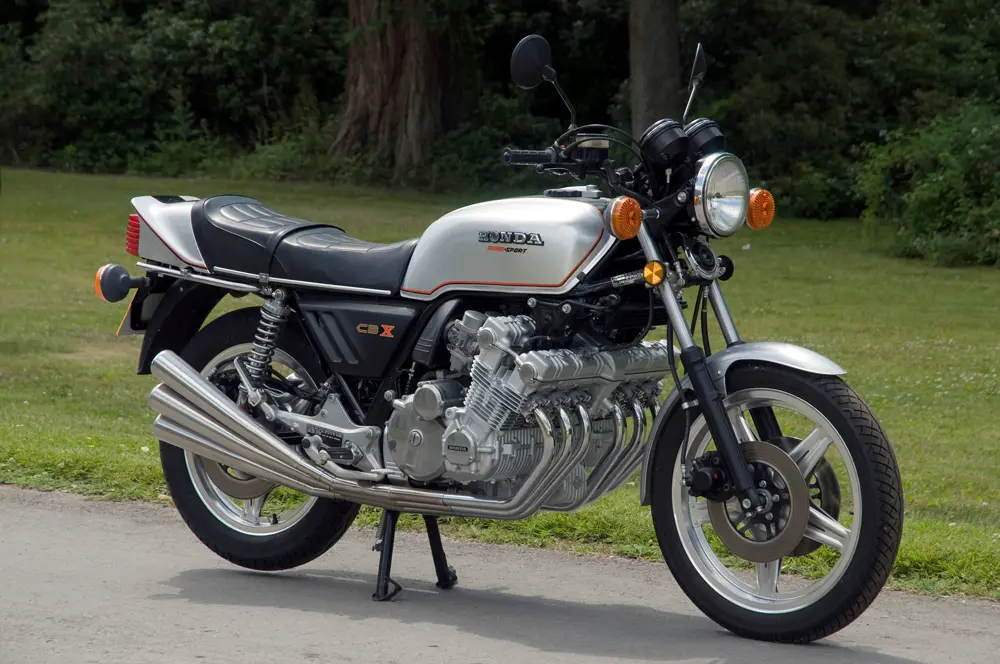
Before the Honda CBX 1000
Today, mention a six-cylinder classic motorcycle and many enthusiasts will immediately think of the Honda CBX. But Benelli got there first.
Honda introduced the CBX in 1978 with a 1047cc DOHC, 24-valve engine producing around 105 horsepower. Technically it took the concept considerably further than Benelli, while Kawasaki soon approached the same idea from yet another direction with the enormous, liquid-cooled Z1300.
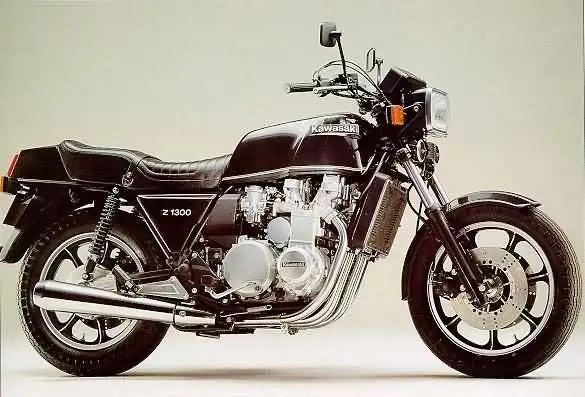
But the Sei had opened the door. And compared with its Italian contemporaries, its character was even more distinctive. Ducati pursued sporting performance with motorcycles such as the 900 Super Sport. Laverda offered muscular twins and triples. Moto Guzzi developed its charismatic transverse V-twins. Benelli chose six.
There was even another wonderfully unconventional De Tomaso idea at the opposite end of the range: the tiny 250 Quattro, which brought four-cylinder complexity to a capacity where almost nobody would consider it necessary.
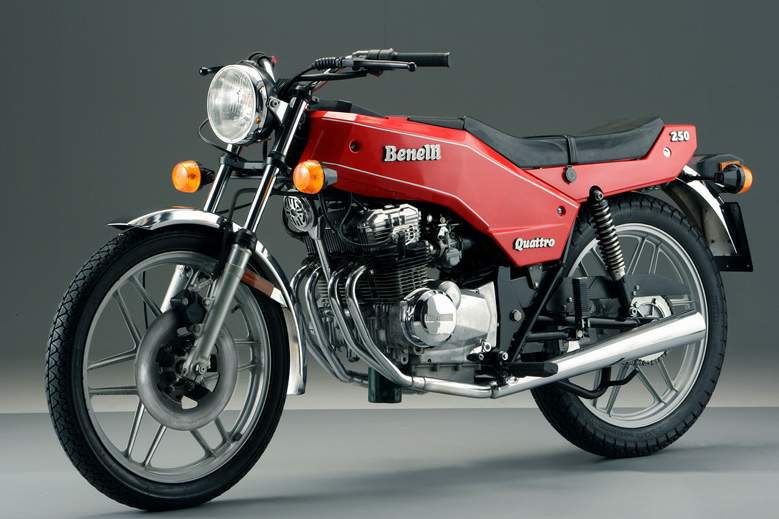
Commercial logic and Alejandro de Tomaso didn’t always travel on the same motorcycle. But boring he certainly wasn’t.
What is a Benelli 750 Sei like to ride?
More than fifty years later, perhaps the greatest surprise isn’t how exotic the Sei feels. It’s how easy it is to ride. The six-cylinder engine is extraordinarily smooth. Power arrives progressively rather than aggressively and the comfortable riding position, predictable chassis and good brakes quickly make the size and complexity of the motorcycle disappear beneath you.
Compared with its Italian contemporaries, the differences are fascinating. A Ducati 750 or 900 Super Sport feels focused and demanding. A big Laverda is muscular and physical. A Moto Guzzi constantly reminds you of its transverse V-twin through its pulses and drivetrain reactions.
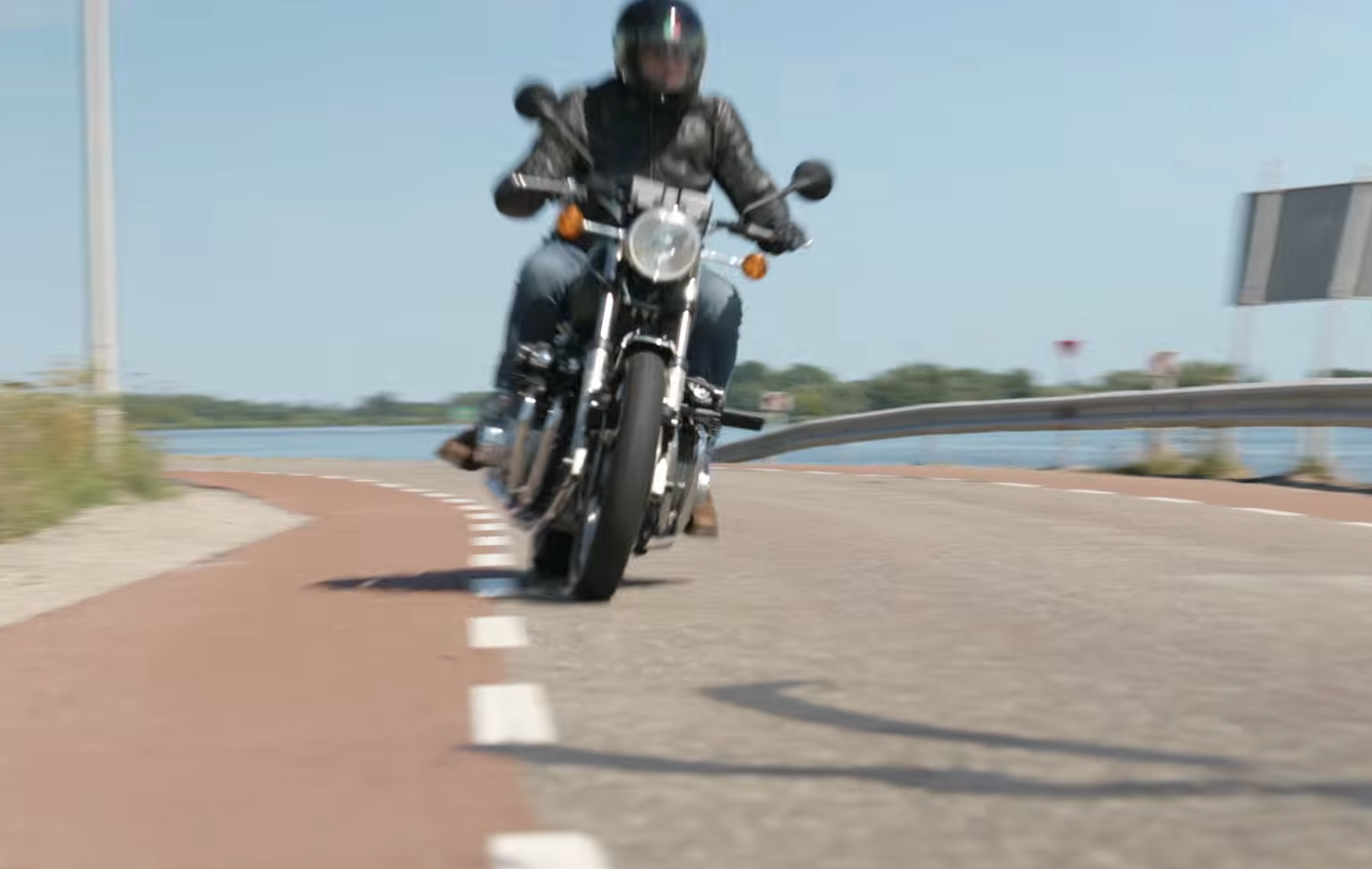
The Benelli simply gets on with the job. It isn’t a superbike in the Ducati sense. Nor is it a cruiser. Perhaps the best description is a 1970s gentleman’s grand tourer. You can ride it quickly, but it doesn’t constantly encourage you to do so. Instead, you settle into the comfortable riding position, enjoy that remarkable engine and cover ground with an ease that must have seemed almost otherworldly in the mid-1970s.
For something so mechanically outrageous, the Sei is remarkably civilised.
How Benelli lost its way
The story didn’t end with the 750. In 1978 Benelli introduced the 900 Sei, enlarging the six-cylinder engine to 906cc and further developing the concept. But by then the motorcycle industry had moved on at a frightening pace.
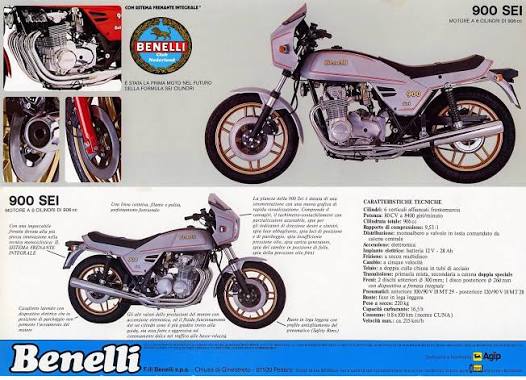
Japanese manufacturers could combine performance, refinement and reliability with production volumes that companies such as Benelli simply couldn’t match. De Tomaso’s wider industrial empire was also becoming increasingly difficult to sustain. The Sei had succeeded in making people look at Benelli again. Turning that attention into a sustainable motorcycle business proved much harder.
Benelli motorcycle production eventually ceased before the marque was revived again under Andrea Merloni in the 1990s. The ambitious Tornado Tre 900 attempted another comeback, but once again the economics proved difficult.
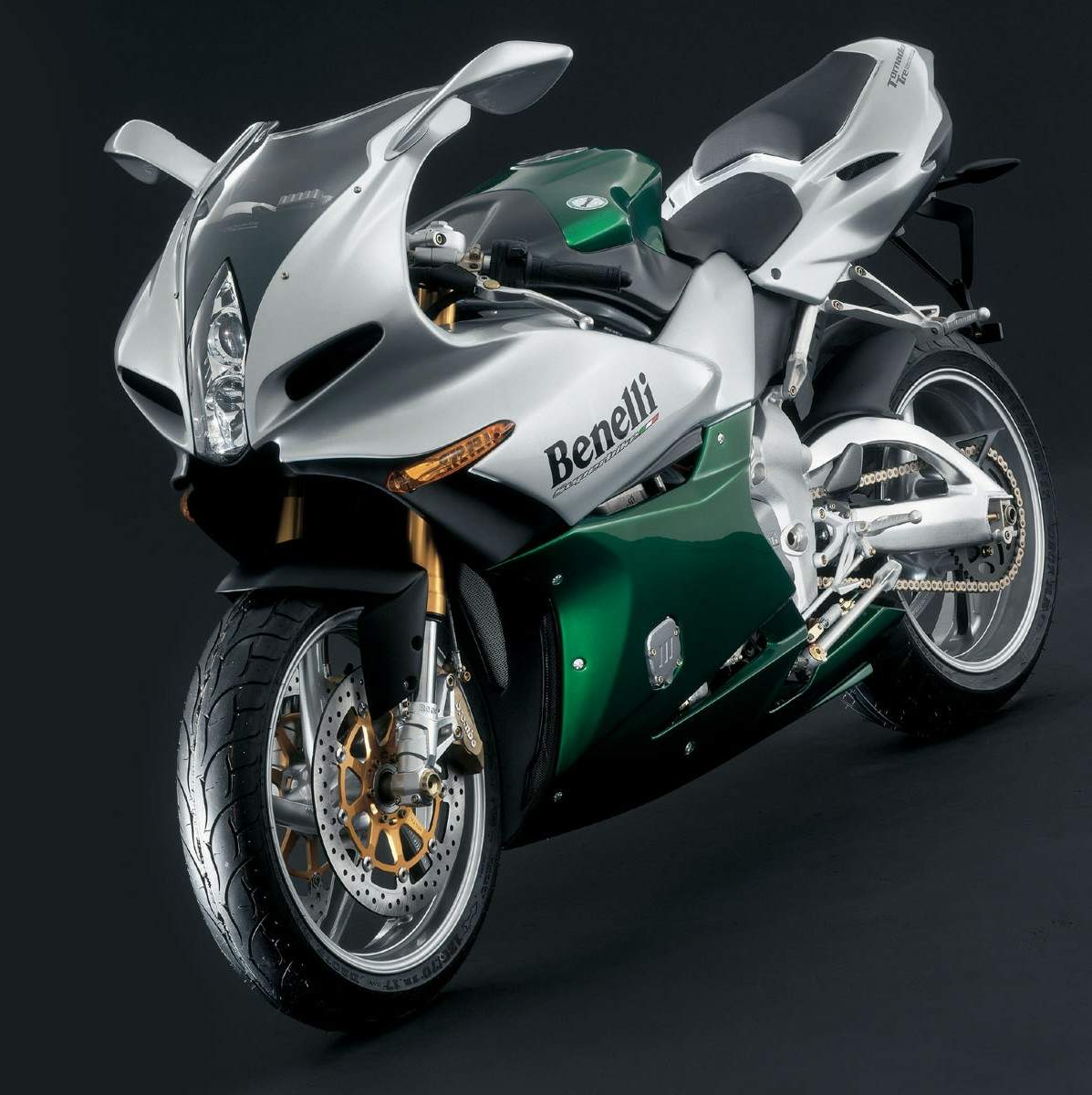
Eventually Benelli was acquired by China’s Qianjiang Motor Group, itself now controlled by Geely. The Benelli name survives. Motorcycles carrying the badge are once again sold around the world.
But the idea has changed.And perhaps that is what makes standing next to a 750 Sei today rather poignant.