
DUCATI 250 MACH 1
Ducati has used a proven strategy for many of the most iconic motorcycles coming from its factory in Bologna. That is to commemorate a victory on the racetrack with a special racing model for the road. The 900 ‘Mike Hailwood’ Replica was created in reference to the victory at the Isle of Man TT in 1978, the 750 Super Sport was built in the light of the 1972 victory at Imola and, yes, the birth of the 250 Mach 1 had a direct link to the 1962 victory at the 24 Horas de Montjuich by Ricard Fargas and Enzo Rippa.
So for more history behind the 250 Mach 1, we have to look at an important Spanish connection for Ducati. In 1958, a new company was created as a co-operation between the industrial companies Maquitrans and Cliper (who was already the Ducati importer in Spain). “Mototrans”, as the new company was called, had a factory set-up in Barcelona and Ducati Meccanica provided them with parts and, most importantly, moulds and drawings to build Ducati-like motorcycles for the Spanish market, thereby licensing their technology.
The Ducati-Mototrans co-operation also had its origin on the racetrack. Already in 1957 Ducati had entered the 24 Horas de Montjuich with a 125 Gran Sport (better known as the ‘Marianna’) and dominated the race by taking the first place with riders Gandossi and Spaggiari. A year later, Ducati won again with Mandolini and Maranghi in the saddle. Again in 1960 Ducati was able to take first place, this time with a 175 Bialbero with riders Villa and Balboni. The co-operation between Ducati and Mototrans turned out to be very successful both on the racetrack and with the sales of road bikes.
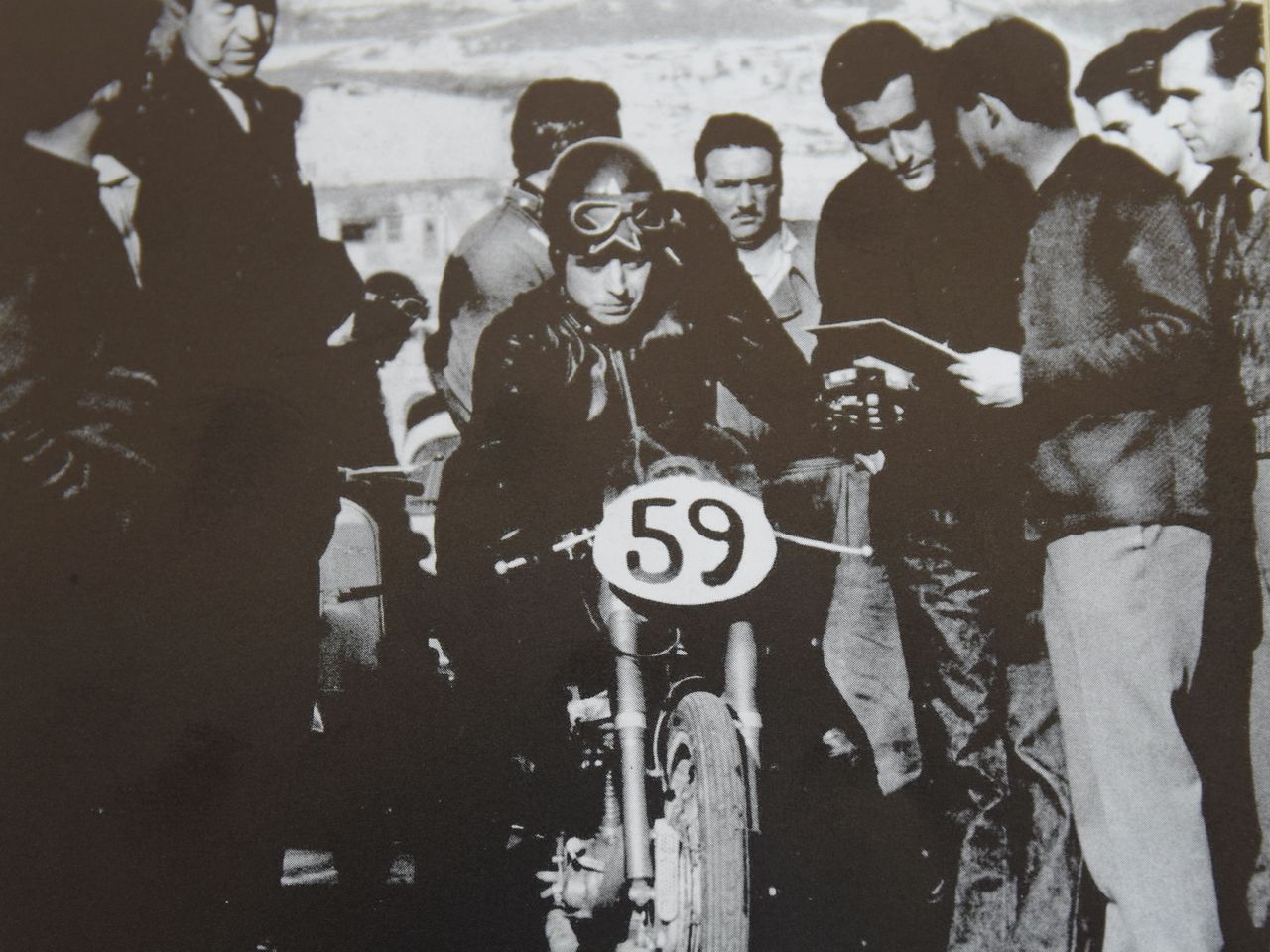
In 1962, Ducati entered two 250cc racing bikes, this time with much more involvement from Mototrans. One team was made up of riders Farné and Mancini, and the other of Fargas and Rippa. The race started on July 7th at 6 o’clock in the afternoon. Both Ducatis did very well from the start, but by 12 hours into the race, the Ducati of Farné and Mancini started to get into problems. Two hours later it had to retire with a pierced piston. The remaining Ducati 250 was in second place behind the Sirera brothers on their Montesa. After 18 hours of racing, Ricard Fargas and Enzo Rippa took the lead and rode the Ducati to victory.
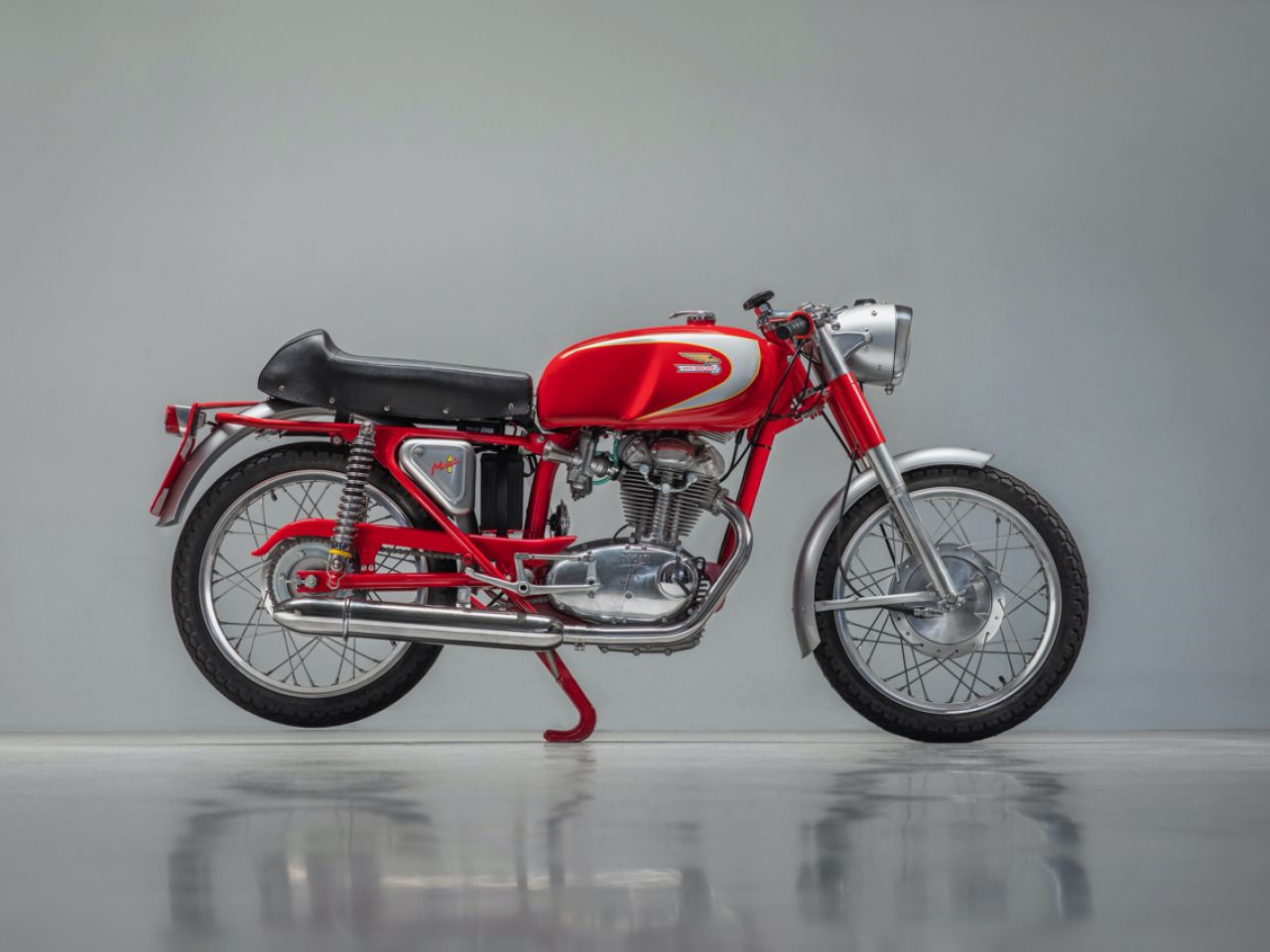
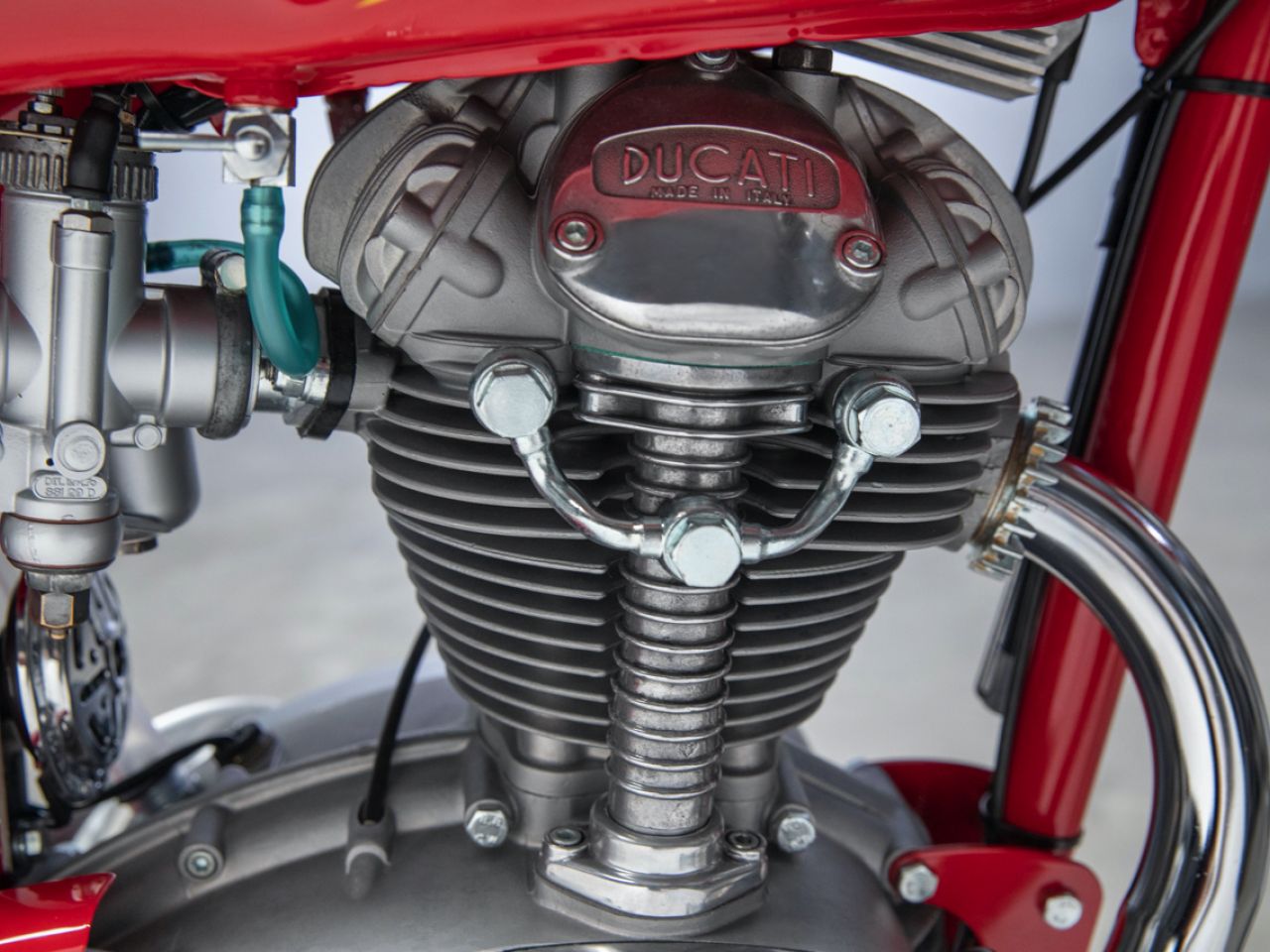
The success of the 250 at Montjuich prompted Ducati to create a new racing model for the road in 1964. Based on the 250 GT (which already had the upgraded 5-speed gearbox compared to the earlier 4-speed models) this became the 250 Mach 1. The engine was essentially an upgraded GT version with a new number sequence starting at DM250M1*00001. Upgrades included larger valves (40mm inlet and 36mm exhaust) and a hotter camshaft and a higher compression piston. A 29mm Dell’Orto SS1 carburettor was also fitted.
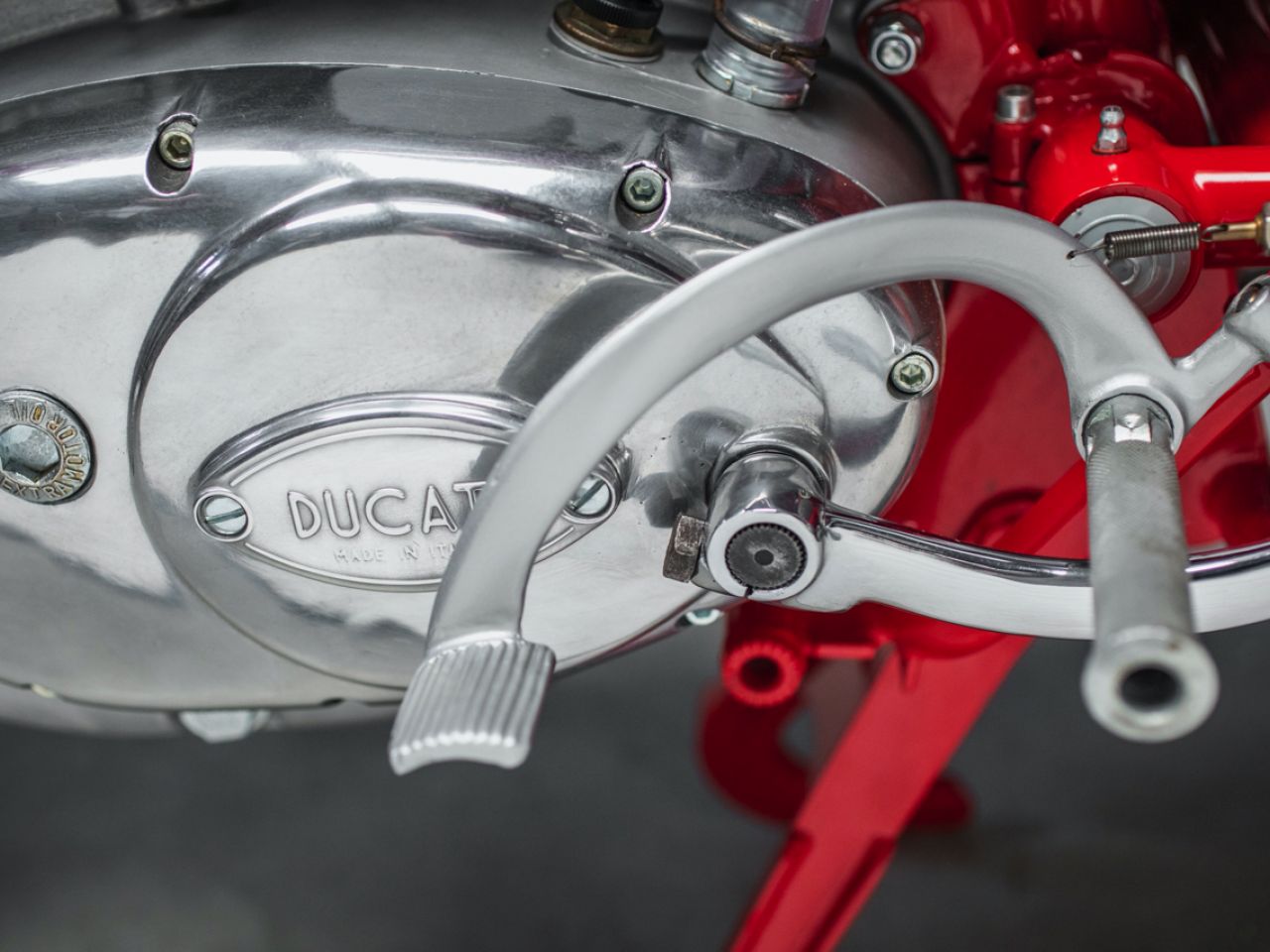
The frame was taken from the 250 GT as well, with some minor updates, but with a distinct number sequence to match the engine range. The 250 Mach 1 was further fitted with a distinct rear-set of footrests, matching levers and a kickstart that was curved underneath the left footrest. The fuel tank was taken from the 250 GT but with a groove underneath to make room for the SS1 carburettor. The red and silver paintwork was a direct link to the 1962 24 Hour bike ridden by Fargas and Rippa.
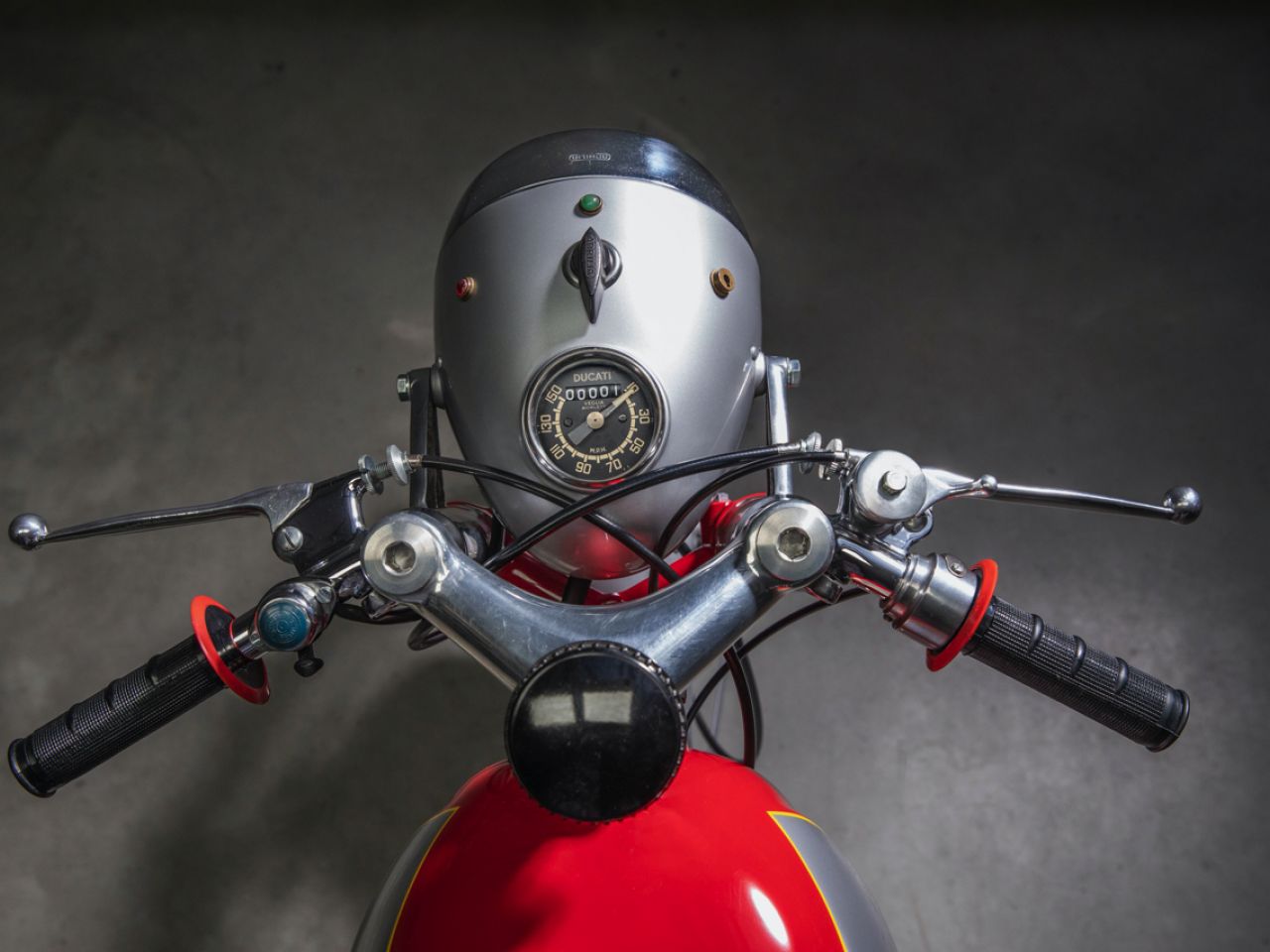
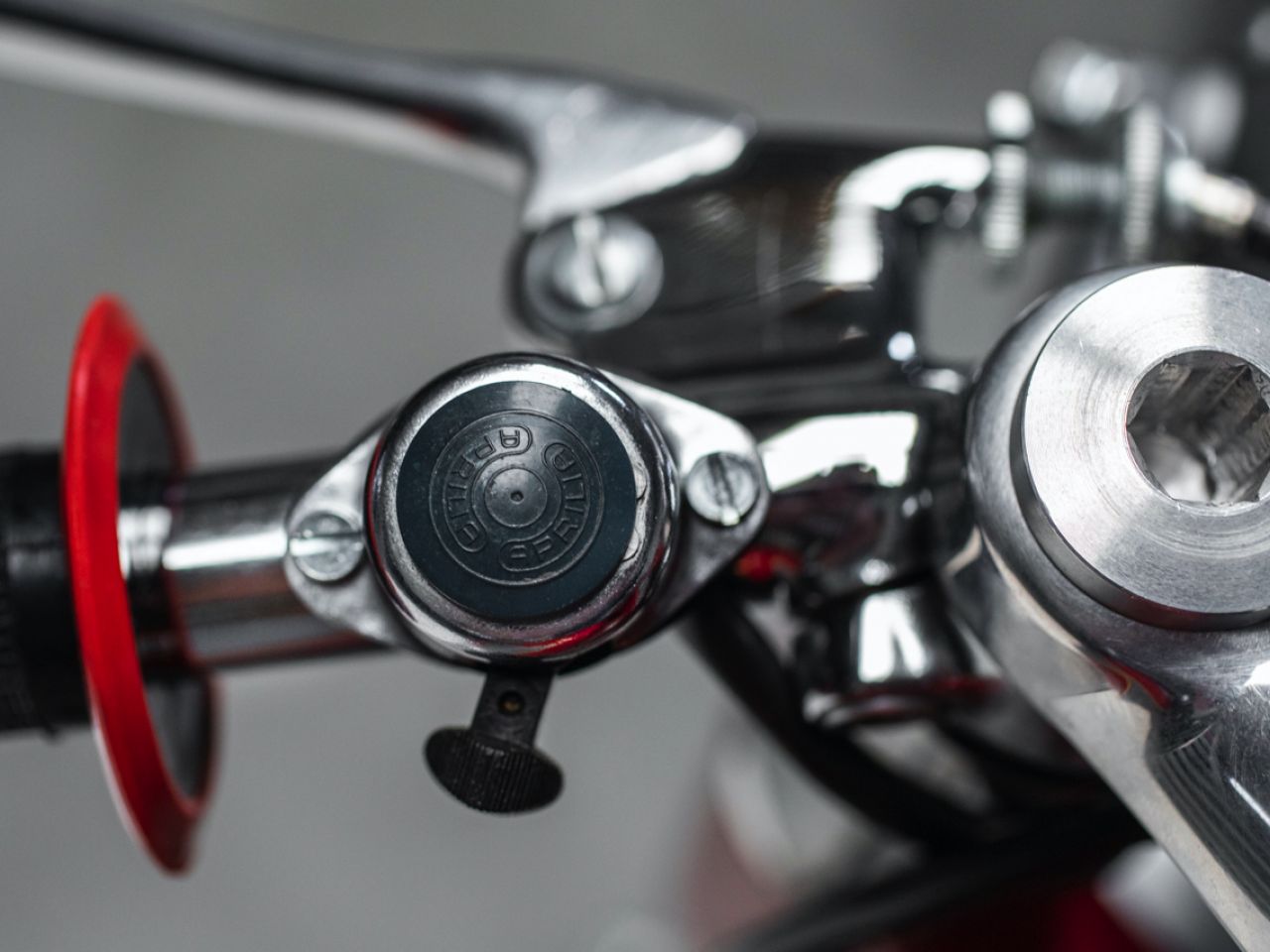
The 250 Mach 1 was produced in very small numbers with only around 800 ever made over a 3-year period (1964-66). It is considered today as one of the finest motorcycles ever to come out of the Borgo Panigale factory. Very attractive in appearance, the Mach 1 was also one of the fastest 250’s one could buy in the 1960’s. With many destroyed on the racetrack, an original 250 Mach 1 is now a very rare bike.
When we were asked to restore an original 1966 Ducati 250 Mach 1 to its former glory, we were of course very enthusiastic about such a project. The bike came in from the owner in the UK, and it immediately became clear to us that it had been raced extensively. To make matters worse, it had been neglected and forgotten for many years after its racing days. We had some serious work to do!
As we always do with our restoration projects, we start with the frame and bodywork. We were able to fit all of the frame lugs and brackets in the right places, making and welding some new parts as necessary. The fuel tank and mudguards had some big rusted-through holes that were welded and shaped before the whole thing could be painted.
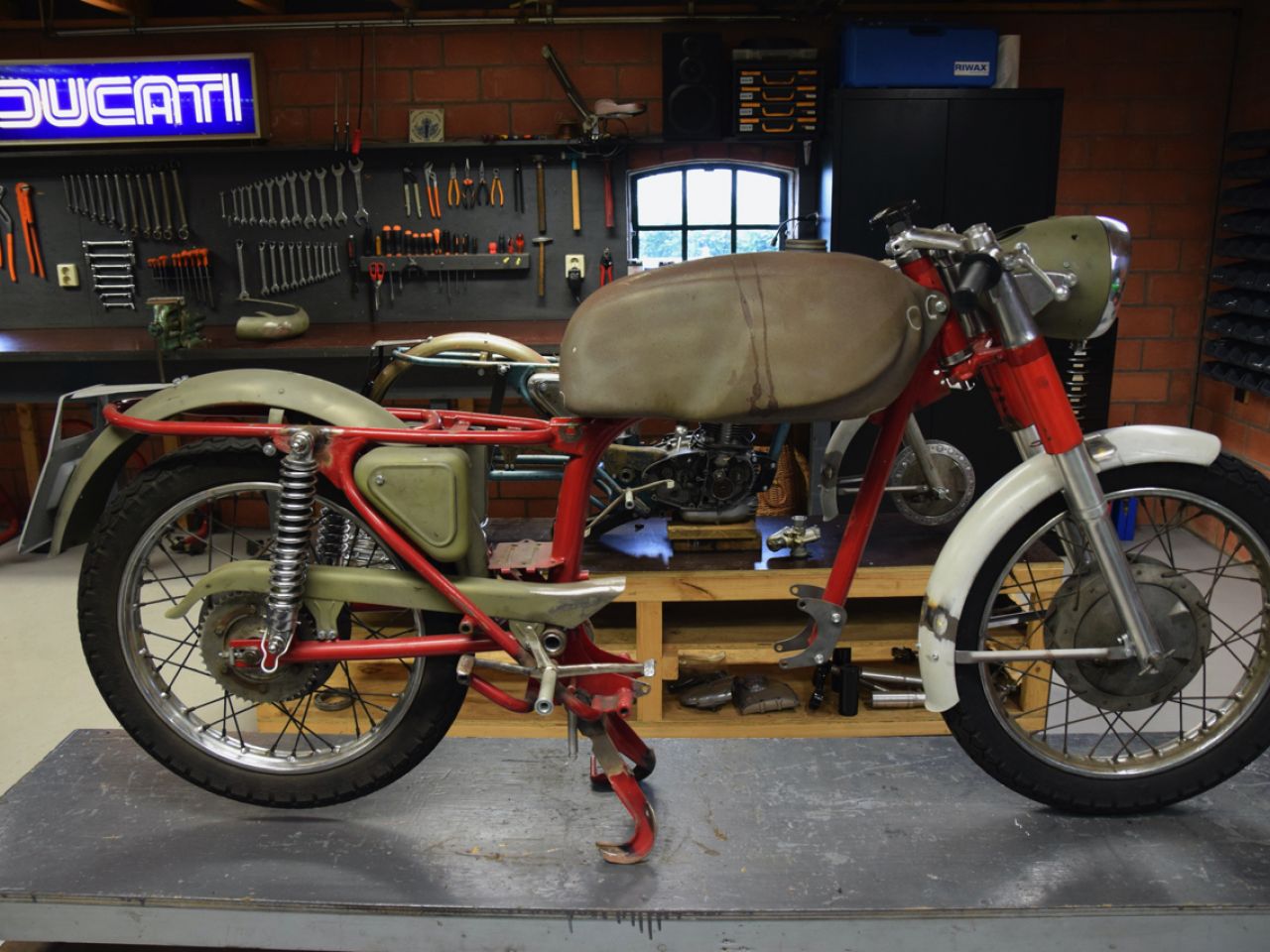
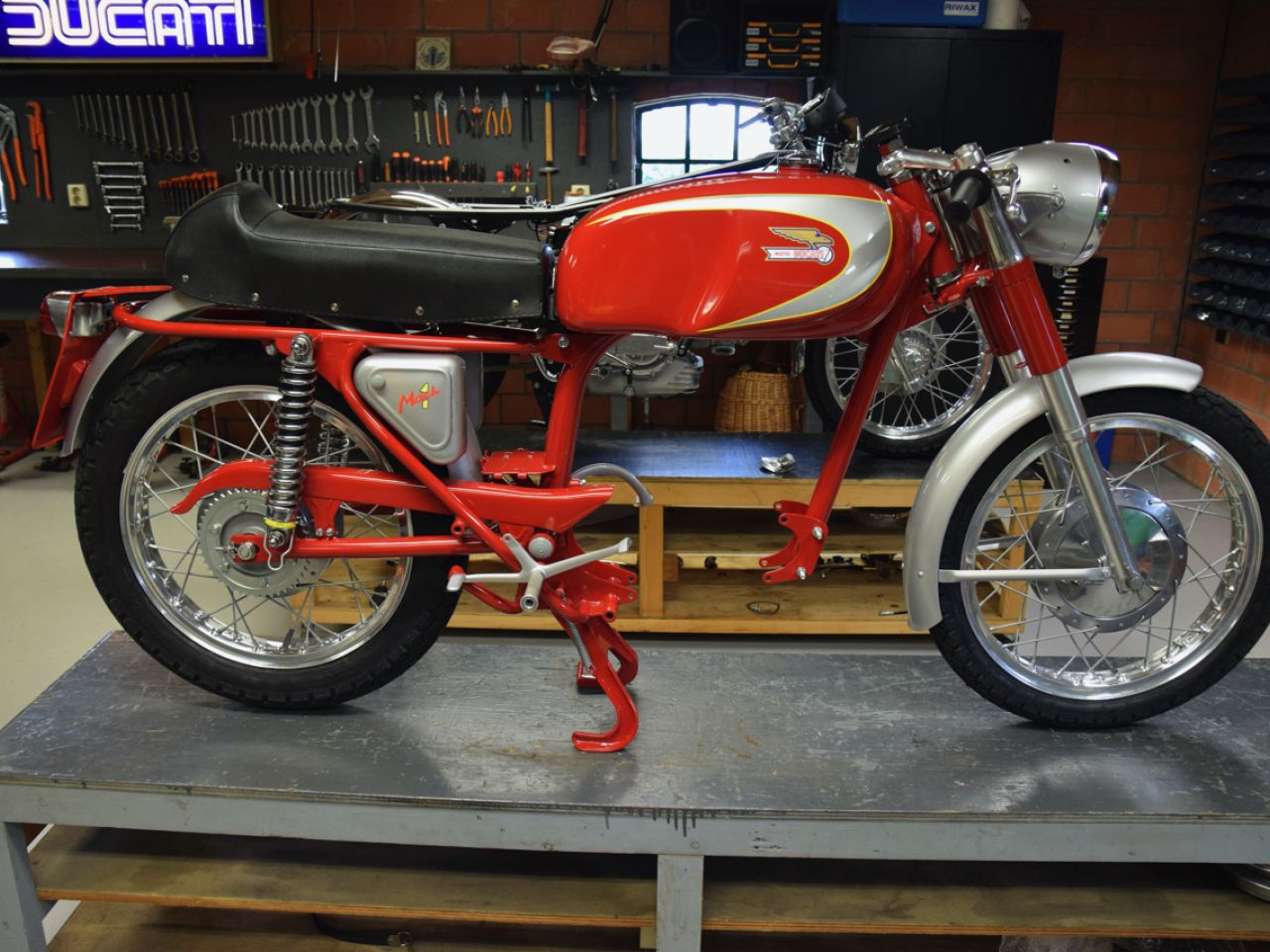
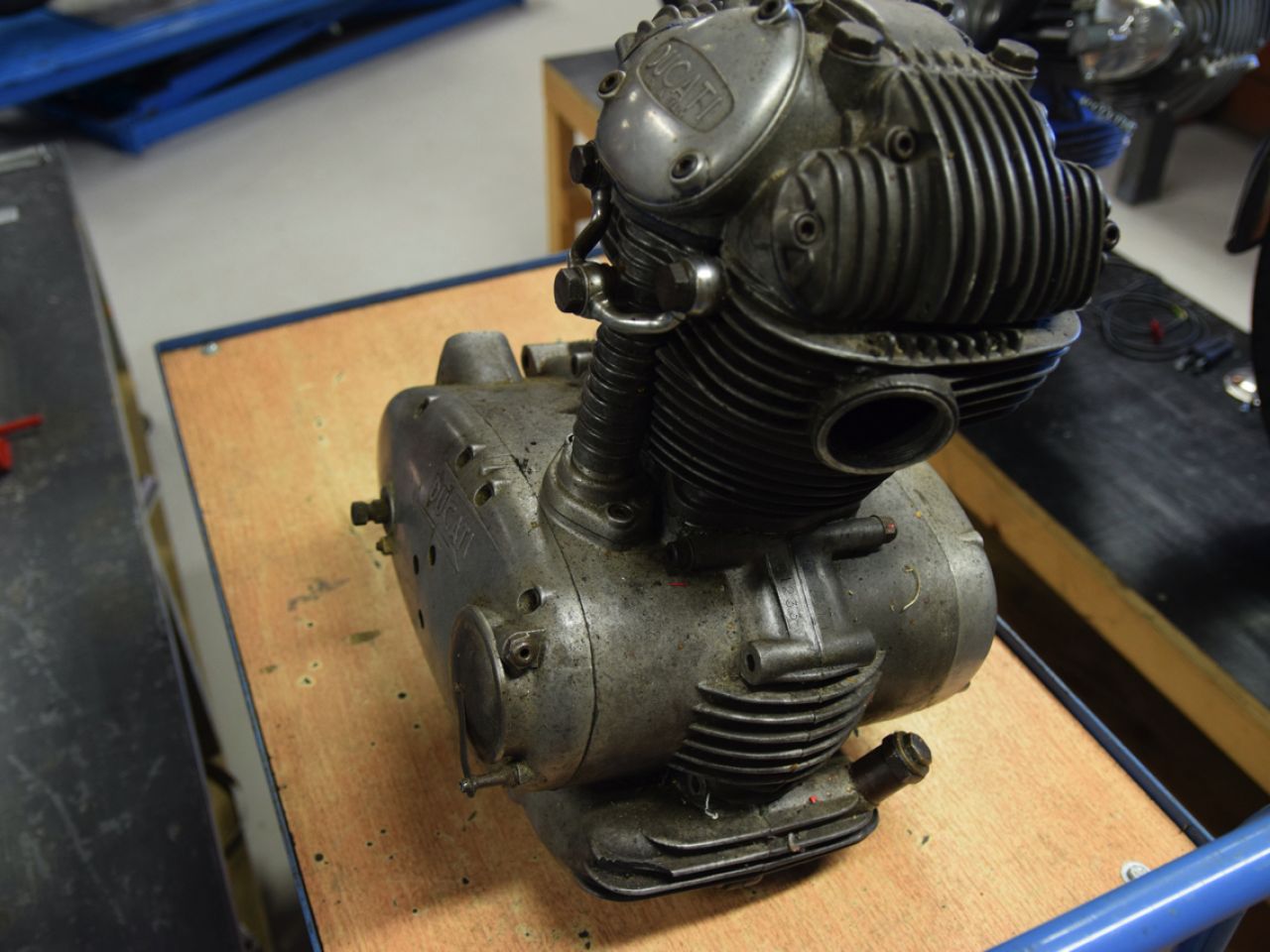
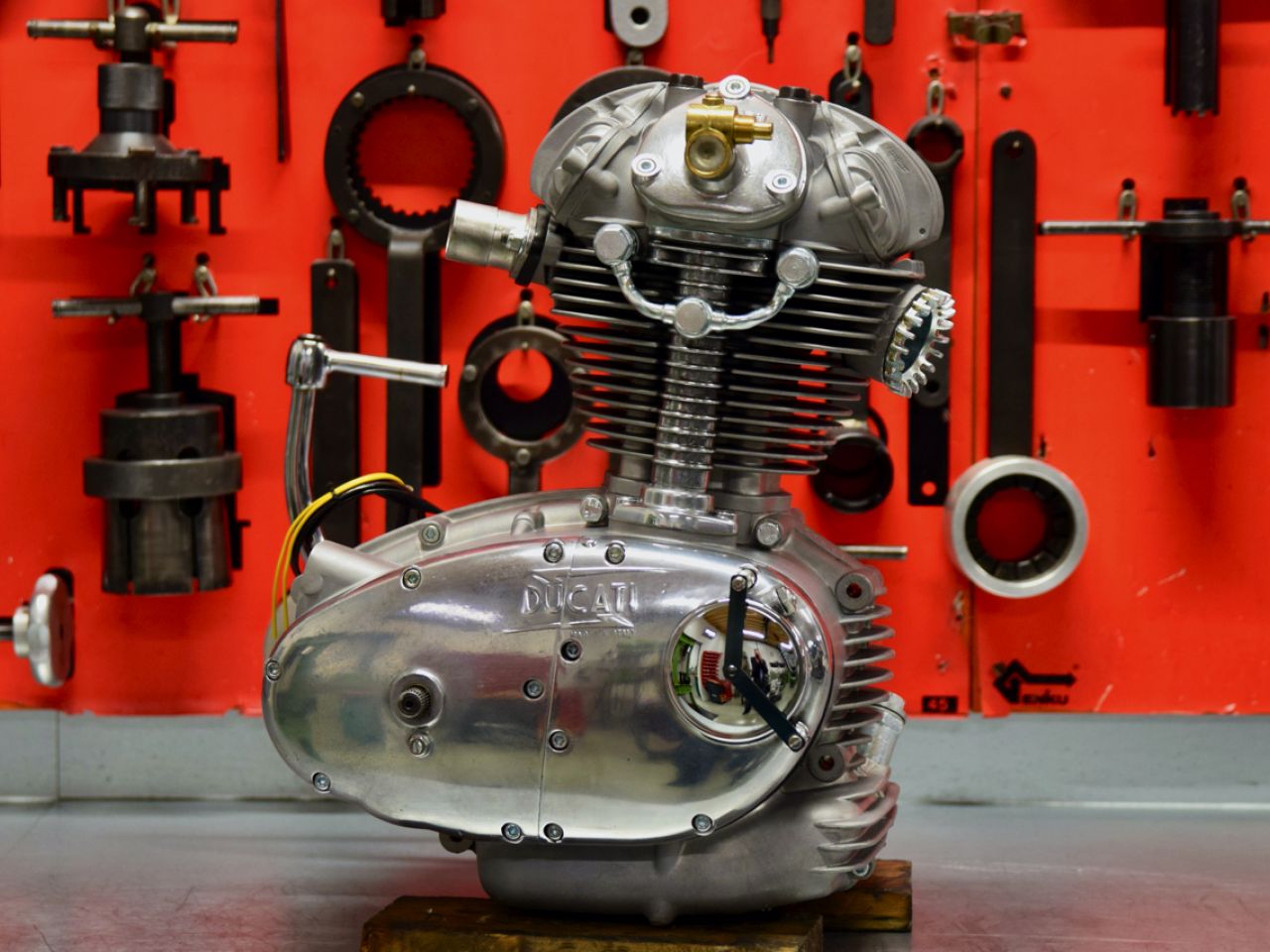
The engine also needed a lot of preparation. Dents, scratches and broken-off cooling fins were all repaired before the cases were aqua blasted and the outer covers newly polished. With new valve seats and guides fitted, a new Arrow con-rod set fitted to the crankshaft and a new piston bored and honed, the engine was re-assembled. We fitted extra upgrades in the form of coil valve springs, lighter valve rockers and a new 12V alternator.
This particular bike, coming from the UK where it was originally sold, had a nice upgrade kit for the front brake fitted. This kit was sold back in the 1960’s by the UK Ducati importer (Vic Camp) and consists of an outer brake plate with direct levers on the 2 brake cams. Although the 250 Mach 1 was originally delivered on chrome plated steel rims, this bike had a set of original 1960’s Borrani rims fitted that we restored along with the front brake upgrade.
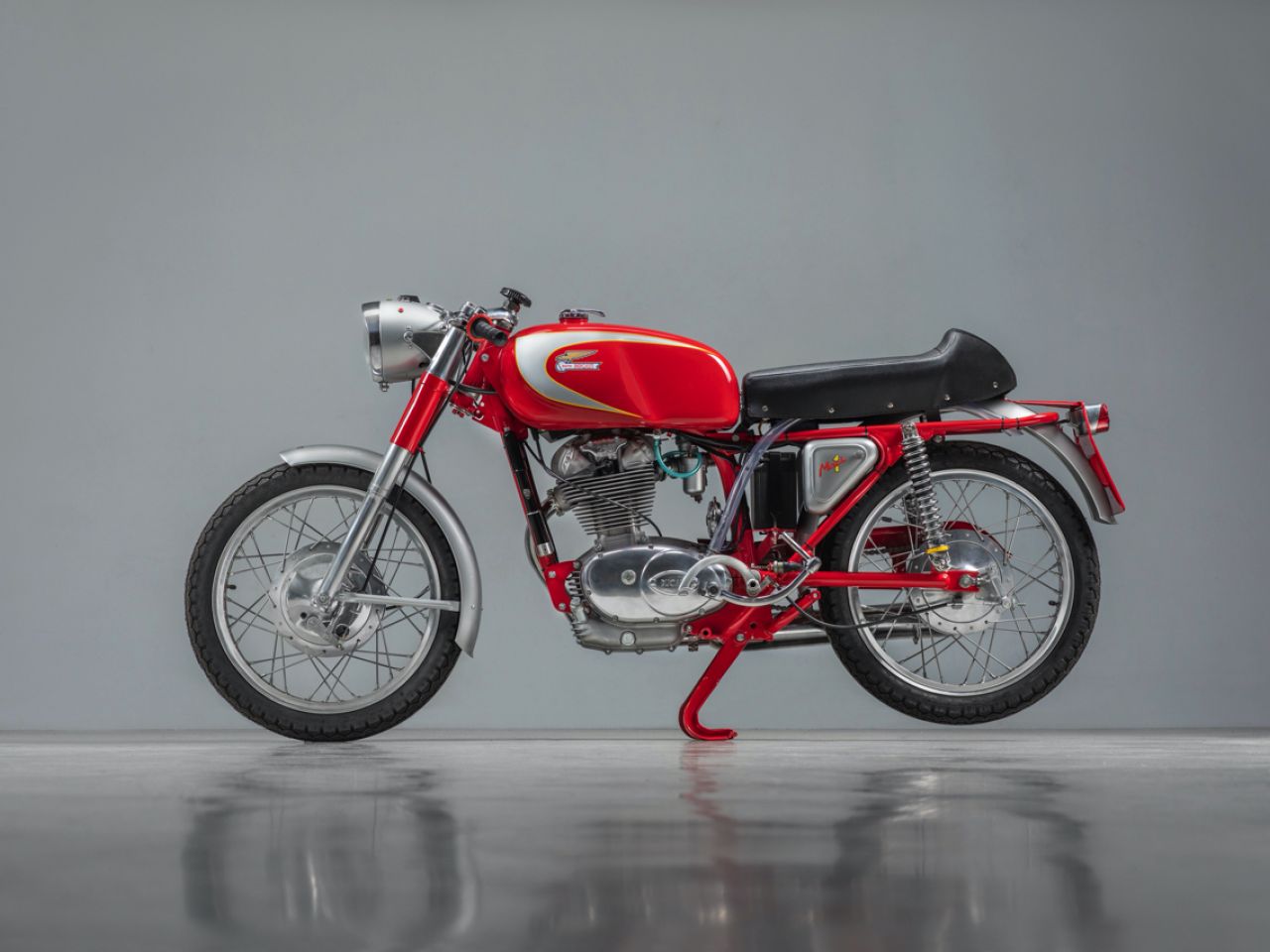
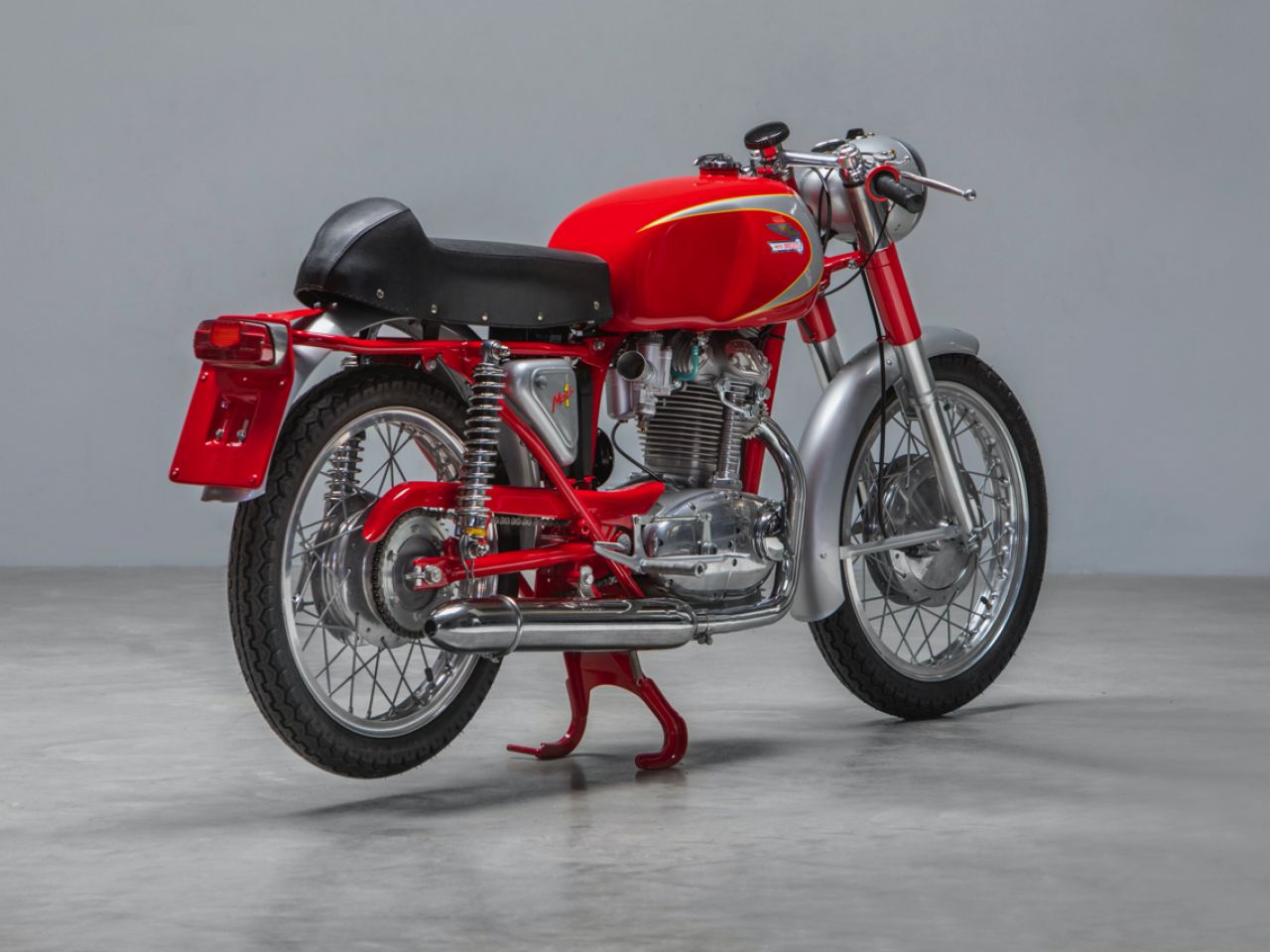
We also incorporated some further electronic upgrades to this bike: a 12V electronic ignition system and a modern regulator were fitted under the fuel tank. The original 6V regulator was left in place – but has no actual function.
With the restoration of the bike now finished, we are very pleased with the end result. It feels like we have truly rescued one of these very rare bikes. One of Ducati’s finest is ready to be taken to the road again: where it belongs!
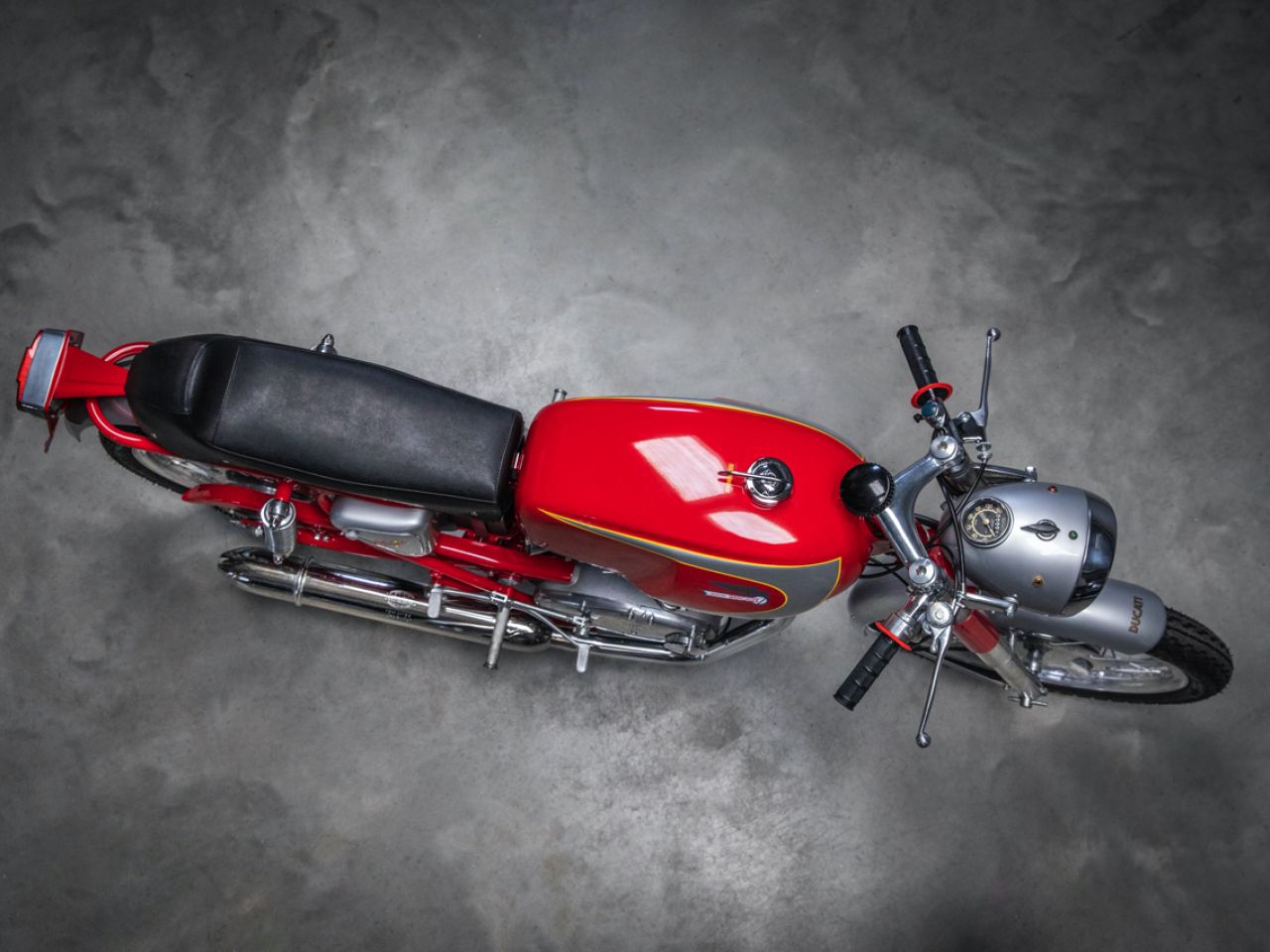
This Ducati 250 Mach 1 was featured on Bike Exif.