Ducati 500 Grand Prix Racing
Words: Harné Heuvelman Photographs: Phil Aynsley
As we have written so many times before when discussing Ducati’s history, racing is anchored deep within the company’s DNA. It may therefore come to no surprise that the first steps Ducati took with the (now so iconic) 90° V-twin were also aimed at the race track: the 500 Grand Prix racing bikes of 1971 and 1972.
By the end of the 1960’s, things looked very bad for the international motorcycle industry. People were shifting to cheap cars as a way of transportation and demand for motorcycles was falling year over year. Later in the 1970’s, the motorcycle would get more of a lifestyle status, but this development came too late for many manufacturers causing a wave of bankruptcies in the industry.
Ducati was no exception and by 1969, the (financial) situation was becoming precarious. An effort was made to get a capital injection from the Italian government in order to maintain employment for the workers. Ducati was taken over by the government controlled EFIM (Ente Finanziaria per gli Industrie Manifatturiere) company and new management was brought in. Arnaldo Milvio became the new director and Fredmano Spairani became the general manager.
Milvio and Spairani both had a passion for racing and were important for laying new foundations for Ducati as a manufacturer of racing motorcycles in the future. The new management had big plans for Ducati and hoped to get the company ready for what appeared to become a new golden age for motorcycles.
The new strategy focused on two main objectives; developing a large displacement bike for road use and getting race success to sell those road bikes. The road bike became the 750 GT (of which you can read more here), the racing bike became the 500 Grand Prix racer of 1971.
1970
Long-time chief engineer Fabio Taglioni must have been quite excited to now finally be able to develop a complete new engine. Based on his earlier developments and thoughts, he started work on the 750 bevel-drive V-twin in March 1970 and a first prototype was ready by August
In October 1970, Ducati management decided to re-enter 500 Grand Prix racing, the premier class of motorcycle racing, the following year. Later on, the GP racer would also need to be developed into a Formula 750 racer. This huge decision meant for Taglioni to start work on a 500cc racing bike immediately, delaying the introduction of the street-750 by a year.
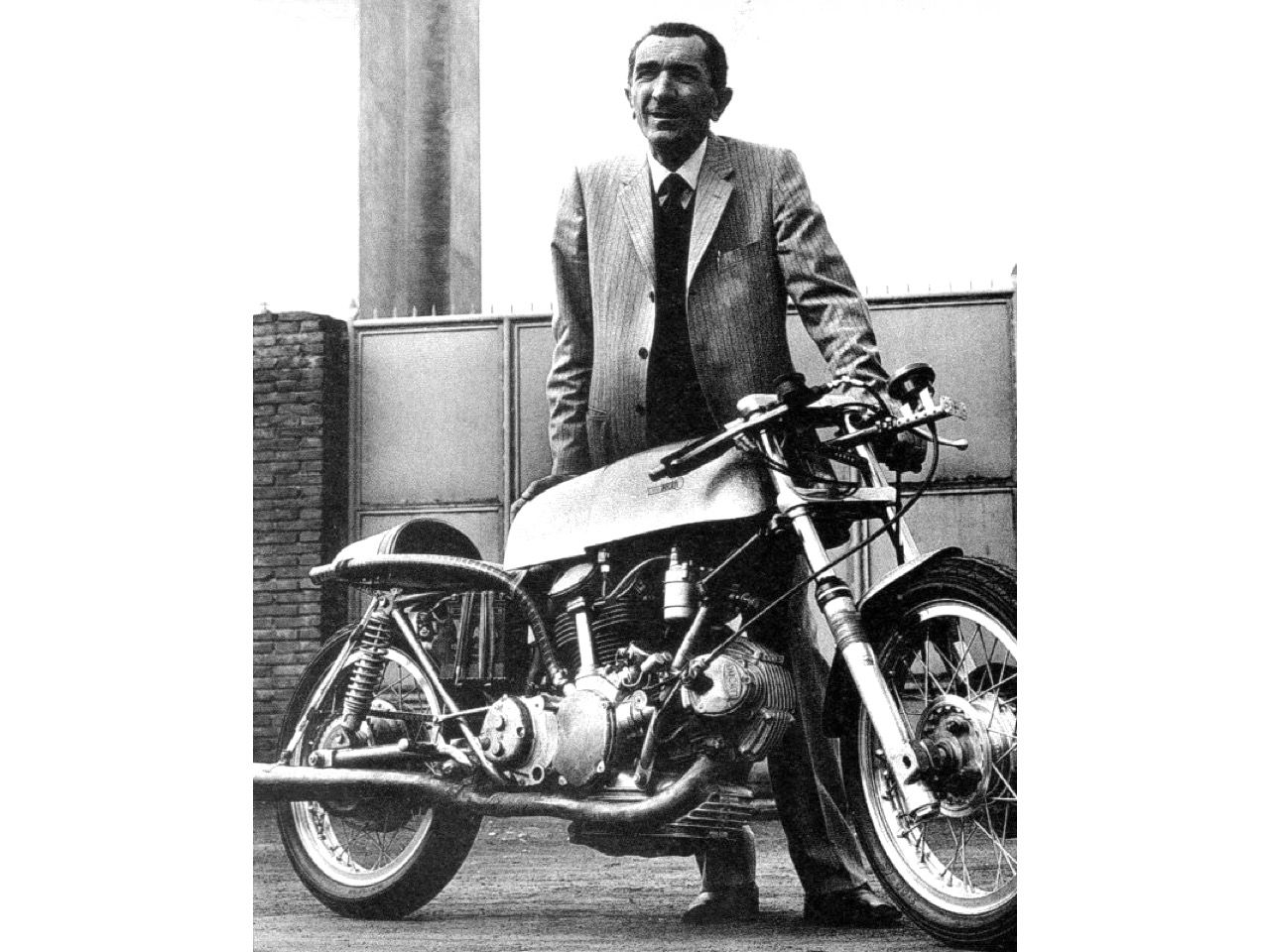
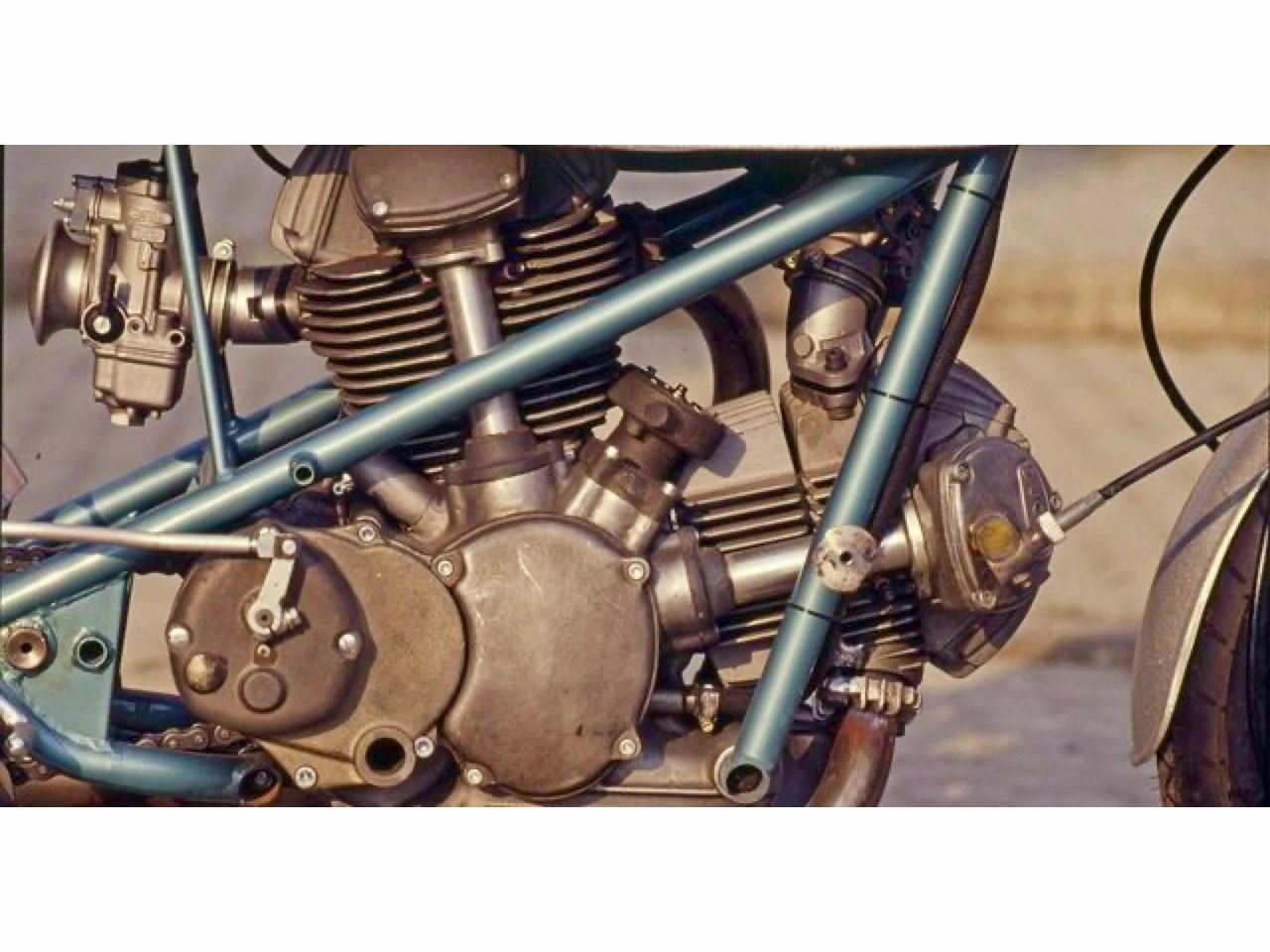
Although the 500cc racing engine was loosely based on the street-750, all parts including the crankcases were specially designed. The crankshaft was completely new and didn’t include room for an alternator to be fitted. With a bore of 74mm and a stroke of 58mm a high-revving engine was in the making.
Compression ratio was set at 10,5:1. The cylinder heads still had the 80° valve angle and the first version of the engine did not have desmodromic valve actuation. A new 6-speed gearbox was developed along with a new dry clutch set-up. A set of 40mm Dell’Orto SS1 carburettors were fitted. Power output was measured at 61,2 bhp at 11.000 rpm.
The development of the chassis initially was done in co-operation with Verlicchi and based on the prototype 750. The front fork was a 35mm ‘leading axle’ from Marzocchi and a single-sided Lockheed brake system was fitted to the front. Rear suspension was a set of Ceriani shocks and the rear brake was a 200mm diameter Fontana drum. 18” Borrani rims were fitted with Dunlop KR83/84 tyres.
1971
The plan was to enter the Italian championship and do some international GP events in 1971. The first 500 Grand Prix racer was ready by January and it was presented to the press at a conference held in London.
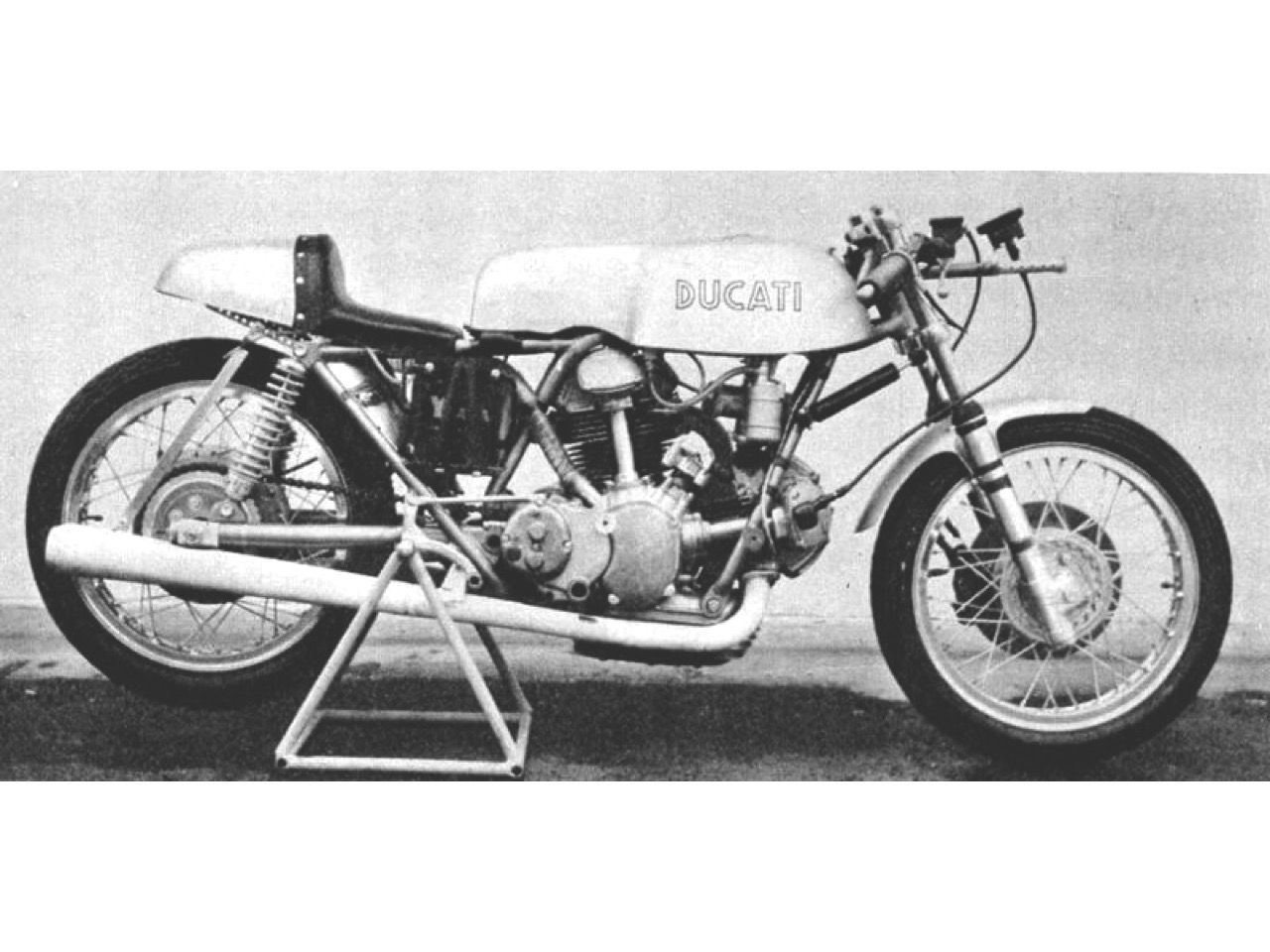
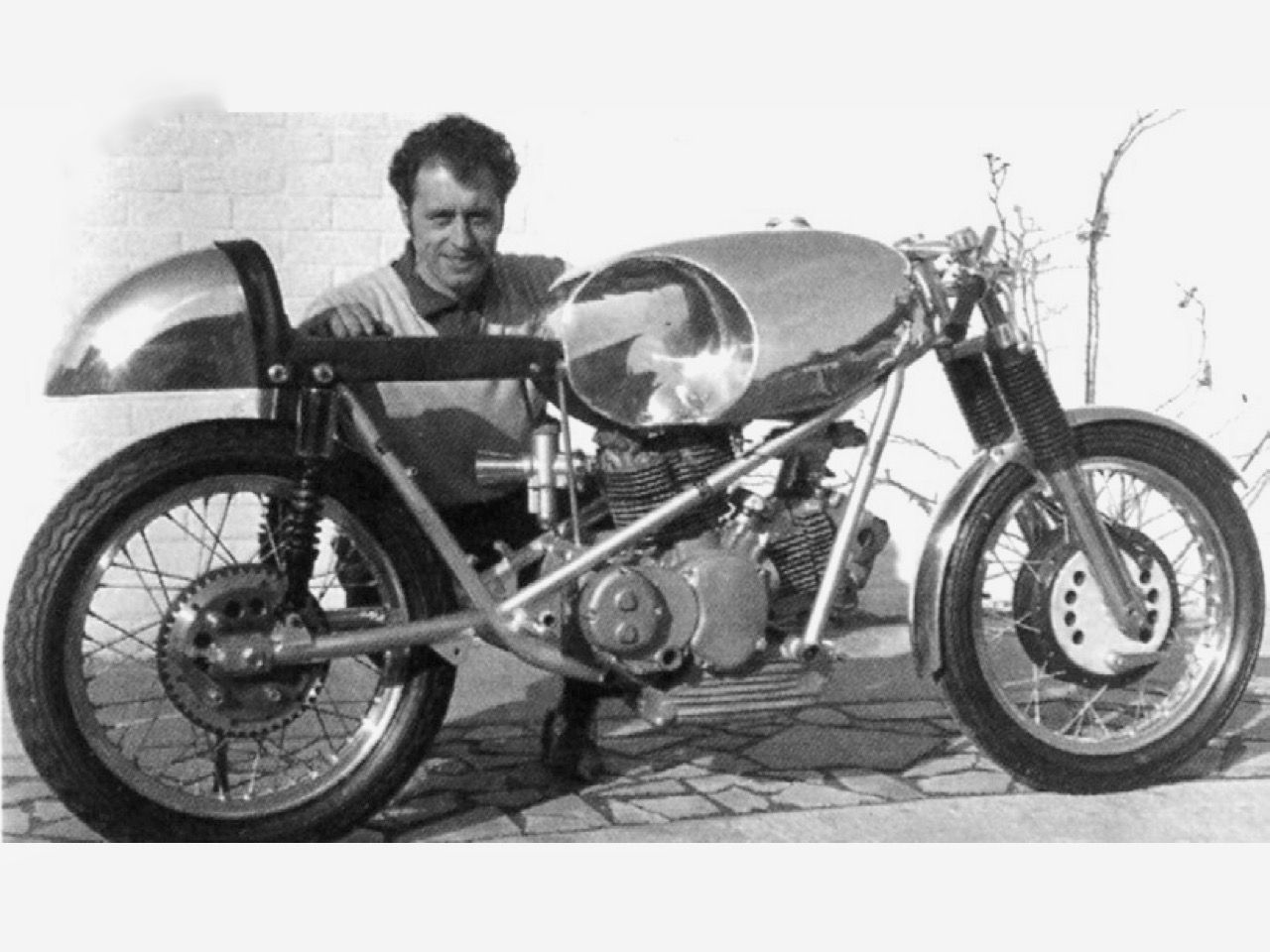
While in England, Spairani was introduced to known frame builder Colin Seeley by the UK Ducati importer Vic Camp. Seeley was very successful with his version of the Matchless G50 and had developed a very innovative approach to frame building. Spairani was impressed and commissioned Seeley to build a prototype frame for the 500 Grand Prix racer around a set of empty engine cases, cylinders and heads.
The prototype frame was already finished by February and was built with Reynolds 531 tubing and had a round shaped aluminium fuel tank with deep cut-outs. When it came to preparing for the debut race though, Ducati decided to go along with their own design as described above.
The 500 Grand Prix made its race debut on 19 March 1971 at Modena with Ermanno Giuliano and Bruno Spaggiari. Both had to retire with technical problems. The team was more lucky at Imola on 12 April where Giuliano was able to finish 2nd after Agostini on his MV Agusta. Spaggiari had to retire with gearbox problems but did so while holding 2nd place. A week later at Cesenatico, Giuliano again finished in 2nd place with Spaggiari (again) with a DNF but while battling Agostini for 1st place.
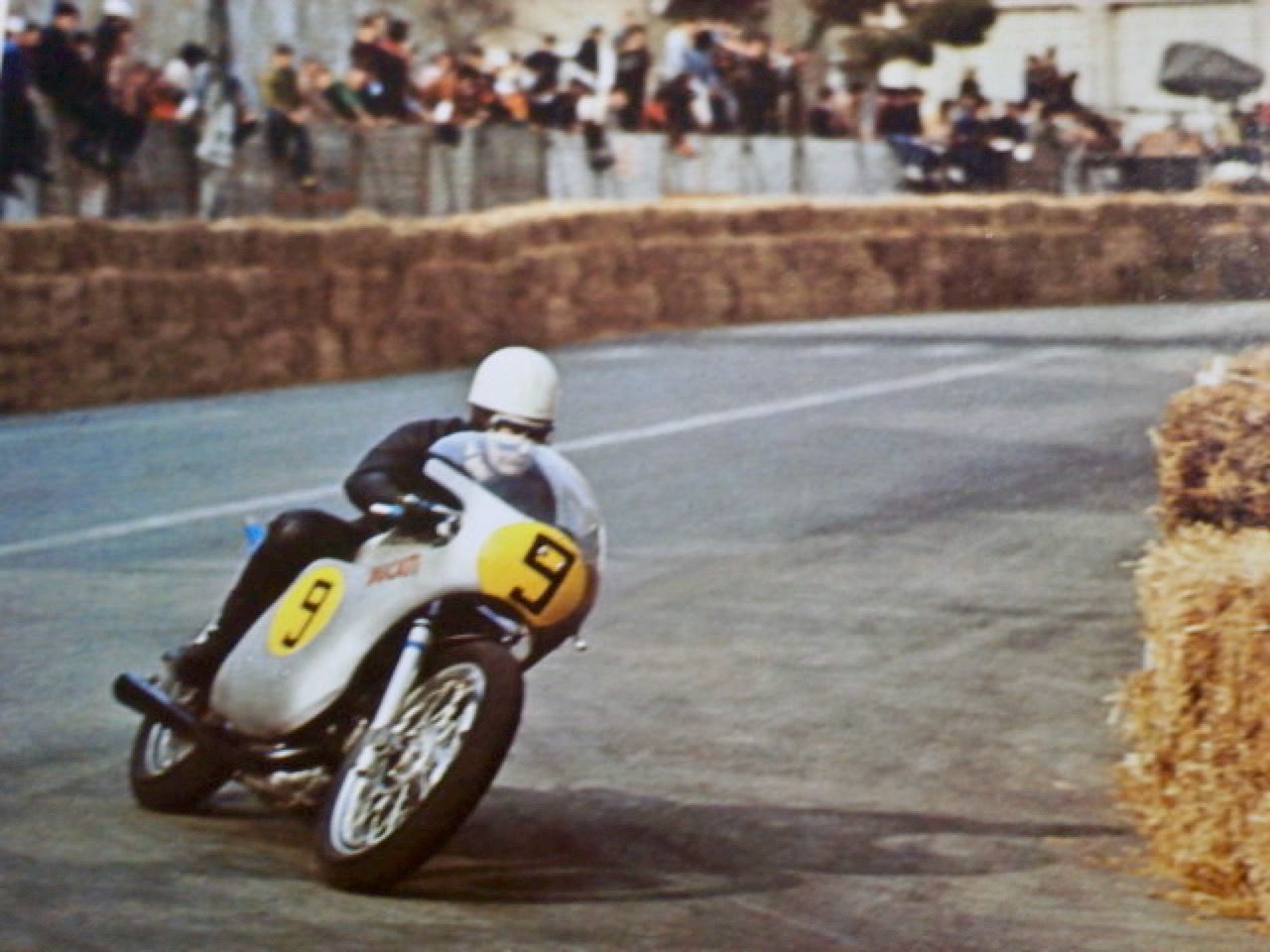
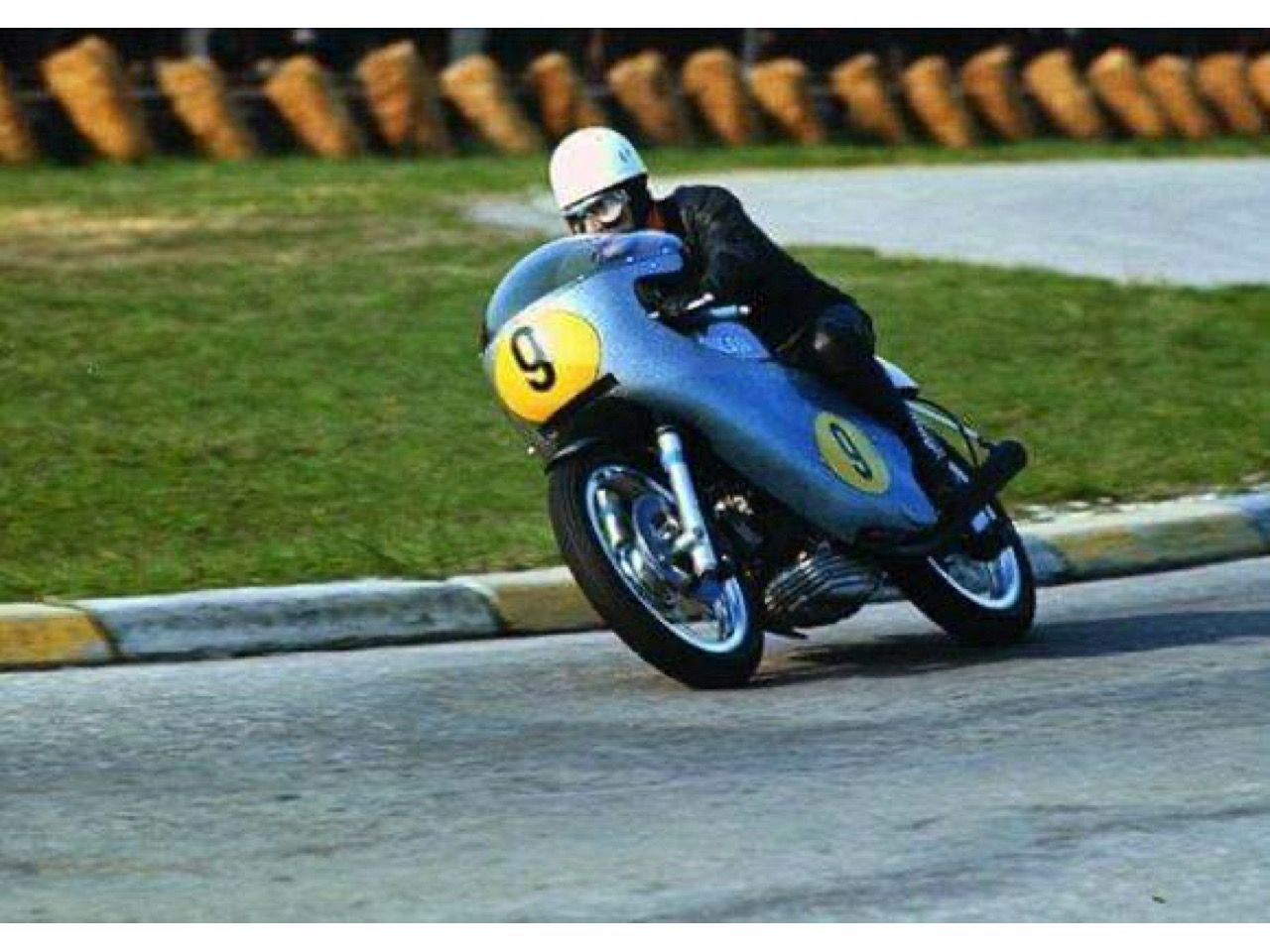
Meanwhile, Ducati had been trying to attract a rider with international acclaim. Phil Read was interested to test the 500 GP. But with Spaggiari still not satisfied with the bike’s handling, it was then decided to dust-off the Seeley frame. On 30 May 1971 the Seeley-framed 500 GP was entered for the race event at Skopia Locka in Yugoslavia. Gilberto Parlotti wrote it to victory. In hindsight the only race won with the 500 GP.
The success in Yugoslavia made Ducati stick with the Seeley frame from now on and it was again entered for the Silverstone race at 22 August with Phil Read and Bruno Spaggiari. Both had to retire from 3rd place but everyone was impressed with the Ducati’s speed and handling.
At Monza on 14 September, Read was able to finish in 4th place but Spaggiari had to retire while in 2nd place. Then on 10 October at the San Remo GP, the final race of 1971, Read finished in 2nd place with Parlotti and Giuliano in 3rd and 4th.
With only the MV Agusta driven by Agostini in front of 3 Ducatis, the impression was that Ducati could be very competitive in 1972. Taglioni realized that there was still work to be done to improve the 500 GP for next year.
1972
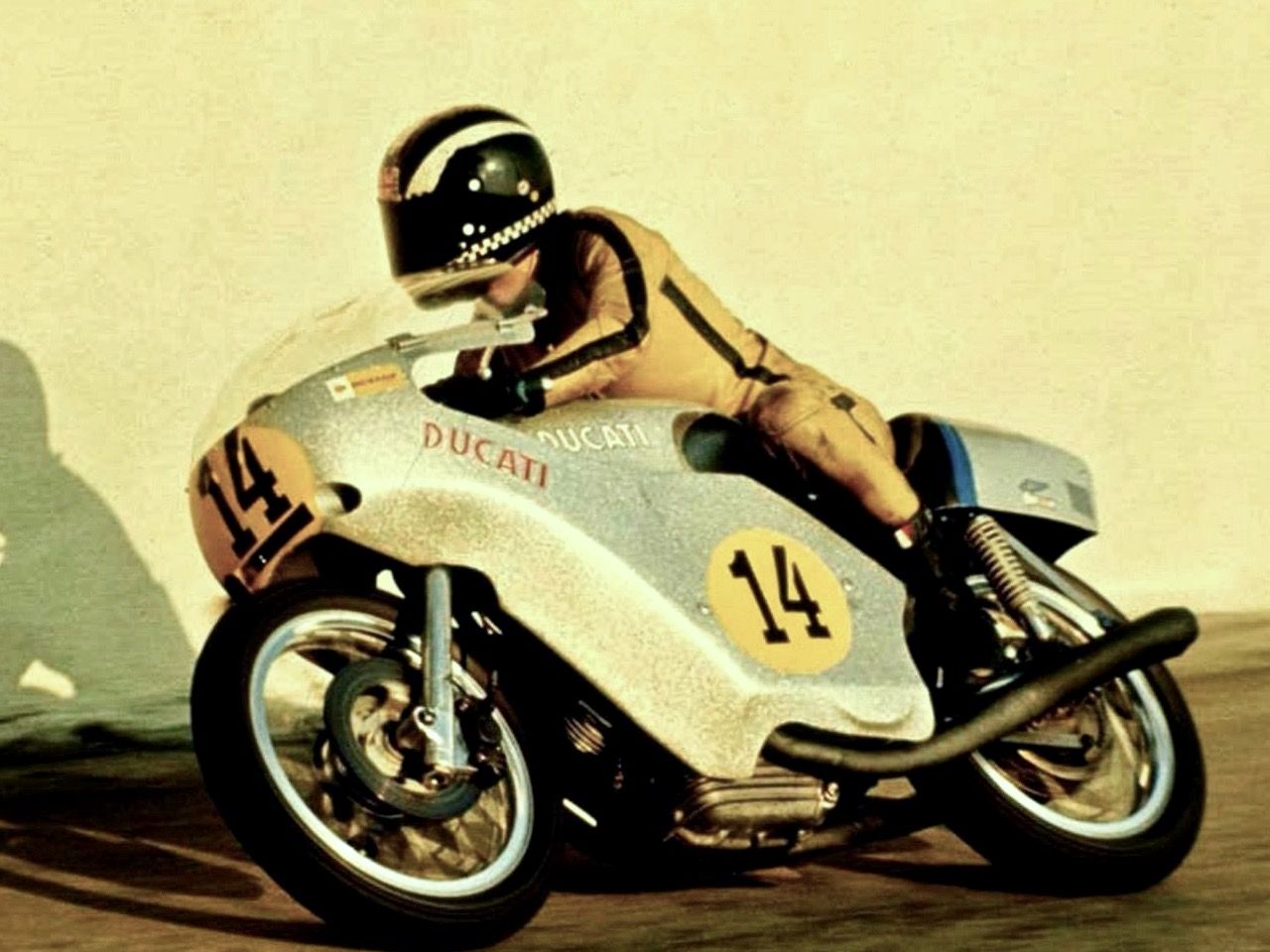
Fabio Taglioni set out to increase the power output of the 500 GP engine as this was the obvious way to beat the mighty MV Agusta. While simultaneously developing the 750 engine for Formula 750 racing, he worked on some experimental changes on the 500. These were tested at Modena on 15 March 1972 and included Dell’Orto PHM40 carburettors and even fuel injection. Although the results of injection were promising, it was later abandoned as the FIM prohibited the use of such system deeming it a form of supercharging.
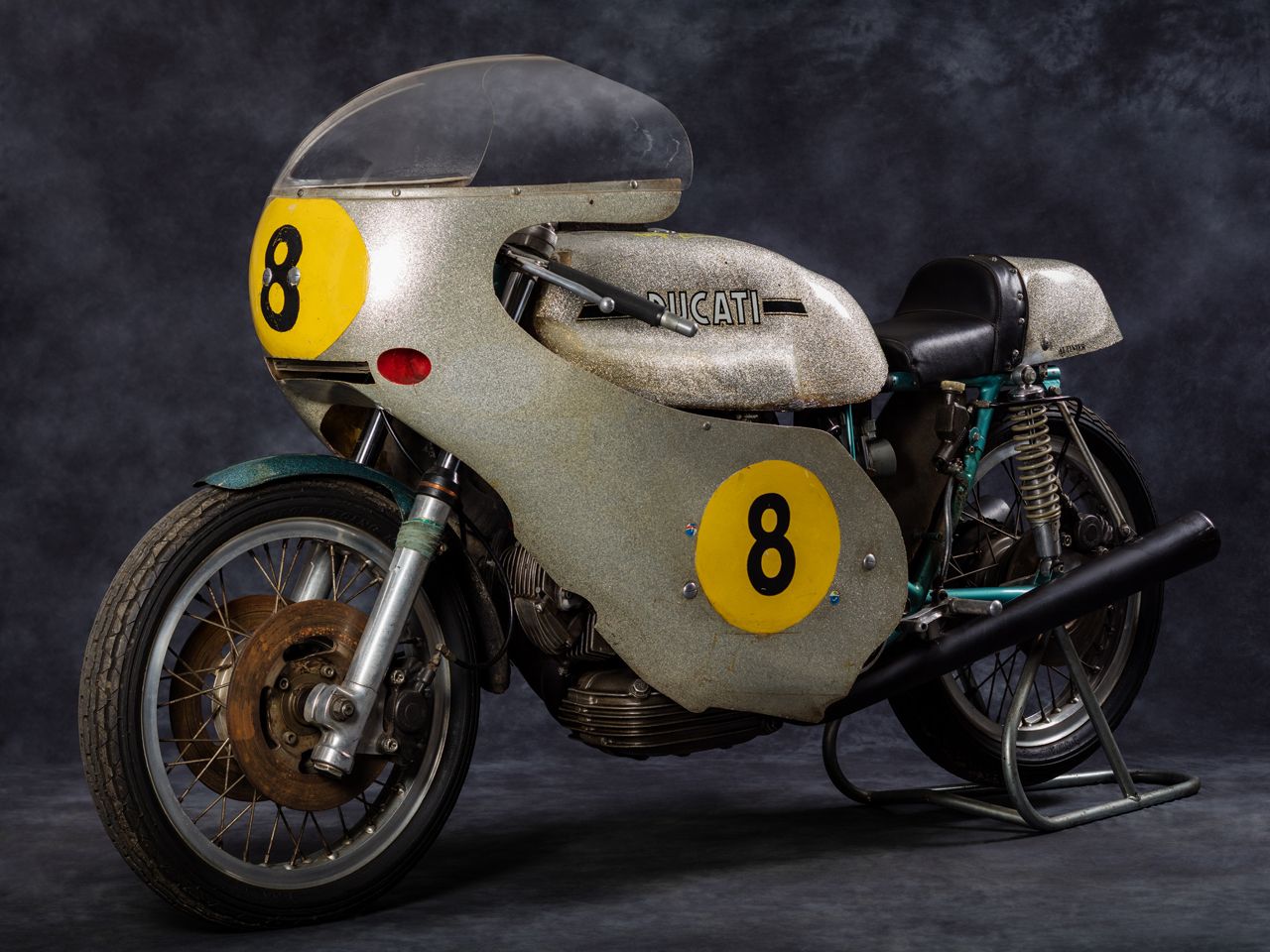
Following the tests at Modena, the 500 GP racing bikes were improved for the 1972 season. Changes included the PHM40 carburettors and a newly designed ‘Imola-style’ fibreglass fuel tank. The rear brake was now also a Lockheed supplied disc replacing the Fontana drum. The cylinder heads were updated to get desmodromic valve actuation. The changes increased the power output to 69 bhp at 12.500 rpm. It is further rumoured that Ducati used exotic materials as titanium for the first time. The total weight of the machine was stated at 127kg.
With Phil Read now moved to the MV Agusta team, Ducati entered the 500 GP at Modena on the 15th March 1972 with Spaggiari and Giuliano. Both riders had to retire with technical problems.
But by now, the team was more focused on developing the 750 to compete in the Imola 200 to be held on April 23rd 1972. Following Ducati’s spectacular 1-2 victory at that event (more about that later), interest in the 500 GP was diminishing. It wasn’t until 21 May 1972 that it raced the Italian Grand Prix, again at Imola. Here, Spaggiari drove the 500 to 3rd place with Paul Smart 4th and Sergio Baroncini finishing 7th.
The 500 GP was then raced officially at the Yugoslavian Grand Prix at Opatija on 18 June and finally at the John Player International Meeting at Silverstone on 13 August. Both events were not successful and the 500 GP was not entered officially again.
Renato Armaroli
Strange enough, Taglioni was still committed to further developing the 500 even towards the end of 1972. A set of 4-valve per cylinder heads were tested but the power increase was very limited. These results might have been the reason Taglioni would remain opposed to using 4-valve technology throughout his carreer.
Because Taglioni was mostly involved with the new 750 ‘short-stroke’ racing bike that would be entered in the Imola 200 of 1973, he had no time to spend on the 500 GP. It was therefore decided to have engineer Renato Armaroli develop the 500 further. Together with Taglioni, they envisioned a toothed belt rather than a set of bevel gears for driving the camshafts. Armaroli went to work and created a set of 4-valve cylinder heads with twin camshaft that were driven by a belt fitted to the left side of the crankshaft. The front cylinder and head were casted with radial cooling fins and the carburettors were fitted between the two cylinders; reversing the rear cylinder head.
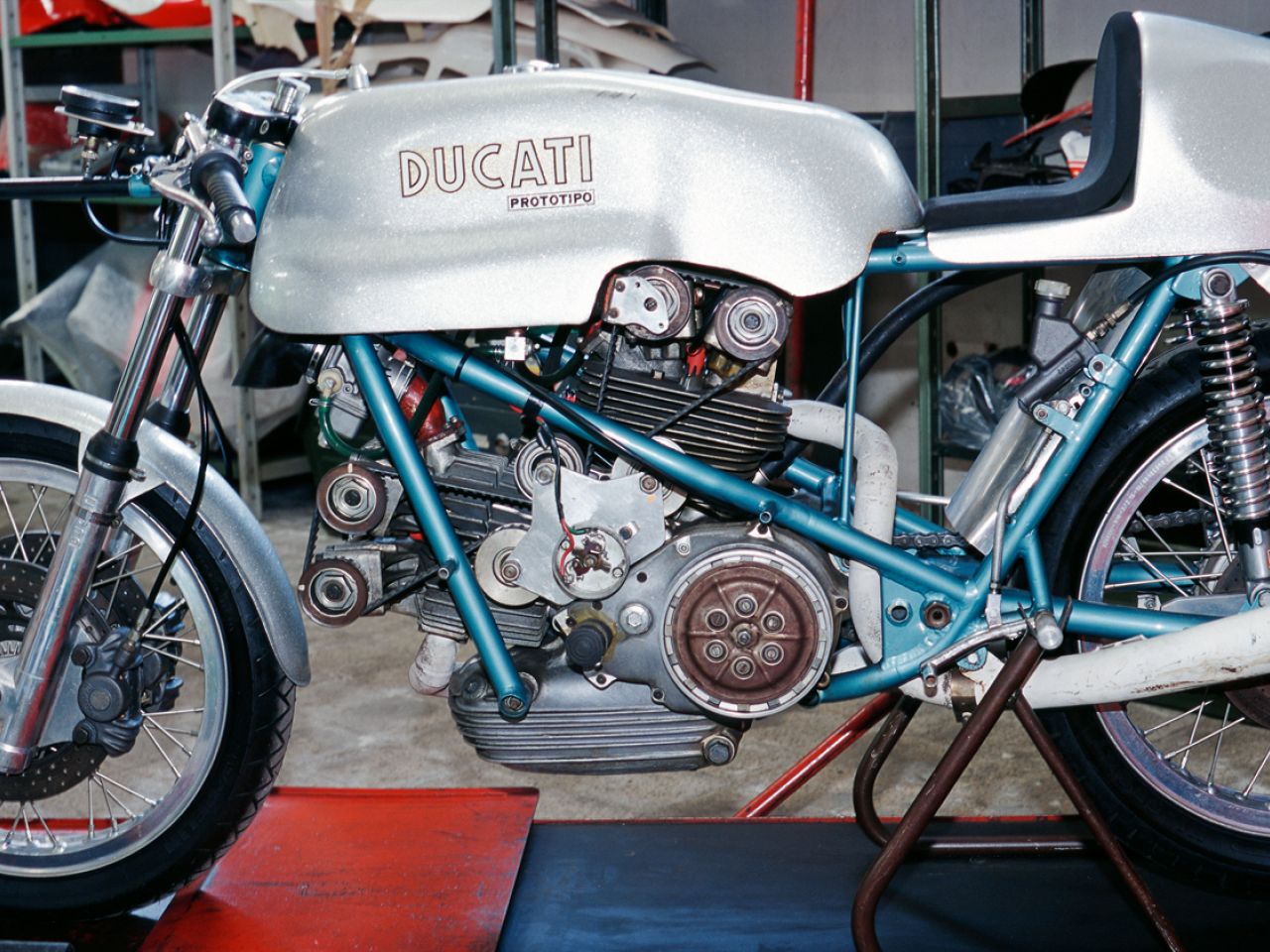
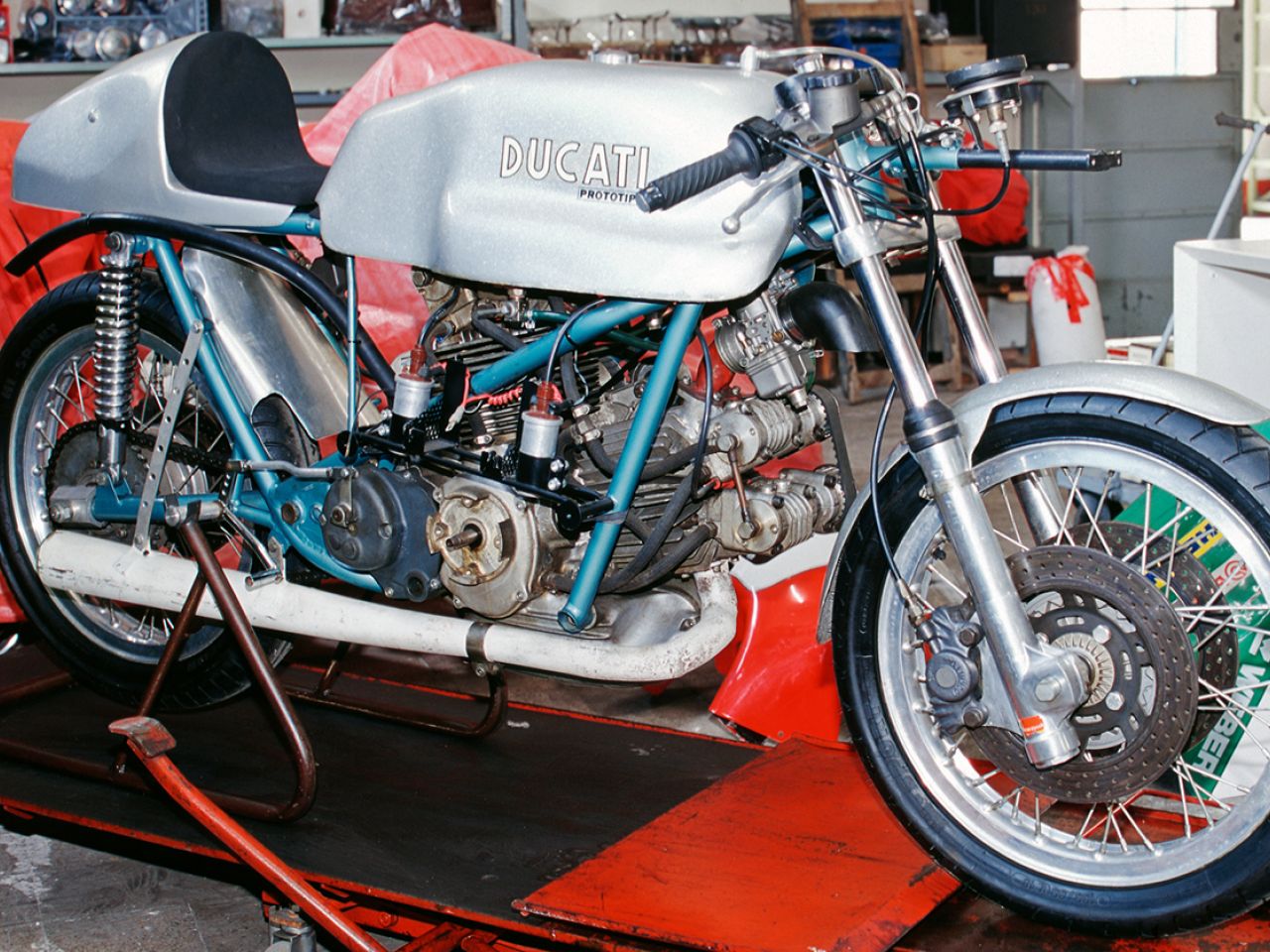
The Armaroli 500 was far more an experimental development than an attempt to re-enter Grand Prix racing. The results were promising with a power output of 74 bhp at 12.000 rpm but the bike was only raced once; by Spaggiari at the opening round of the Italian championship in March 1973.
One only has to take a look at the later Pantah, Paso and even the 851 engines to see a striking resemblance with the Armaroli lay-out: belt-drive from the drive side of the engine, reverse rear cylinder head, twin overhead camshafts and 4-valves per cylinder… It was all first tested on the Armaroli 500 GP.
A Place in History
It is easy to dismiss the 500 GP as a failed attempt to compete in the premier class of motorcycle racing. However, the 500 GP was very close to being able to rival MV Agusta’s dominance. As Paul Smart remarked to author Ian Falloon: “The machine was incredibly fast, almost as fast as the MV and handled beautifully. It was a real racer.”
One could argue, that if Taglioni would have had the chance to develop the 500 GP further, especially given the promising tests in 1972, it would have become a true rival to the MV in the end.
Unfortunately the 500 GP came too late as by 1972, one could easily see where the future of Grand Prix racing would be. Not MV Agusta would be the dominant force for the years to come but rather the Japanese two-strokes. With the era of two-stroke racing dawning in the early seventies, Ducati pulled out of Grand Prix racing for 1973 focusing fully on first the Formula 750 and later endurance racing.
It was not until 2003 that Ducati would be back at Grand Prix racing (now rebranded ‘MotoGP’) after a 30-year absence following new rules that were more favourable to four-stroke engines. This eventually led to Ducati becoming world champion in 2007 with Casey Stoner.