
Ducati 750 F1, Another Race Replica
Words: Harné Heuvelman Photographs: Phil Aynsley
Ducati has a long history of creating road-going ‘replicas’ of famous racing bikes. The creation of the Ducati 750 F1 is no exception to this proven strategy. By 1982 it was very clear that the TT2 racing bikes were extremely successful so it wouldn’t be long until a road version would be introduced…
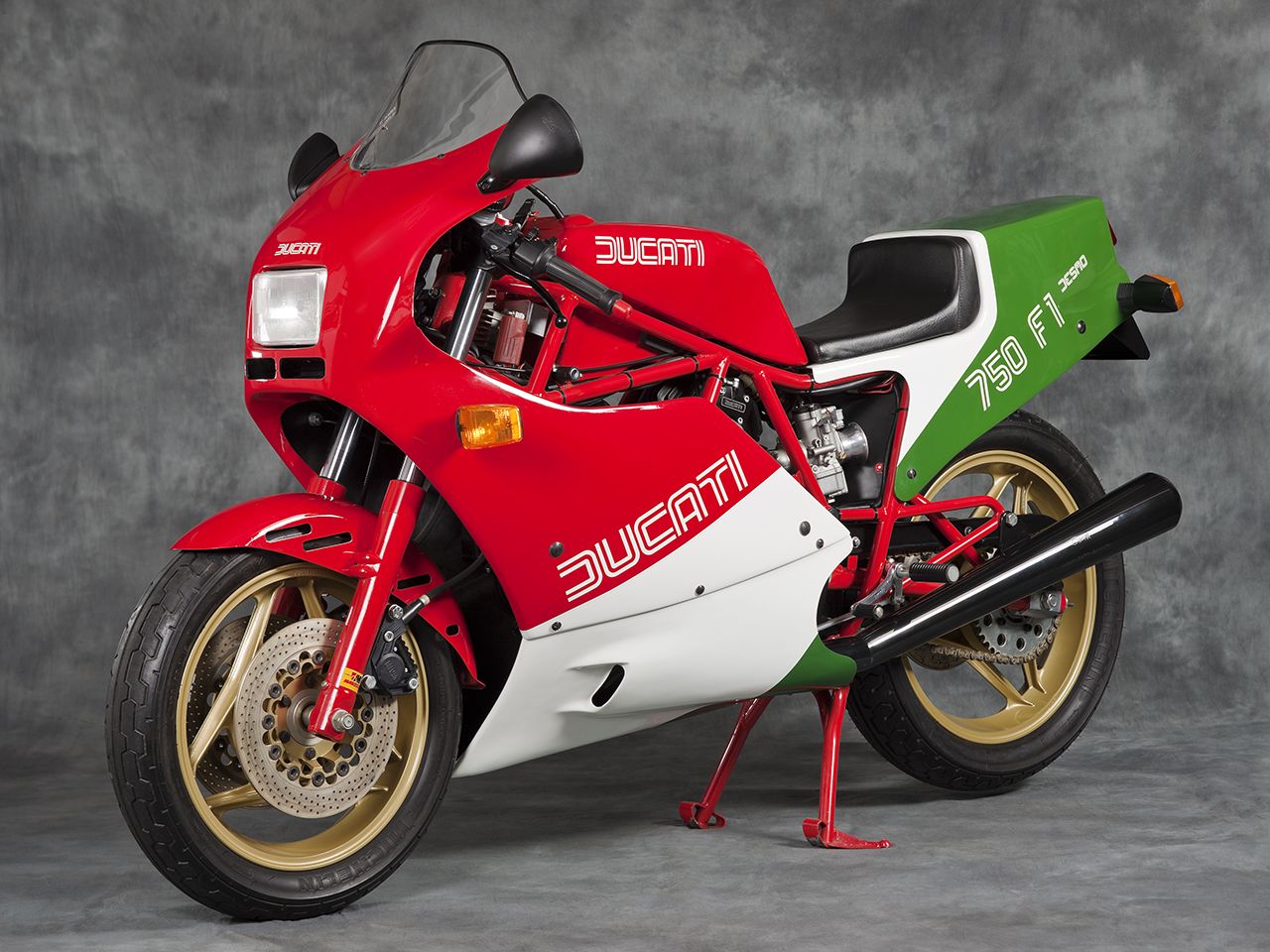
Well, not too fast as it took Ducati until 1984 to develop a first prototype of what would become the 750 F1. This prototype was further developed and Ducati was ready to launch the 750 F1 to the market in 1985.
Although basically a 750cc version of the earlier Pantah engine, updates included new camshafts, straight cut primary gears, aluminium pulleys and black painted crankcase, cylinders and cylinder heads. The 750 F1 was fitted with a two-into-one Conti exhaust and the same carburettors as the 650 SL, but without air filters.
The frame however was based on that of the TT2 racer rather than on that of earlier Pantah models. The fuel tank was aluminium and styled like the TT2 as well. The 750 F1 was fitted with Marzocchi front fork and a Marzocchi monoshock on the cantilever swing arm. Wheels were OSCAM with standard (and later fully floating) Brembo discs front and rear.
The 1986 750 F1 was updated in many ways. The crankcase was strengthened and formed the basis for the later limited production versions. The camshafts were updated and the con-rods strengthened. The cylinder heads received larger valves, the gear box got larger gears and the oil-cooling system was improved.
For the first time on a Ducati road bike a dry clutch was fitted, later to become one the distinct Ducati features. The 1986 750 F1 received a 40mm Forcelle Italia front fork and retained the floating Brembo discs at the front while the rear was now a solid type. The wheels were the same OSCAM’s but painted red instead of gold. The fuel tank now was made of steel instead of aluminium. Ducati had been acquired by Cagiva in 1985 and the logo design changed in 1986 to match that of Cagiva, adding an elephant to the graphic design of the 750 F1.
In 1986 and 1987 a total of three limited edition 750 F1’s were introduced: the Montjuich, Laguna Seca and the Santamonica. As Ducati did before with the 1975 750 and 900 Super Sport; not much attention was given to road regulations…
MONTJUICH
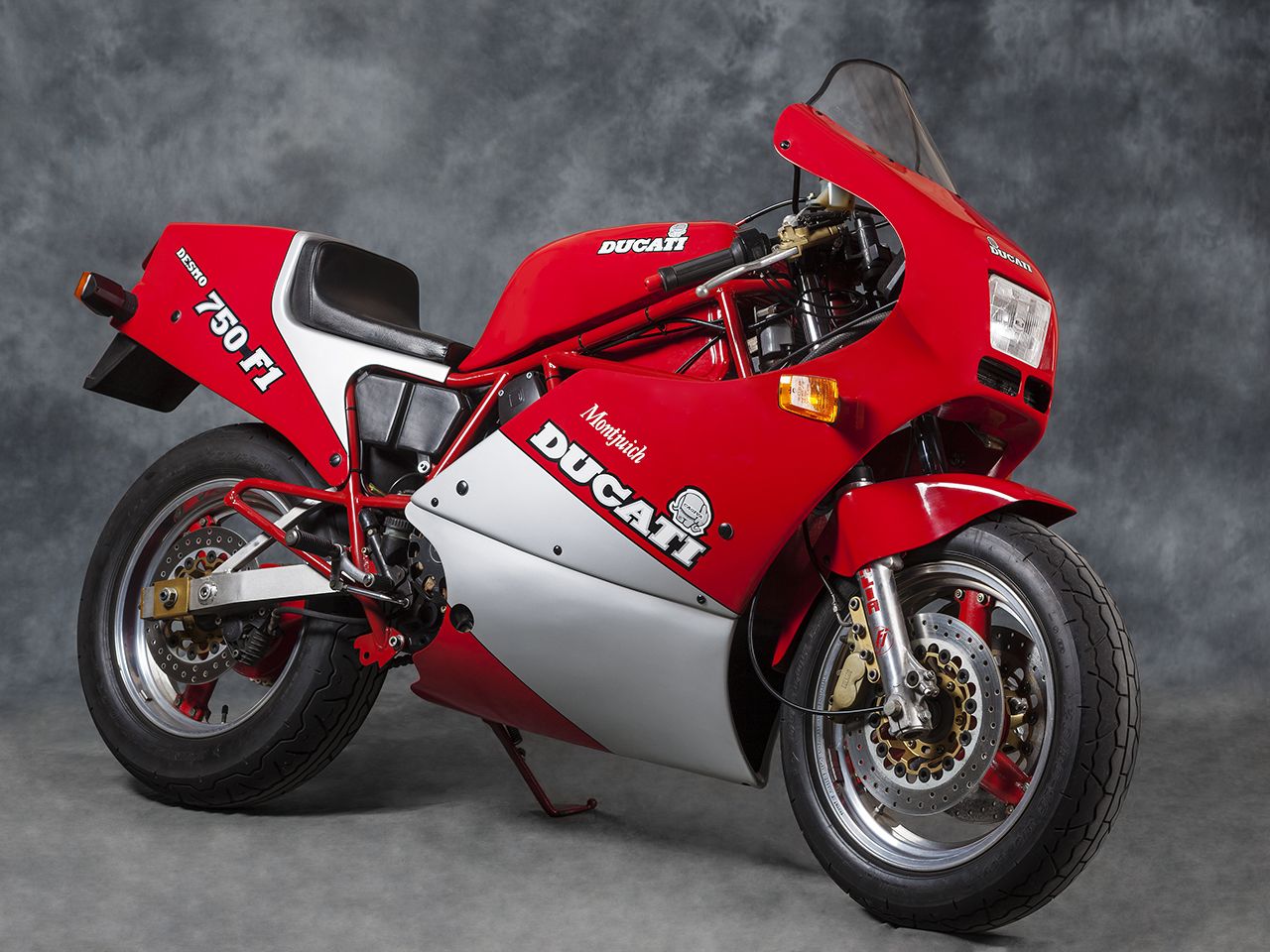
The Montjuich (named after the Montjuich Park racing circuit in Barcelona, Spain) was the first to arrive and was uncompromising in every way. The engine was taken from the 750 F1 but with many changes: the inlet ports were larger, the cams hotter, the carburettors larger and the gearbox altered (as for the ‘standard’ 1986 750 F1 model). The dry clutch had an aluminium inner drum and ignition was Kokusan rather than Bosch. The Montjuich was fitted with an extremely loud Verlicchi 2-into-1 exhaust. It received an aluminium swing arm and Marvic/Akront wheels which had a polished aluminium outer ring (Akront) and a cast magnesium three-spoke centre (Marvic). Brakes were Brembo ‘Gold Series’ four-piston callipers with full floating discs. No indicator lights were fitted. Only 200 were ever produced.
LAGUNA SECA
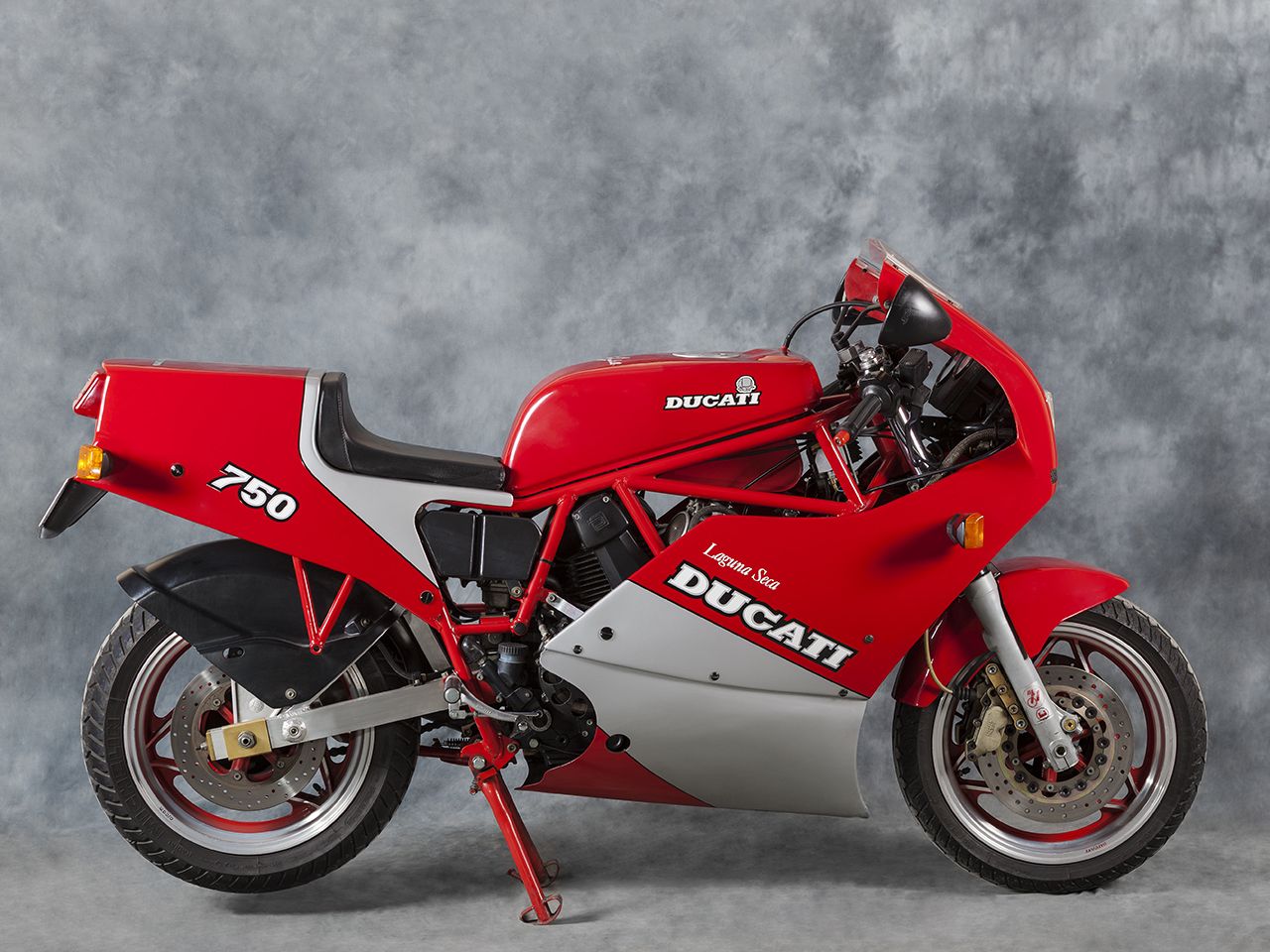
With the next series: the Laguna Seca (named after the Laguna Seca race track in the USA), the concept was a bit softened. The exhaust was a lot quieter, there were indicators fitted along with a centre stand and the fuel tank was steel rather than aluminium. Wheels were now OSCAM aluminium but the ‘Gold Series’ Brembo brakes were the same as on the Montjuich. Although the Laguna Seca might have been a bit more ‘sensible’ than the Montjuich, it was still an uncompromised racer for the road. A total of 296 Laguna Seca’s were produced.
SANTAMONICA
The final special series 750 F1 was the Santamonica (named after the Autodromo Santamonica at Misano, Italy). It was basically a Laguna Seca with only minor changes: there was a dual seat fitted with removable cover and the Montjuich Marvic/Akront wheels were back. The Santamonica came with a new white and red colour scheme. A total of 204 Santamonica’s were ever produced.
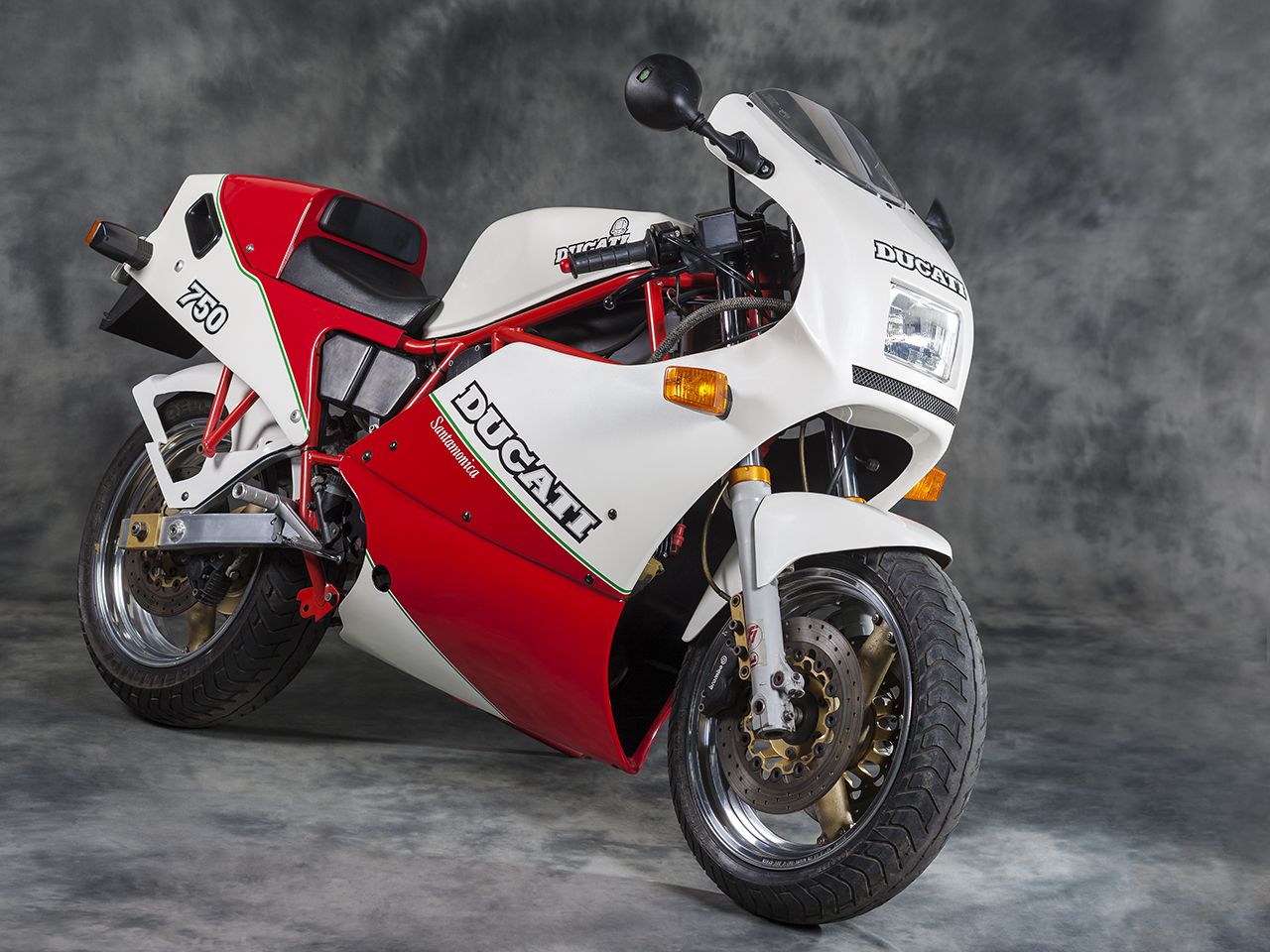
Together, the three special series of the 750 F1 are among the most desirable Ducati’s of the 1980’s. The 750 F1 was discontinued in 1986 and replaced by the 750 Paso which was the first Ducati to have been completely developed under the management of the Castiglioni brothers.