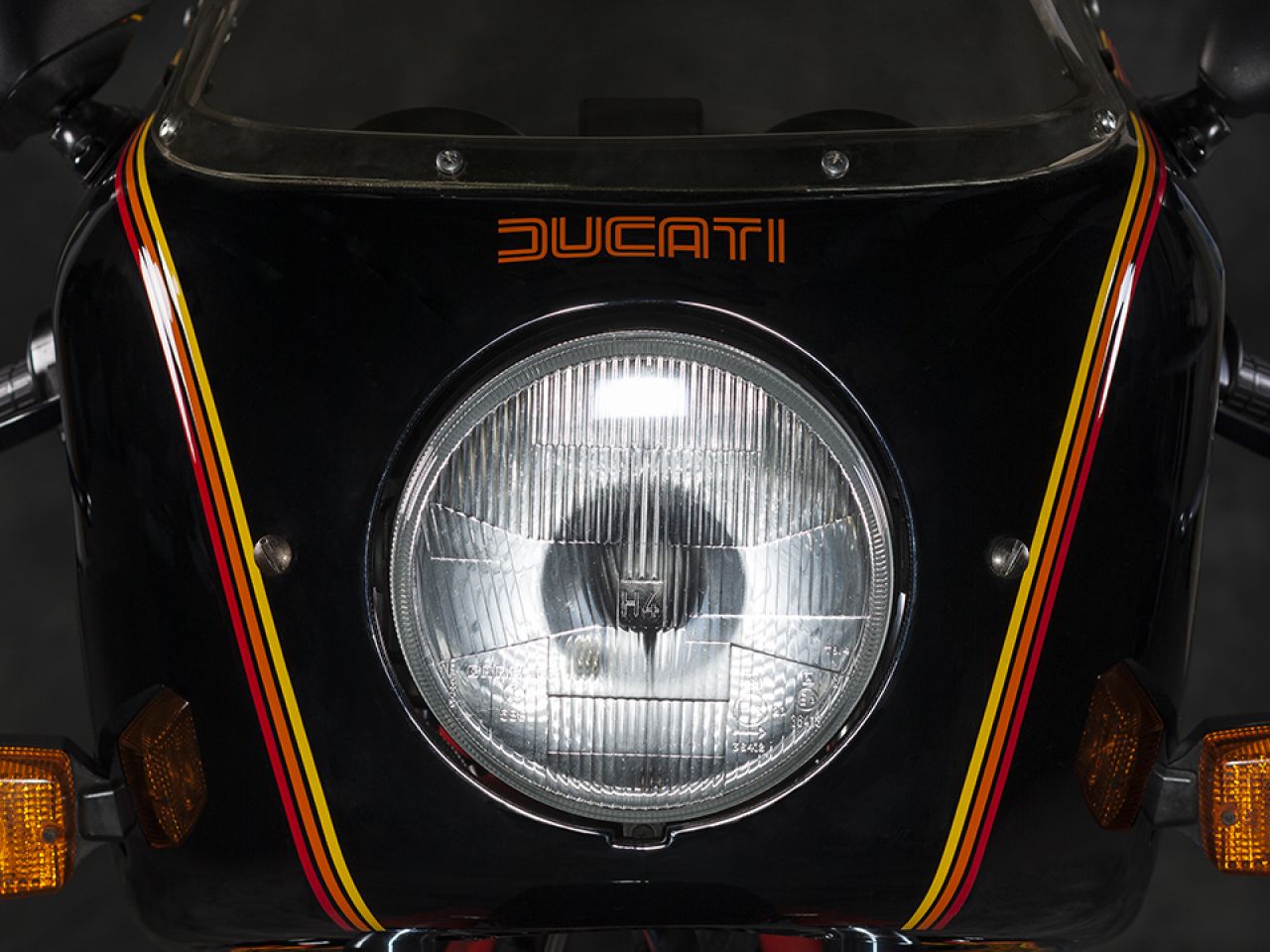
Ducati Mille, Last of the Bevel-Breed
Words: Harné Heuvelman Photographs: Phil Aynsley
The final bevel-drive Ducati models, the Mille MHR and Mille S2, could very easily be regarded as outdated and obsolete by the time they came to market. However, this approach is not doing these bikes justice as Ducati went out of its way to modernize them. Now that we have added the Mille in our online parts store, we thought to shine a light on this ‘last of the breed’!
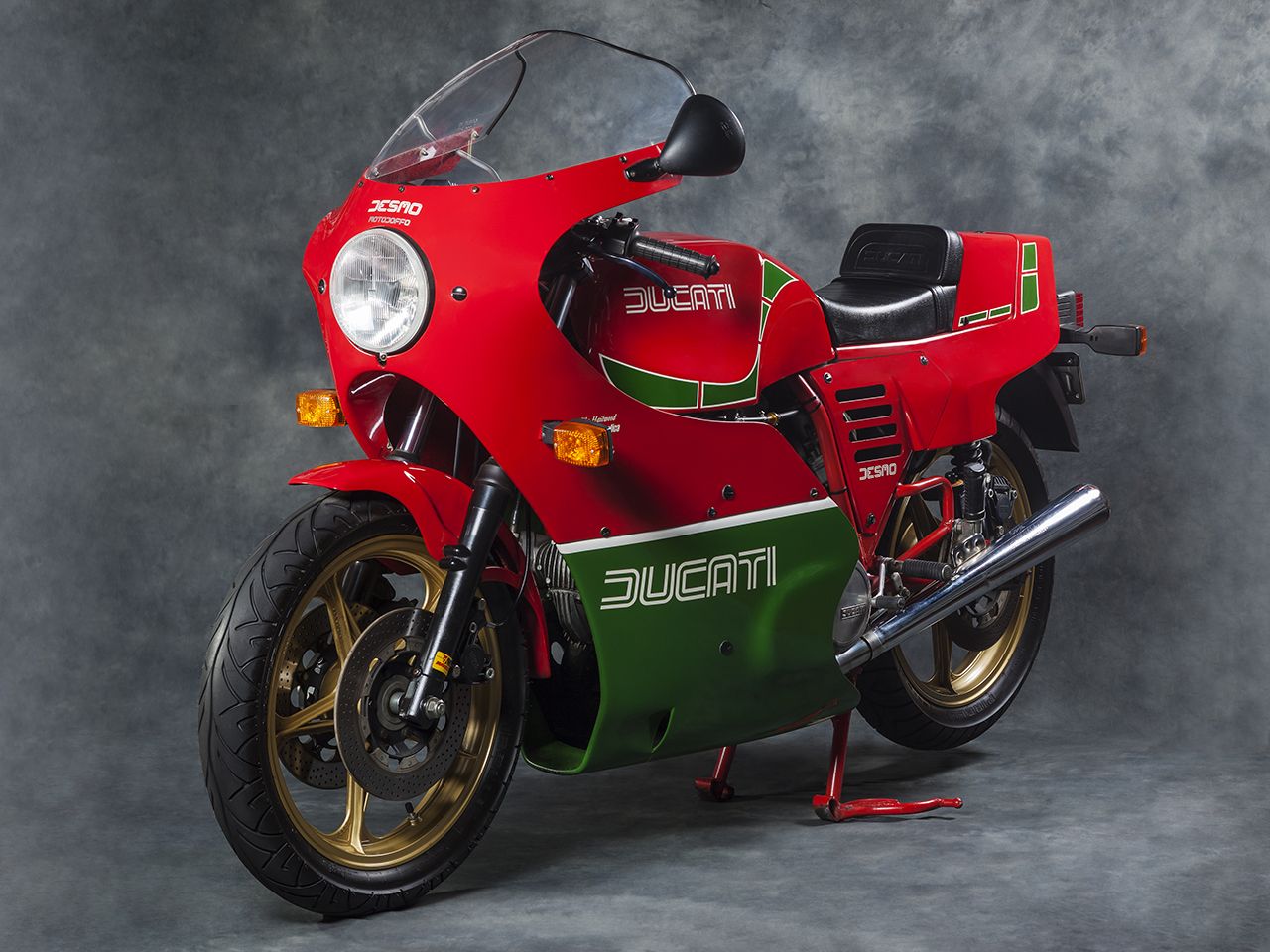
By 1984 the Ducati 900 ‘Mike Hailwood’ Replica was in many ways an obsolete bike: it featured an engine that was 12 years old in its basic form and with dual shocks and 18” wheels, it was becoming seriously outdated. Let alone the fact that the MHR was commemorating a victory at the Isle of Man 6 years ago.
To add insult to injury; Ducati was doing very badly as a company in the early 80’s. It had not caught up with the new bikes from Japan and the outdated line-up was not selling as was hoped. In fact, Ducati survived largely by building diesel engines for VM Motori. After years of being under state-controlled ownership within the EFIM conglomerate, the company was now being sold to Cagiva, managed by the Castiglioni bothers.
Where the newly introduced Pantah range was technically very advanced, it proved to take another decade of development before a real money-maker would come out of this product line. Despite the outdated design of the bevel-drive engine, it was decided to also develop this further into what is now known as the Mille engine.
Already in 1983 work began on developing this new evolution of the bevel engine by Taglioni and his new assistant (and soon to be successor) Massimo Bordi. In 1984 some of the development saw their way to the market on that year’s 900 Mike Hailwood Replica but these were limited to the outer engine covers and clutch assembly.
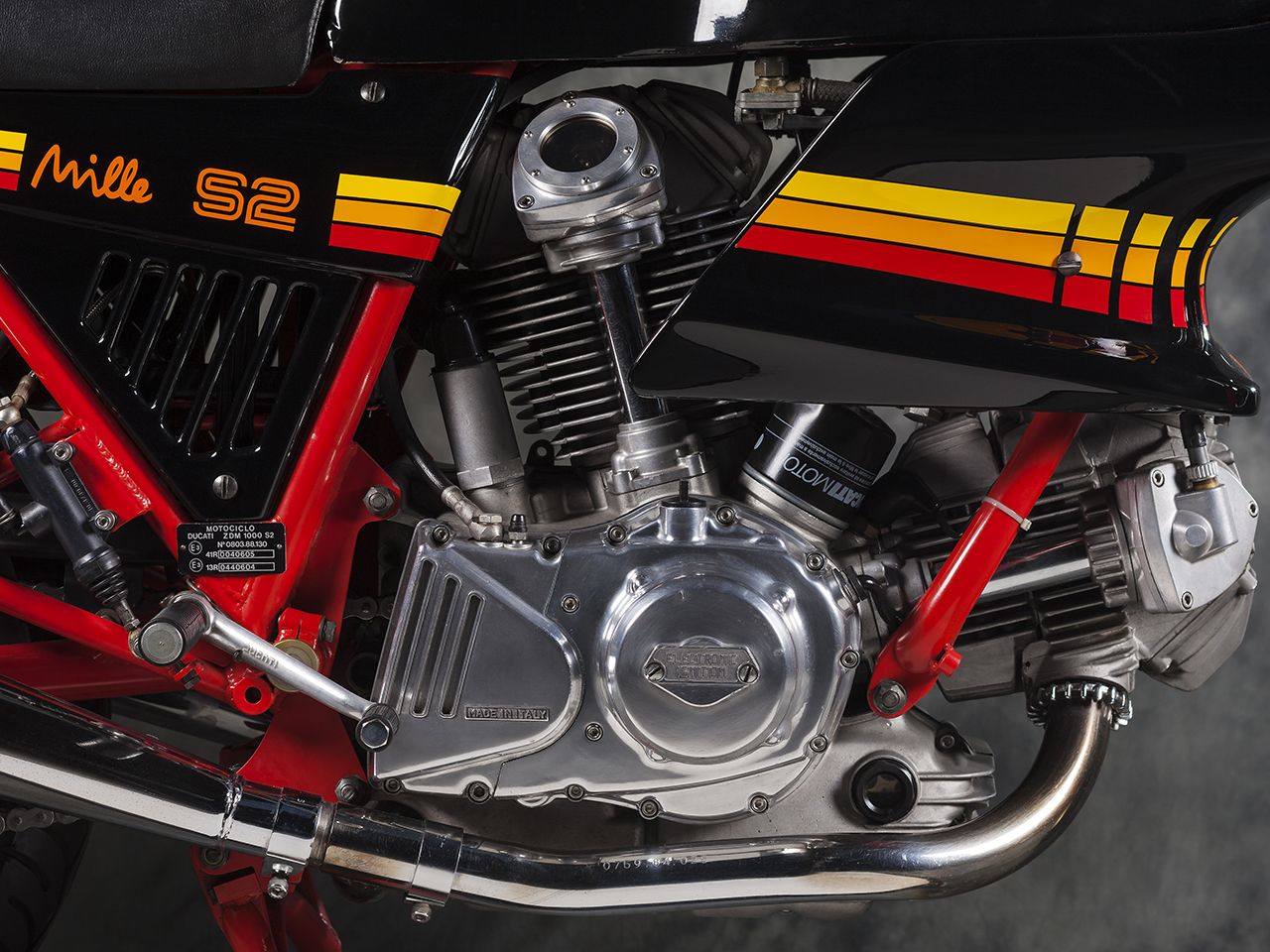
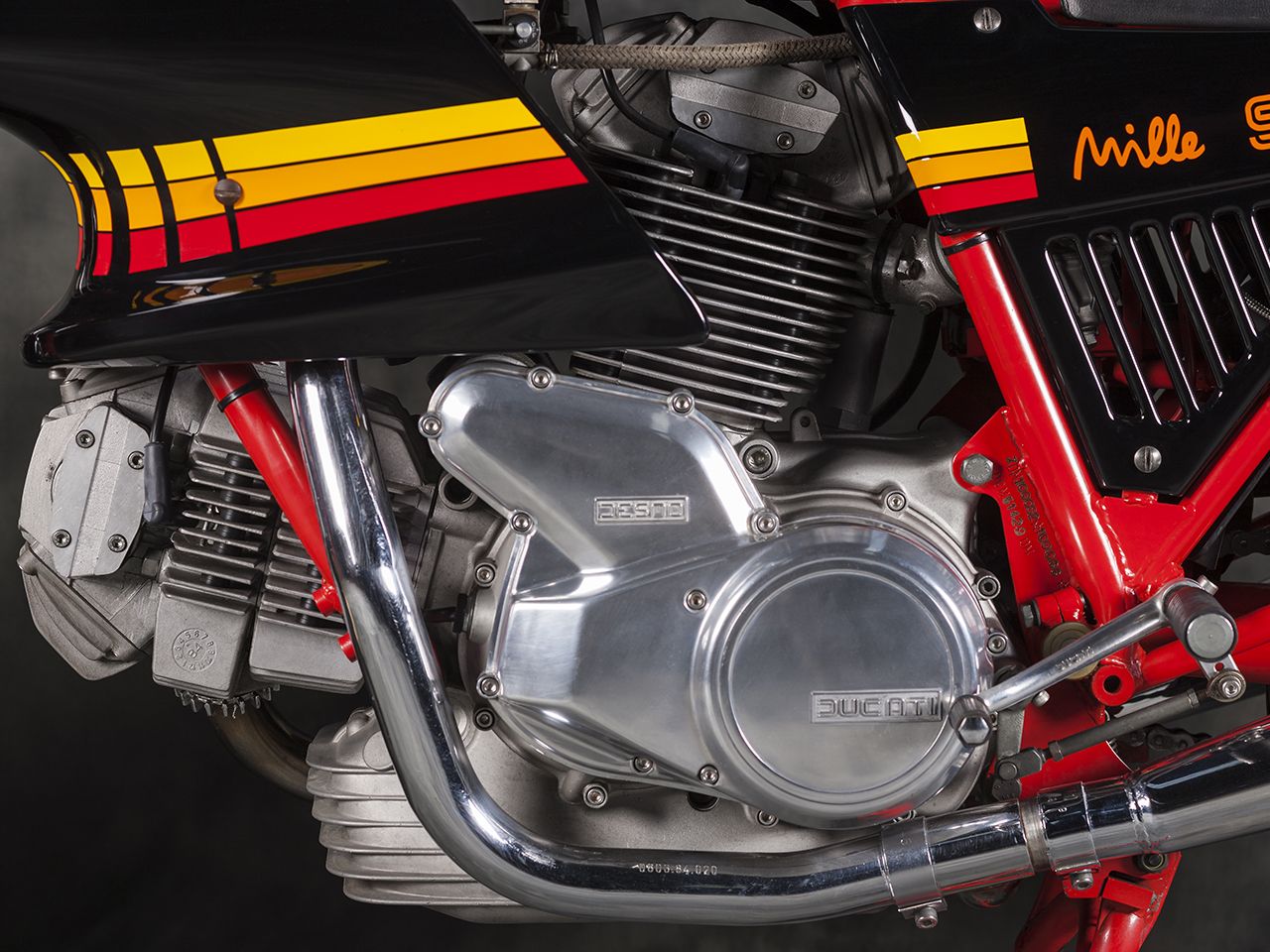
By the end of 1984 the eventual Mille engine was ready. It featured a lot of updates compared to the earlier 900. The oil flow was now fully pressurized allowing for a new plain-bearing crankshaft and a full-flow oil filter. The displacement was increased to 973cc with 80×88 dimensions and the cylinders were Nikasil coated aluminium instead of the steel sleeved cylinders used previously. Valve size was increased to 42 and 38mm and a new clutch design made its way to production as well. A new Nippon Denso supplied starter motor replaced that of Magneti Marelli.
The new engine saw its way to what was basically the Mike Hailwood replica of 1984. It featured the same frame, bodywork and wheels so the updates were limited to the engine. The same approach was taken to the Mille S2 that was virtually the same as the 900 S2 of the year before. For this model at least, Ducati came up with a new black/orange/yellow colour scheme. A total of around 1200 Milles were built: ca. 900 as MHR and only 300 as S2.
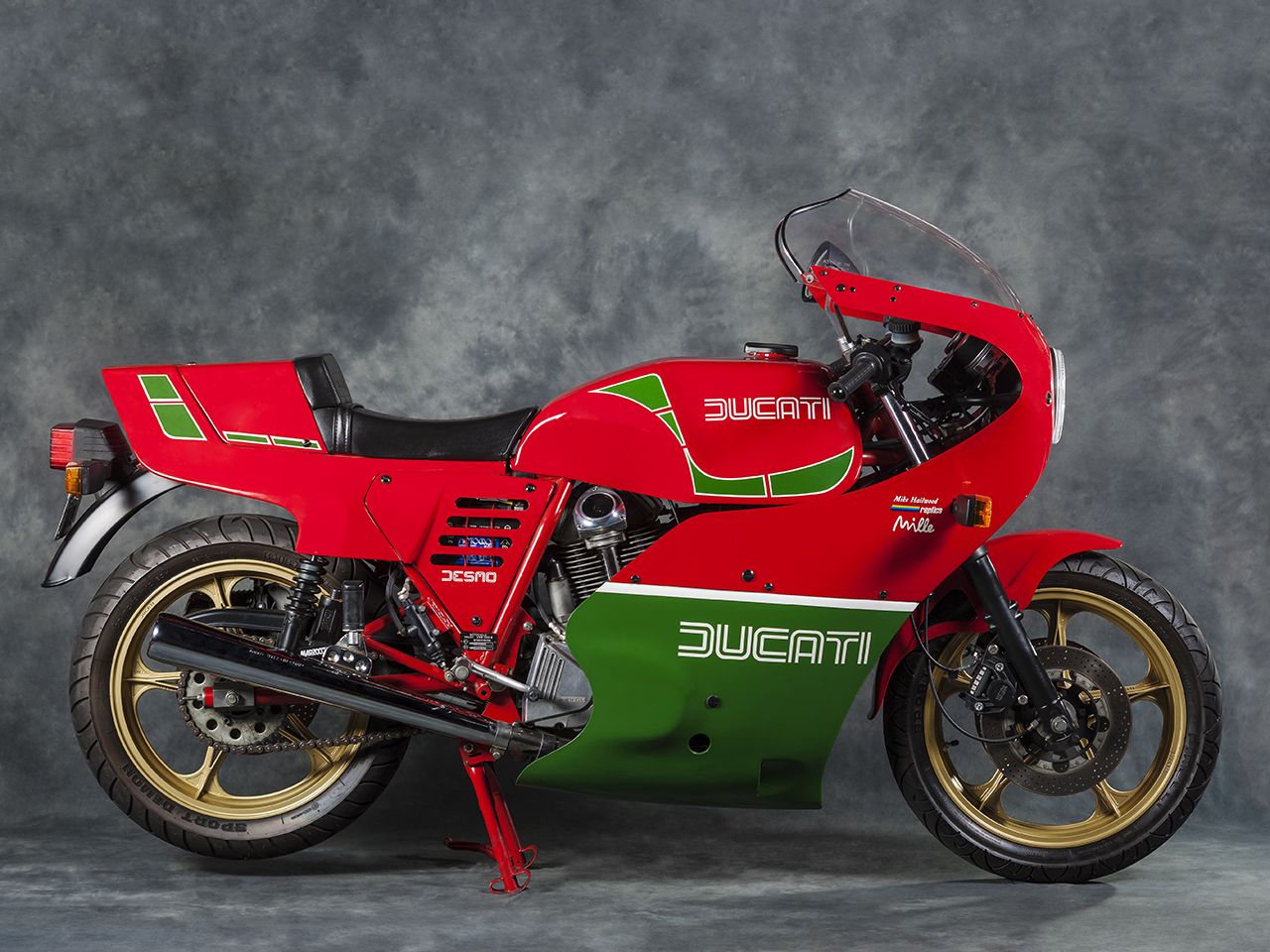
That Ducati did not make a complete new model out of all the work that went into the engine might, in hindsight, be regarded as the big flaw in the plan. To the public, the updates were minor and both the Mille MHR and the Mille S2 were not seen as new models.
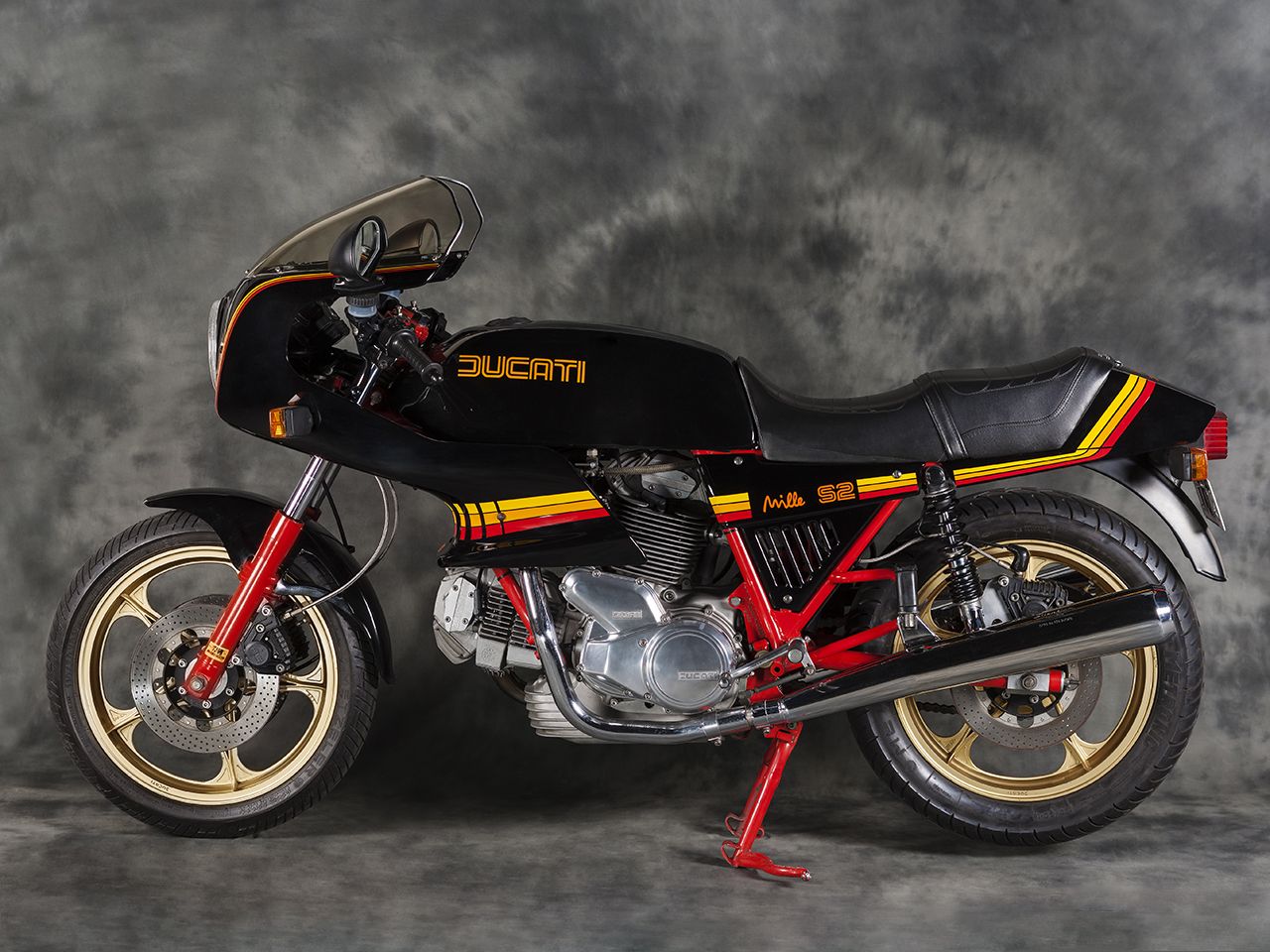
Looking back now, it is remarkable that Ducati went through all the trouble of improving the bevel-drive engine in the way that it did. Yes, many of the problems were now solved and indeed the reliability was greatly improved. But it remained a rather large, heavy and not very powerful engine compared to its 1980’s rivals.
By 1985 the take-over by Cagiva was finally effectuated and Ducati came under new management. It seems the Castiglioni brothers were initially still convinced to take the bevel-drive engine to yet further development as Massimo Tamburini was commissioned to develop a complete new chassis design for the new Mille engine. However, this project soon was killed off before it even reached a full prototype stage. Cagiva had made up their mind and decided that the bevel-drive engine was not suitable to take the company towards much needed success. Where the Mille MHR and S2 were both available throughout 1985, only the MHR still featured in the catalogue for 1986. That year proved to be the final year for the bevel-drive Ducati’s.
It must be said that the decisions made by Cagiva in the late 1980’s did pay off in the end. The Pantah based 750’s were much more modern bikes and soon, under leadership of Massimo Bordi, development of the first 4 valve, water-cooled engines began. Although it took some more years to develop further, with Massimo Tamburini back at the drawing table, Ducati struck gold with the introduction of the 916 in 1994.