
THE NCR ERA: ENDURANCE AND FORMULA 1
We currently have a lot going on in the ‘racing department’ here at Back to Classics. We’ll be keeping you posted about new restorations and new developments for our parts catalogue of course. But before we can introduce any of these, we thought to first dive into the history of the racing Ducati bevel-twins further. We have discussed Ducati’s efforts in 500cc Gran Prix racing in an article before. This time, we would like to take you back to the NCR era (1974-79) of endurance and Formula 1 racing.
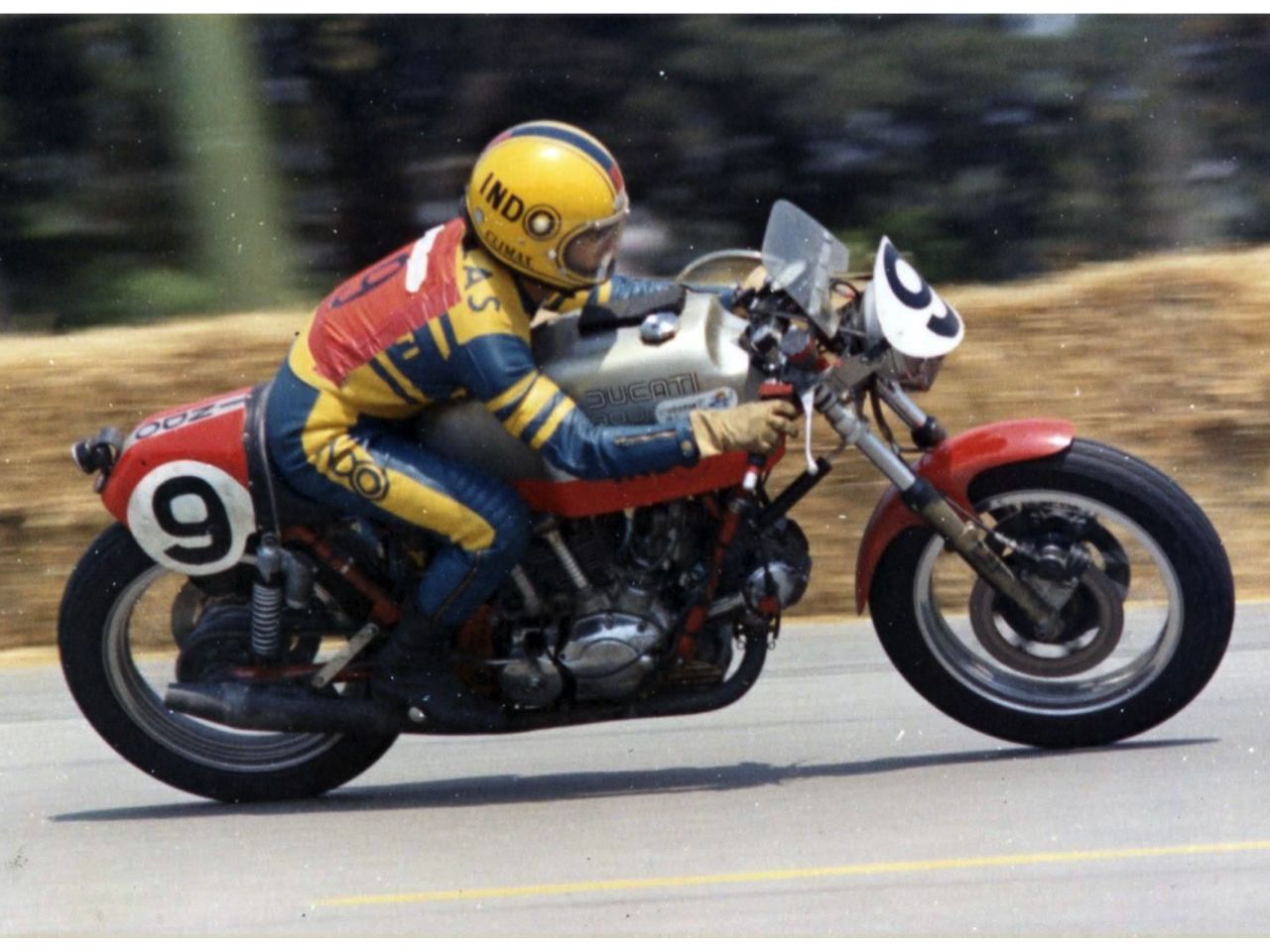
In 1970, the new Ducati management decided to take the company into the future of large displacement bikes with a strategy focused on two main objectives: developing a 750cc bike for road use and getting race success to sell them. The road bike became the 750 GT, the racing bike initially became the 500 Grand Prix racer of 1971. It soon became apparent however that the days of 4-stroke 500cc racers were counted and attention was shifted to an area of motorsport where Ducati could be competitive; long-distance and endurance racing.
The decision was made to enter a works-team in the 1972 200 mile-race at Imola and a number of 750 racing bikes, based on the street 750 GT, were prepared. The now world-famous 1-2 victory at that event with riders Paul Smart and Bruno Spaggiari cemented Ducati’s name as a manufacturer of world-class racing bikes.
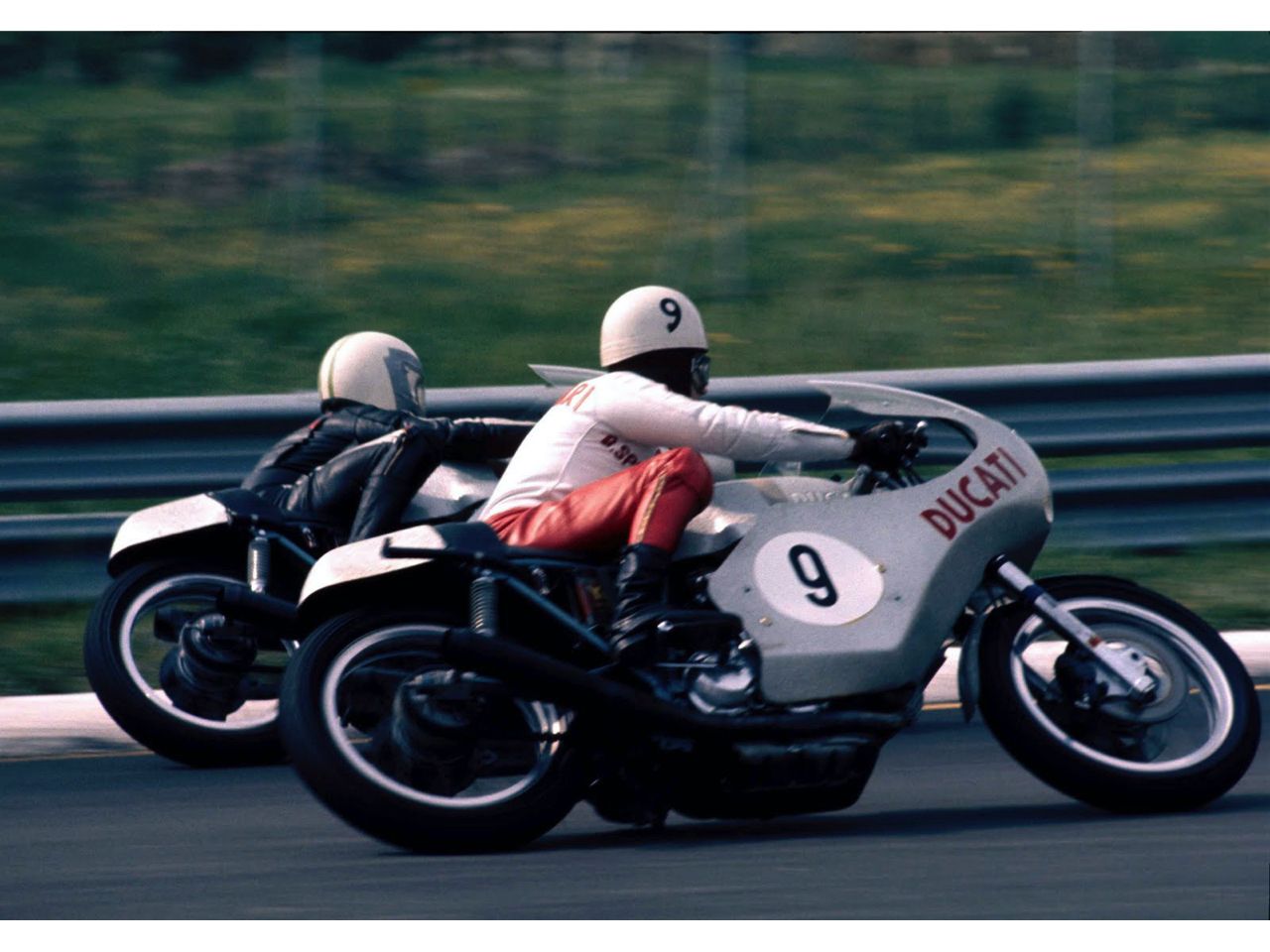
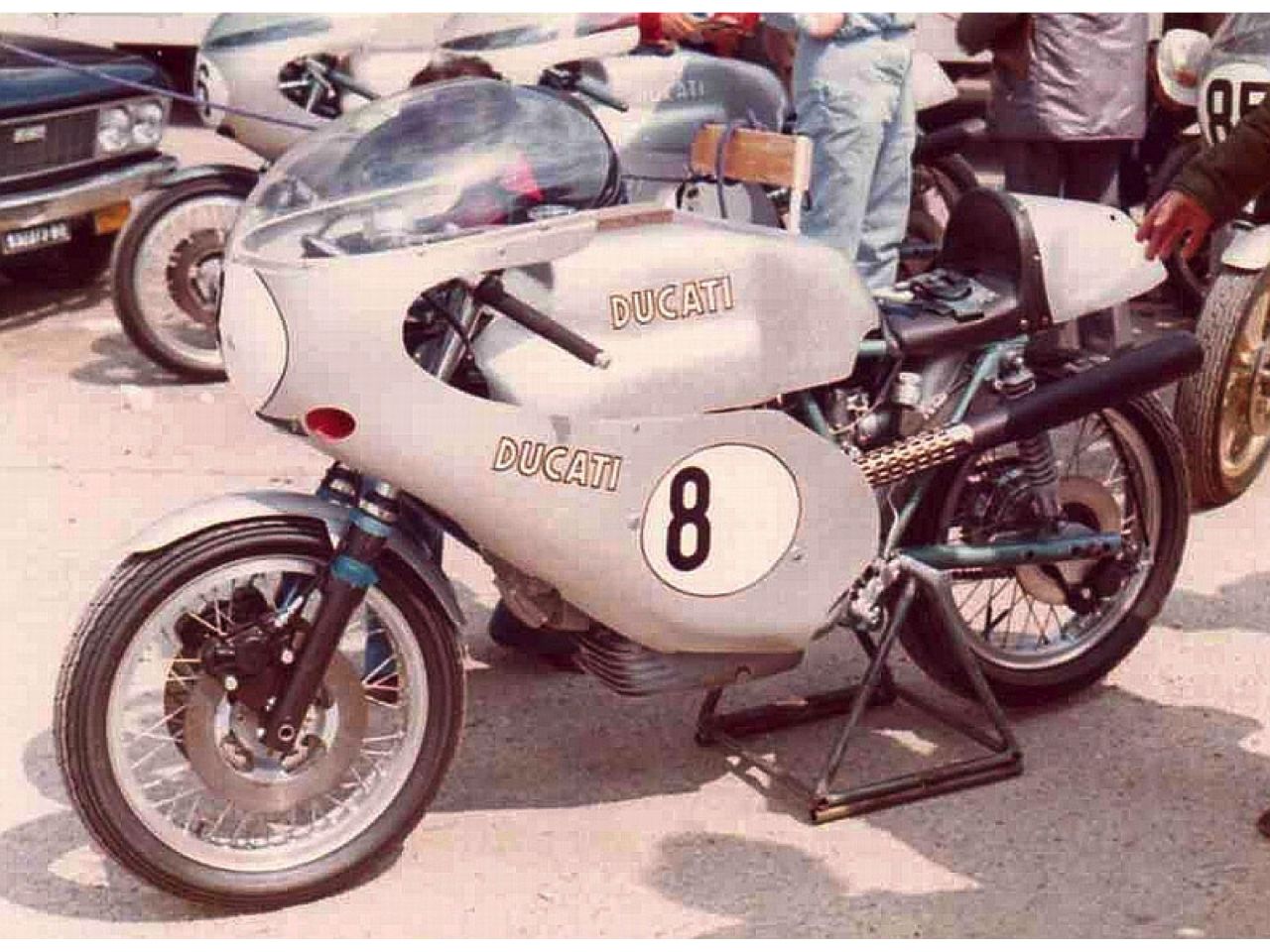
For the 1973 Imola 200, Ducati chief-engineer Fabio Taglioni developed an even more special 750 racing bike. The engine got a much shorter stroke and larger bore and the frame was now specially designed for racing rather than an adjusted street frame. It was also the first frame to be made by specialist Daspa in 25CrMo4 chrome-molybdenum tube.
Although the 1973 750 Imola finished second in the hands of Bruno Spaggiari, Ducati wasn’t able to repeat the victorious results of the year before. But by now a new director was appointed who had a different, less enthusiastic, view on racing. Over the coming years, many battles were fought between this new director DeEccher and chief-engineer Taglioni and many were about Ducati’s involvement with racing.
A ‘semi-independent’ racing shop
With racing now effectively banned as an official factory activity, Taglioni and Franco Farnè collaborated with ex-factory mechanics Giorgio Nepoti and Rino Caracchi to set up a ‘semi-independent’ racing shop. Located at Via Signorini 16, close to the Ducati factory in Borgo Panigale, the shop was called Nepoti Caracchi Racing (NCR) and had ‘limited’ access to the factory for parts and assistance.
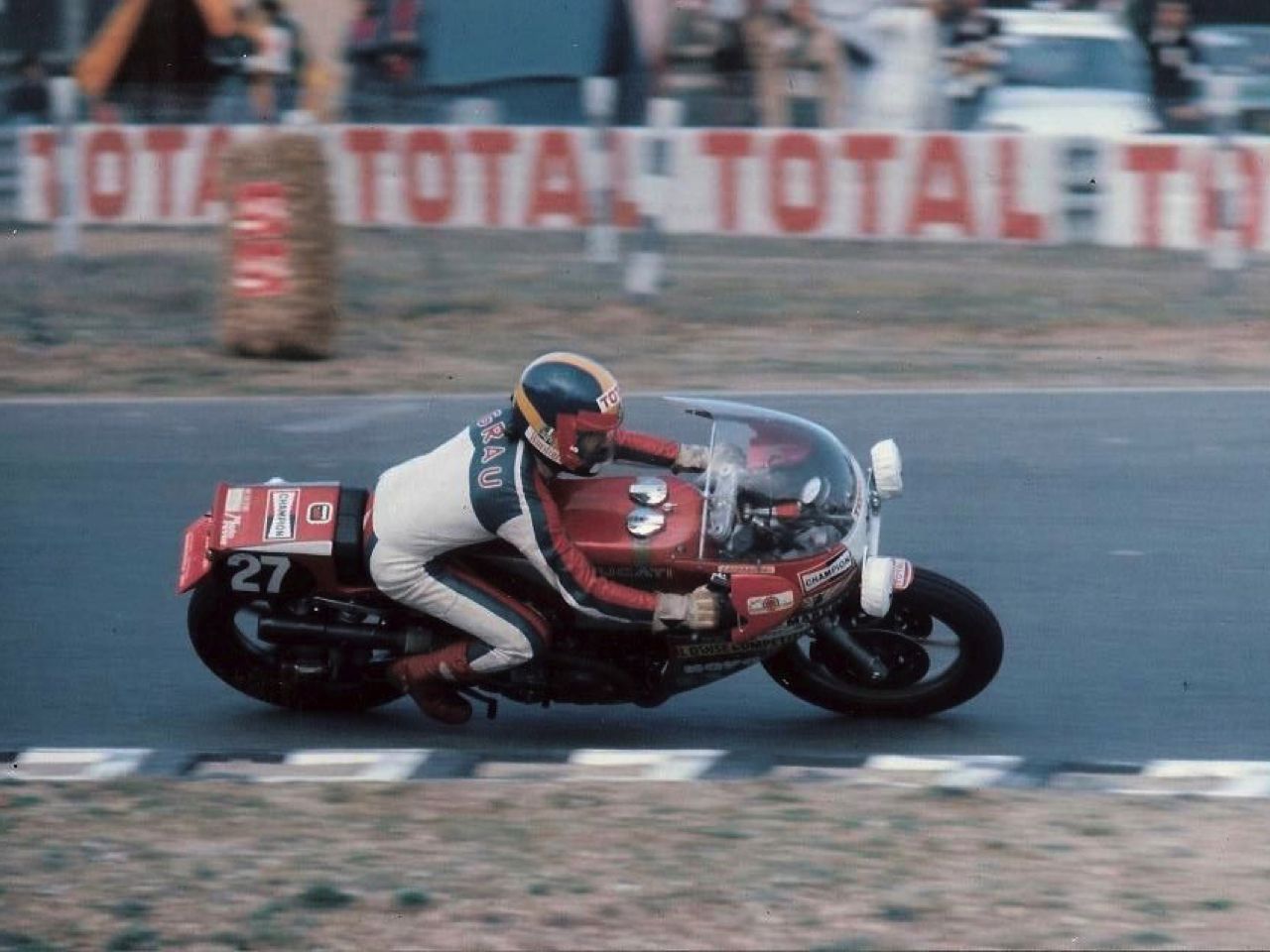
Taglioni was able to get some funds from Ducati to support the Scuderia NCR to enter the 1975 FIM Coupe d’Endurance with Benjamin Grau and Salvador Canellas as riders. Based on the experiences of the 1972 and especially the 1973 Imola races, a completely new racing bike was developed. A new Daspa frame was still based on the 1973 Imola but now took a larger capacity engine. The engine was 905cc (74,4×88,0mm) and had standard crankcases that were cut open and welded to allow the exhausts to run closer to the centre to increase ground clearance. Cylinder heads were specially made with 60˚ valve angle as were earlier seen on some of the Imola racing bikes.
The team was quite successful in the 1975 season winning both the 24 Hours of Montjuich (Barcelona) and the 1,000km race at Mugello. Grau finished 3rd in the 1975 championship.
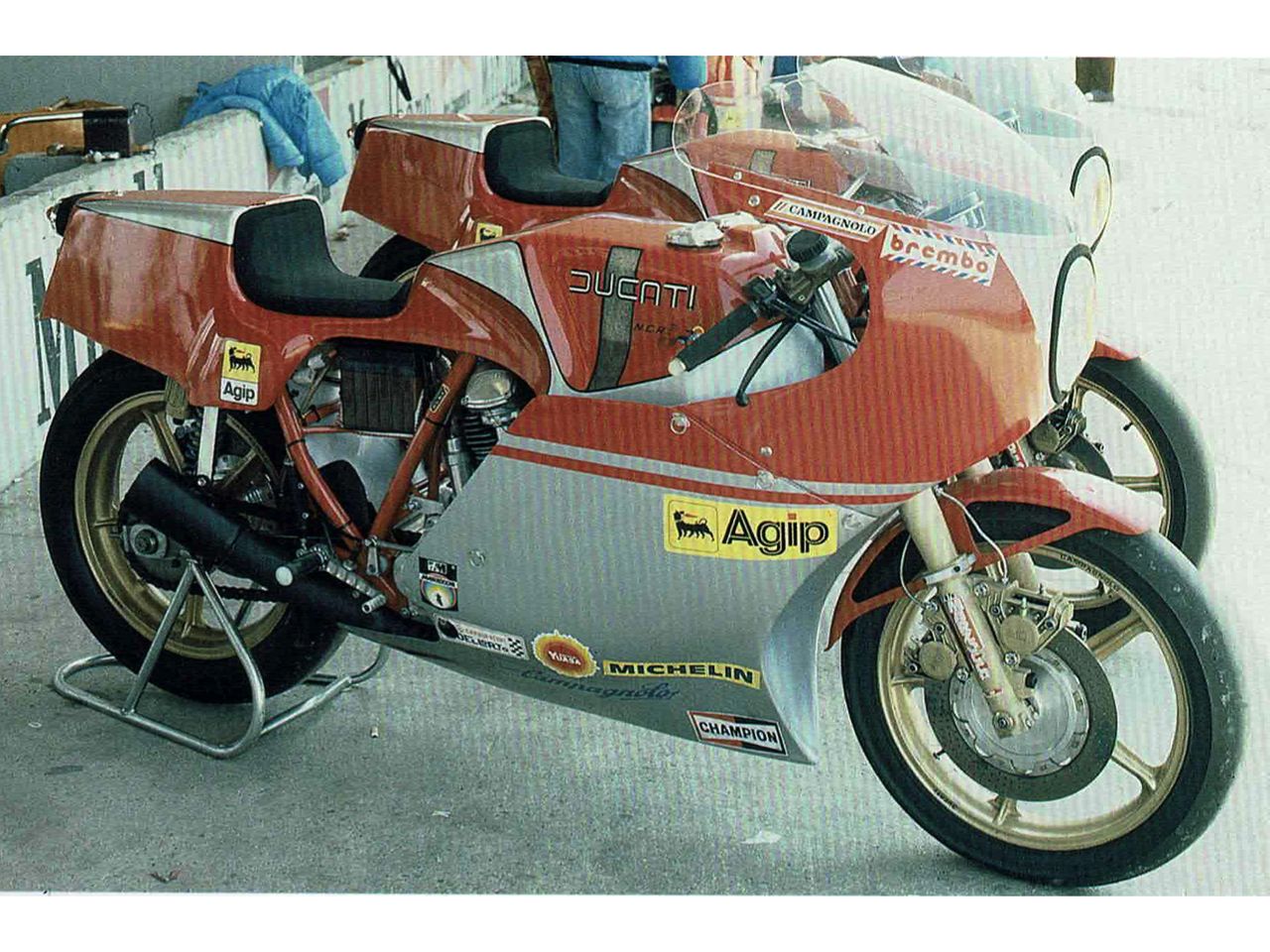
Between 1976 and 1979 the factory racing Ducatis were built by NCR (officially titled ‘Ducati 900 NCR’) to comply with either FIM Coupe d’Endurance or Formula 1 regulations. In 1976 and 1977 a small number of highly specific racing bikes were built, all according to client specifications so no two bikes are exactly the same. Even though, there are some gradual developments to note for these earlier machines.
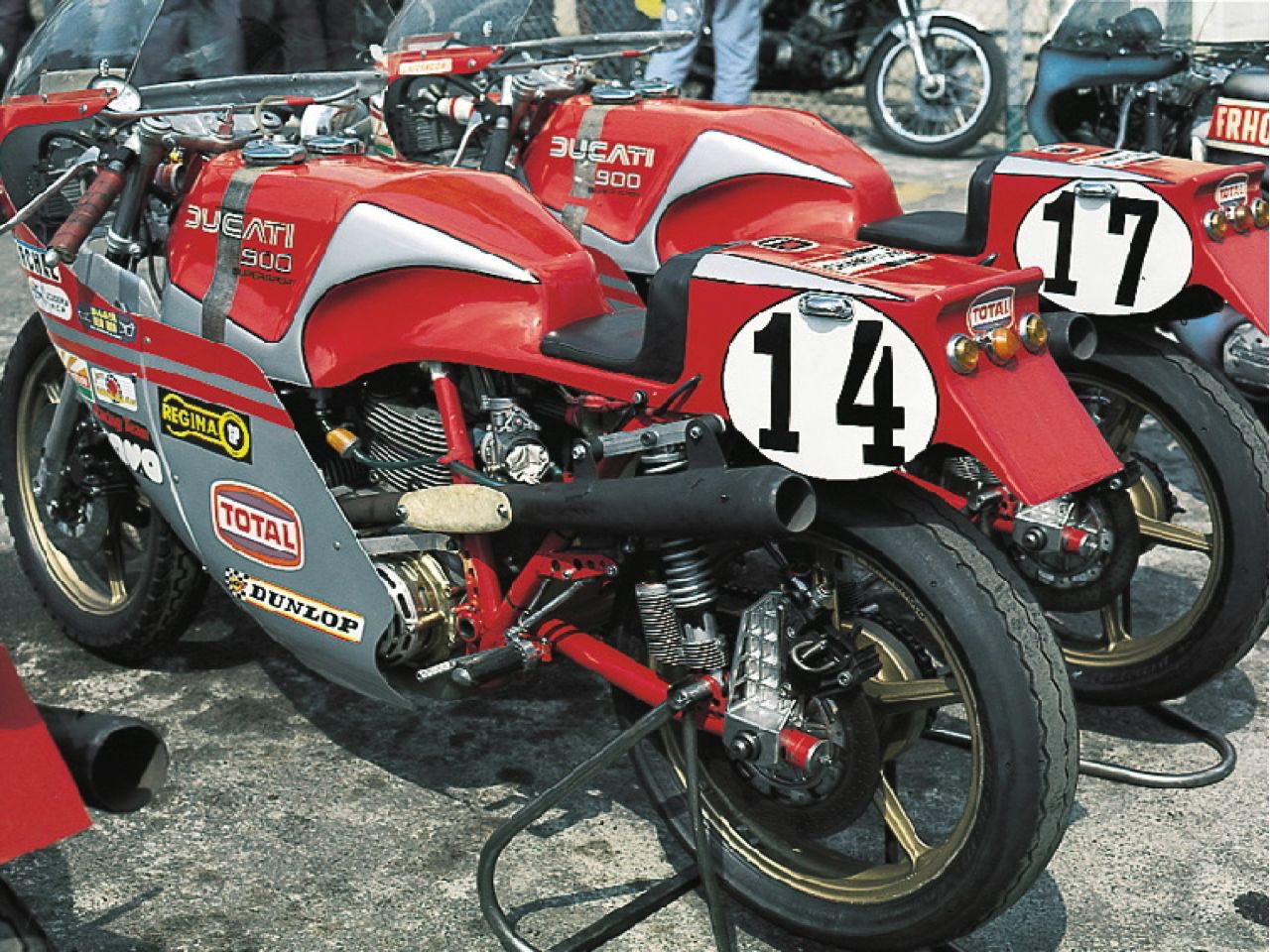
The crankcases were initially either standard 750 units with high-rise exhaust system or cut-open and welded standard 750 cases to fit a low-running exhaust system. These welded crankcases proved to be not strong enough and sometimes cracked. This is why during 1976 a series of special sand-casted crankcases were made that also incorporated a spin-on oil filter, oil sight gauge and some other minor updates.
Engines were built to specifications and varied from one racer to the next. Cylinder heads mostly had the standard 80˚ valve angle but some engines were fitted with 60˚ heads. Stroke was either the standard 74,4mm or shorter at 70,0mm creating a 851cc bike. The clutch was basically the same as the 1973 Imola although some had the castings in magnesium and others in aluminium.
The chassis too was slightly modified over the years. With only a handful of endurance racers built between 1976 and 1978 and specifications varying it is hard to say anything in general about originality. It seems however the first incarnations had a tank-seat unit that had room for the start number. This later moved to the fairing and a wing-like seat was introduced. With many endurance machines fitted with a specially made quick-release system for the rear wheel, the swingarm differed from the earlier 1975 bikes that had an eccentric chain adjustment around the swingarm pin. Front forks were always 38mm Marzocchi-supplied racing ZTi either in aluminium or magnesium.
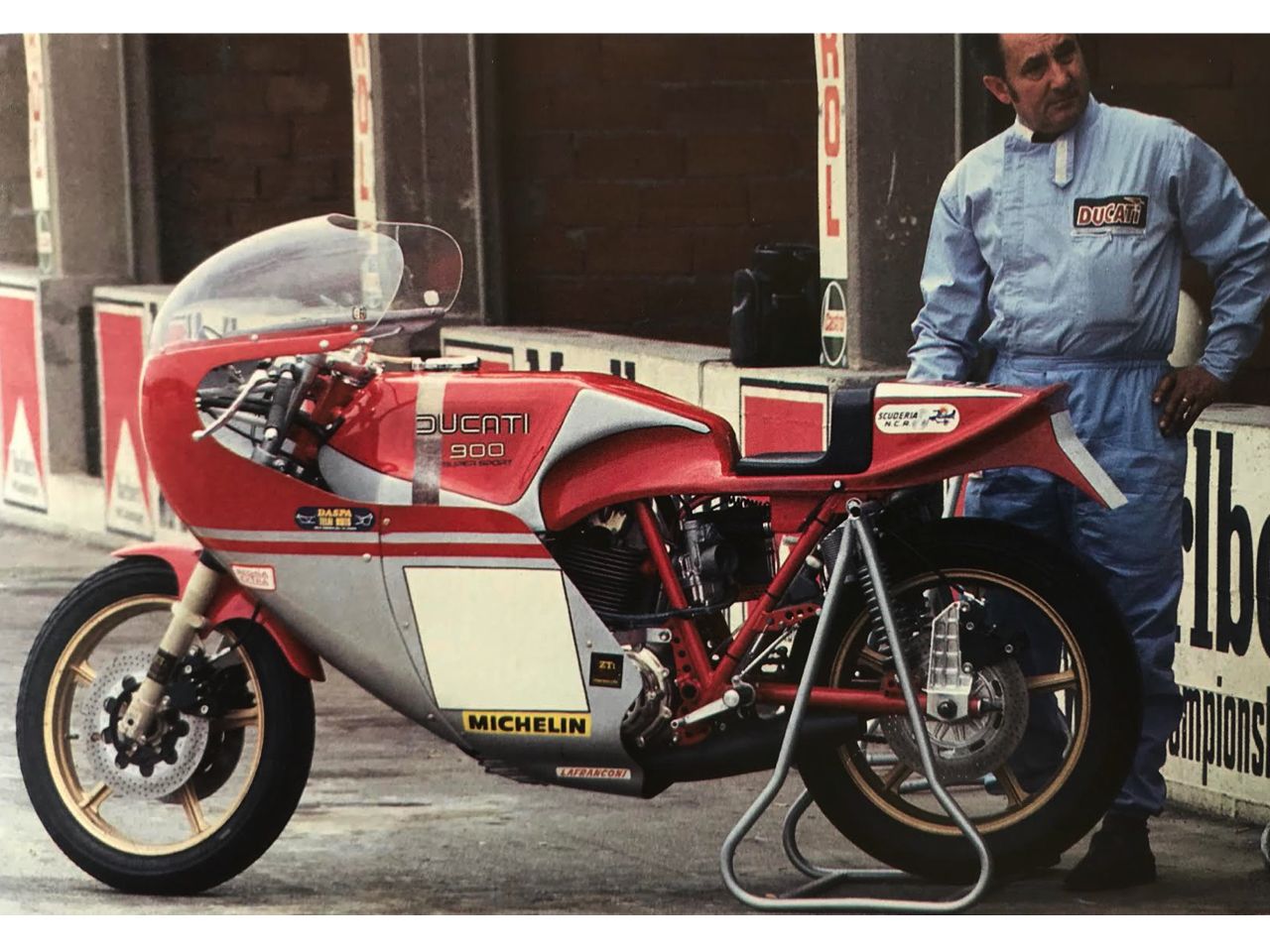
The endurance-focused NCR racing bikes were gradually upgraded over 1977 and 1978 with a handful of new machines built each year. The results in the Coupe d’Endurance were mixed. There were certainly successes at individual races but reliability issues hampered results in the overall classification.
FORMULA 1 RACING AT THE ISLE OF MAN
For 1978 the focus moved towards the Formula 1 race at the Isle of Man. Regulations required for the stroke to be the same as standard models so this was retained at 74,4mm in order to make the standard 900 Super Sport the homologation model for the racing bike. Taglioni was correct in thinking he could use much of the endurance specifications with some minor alterations to be competitive on the Island.
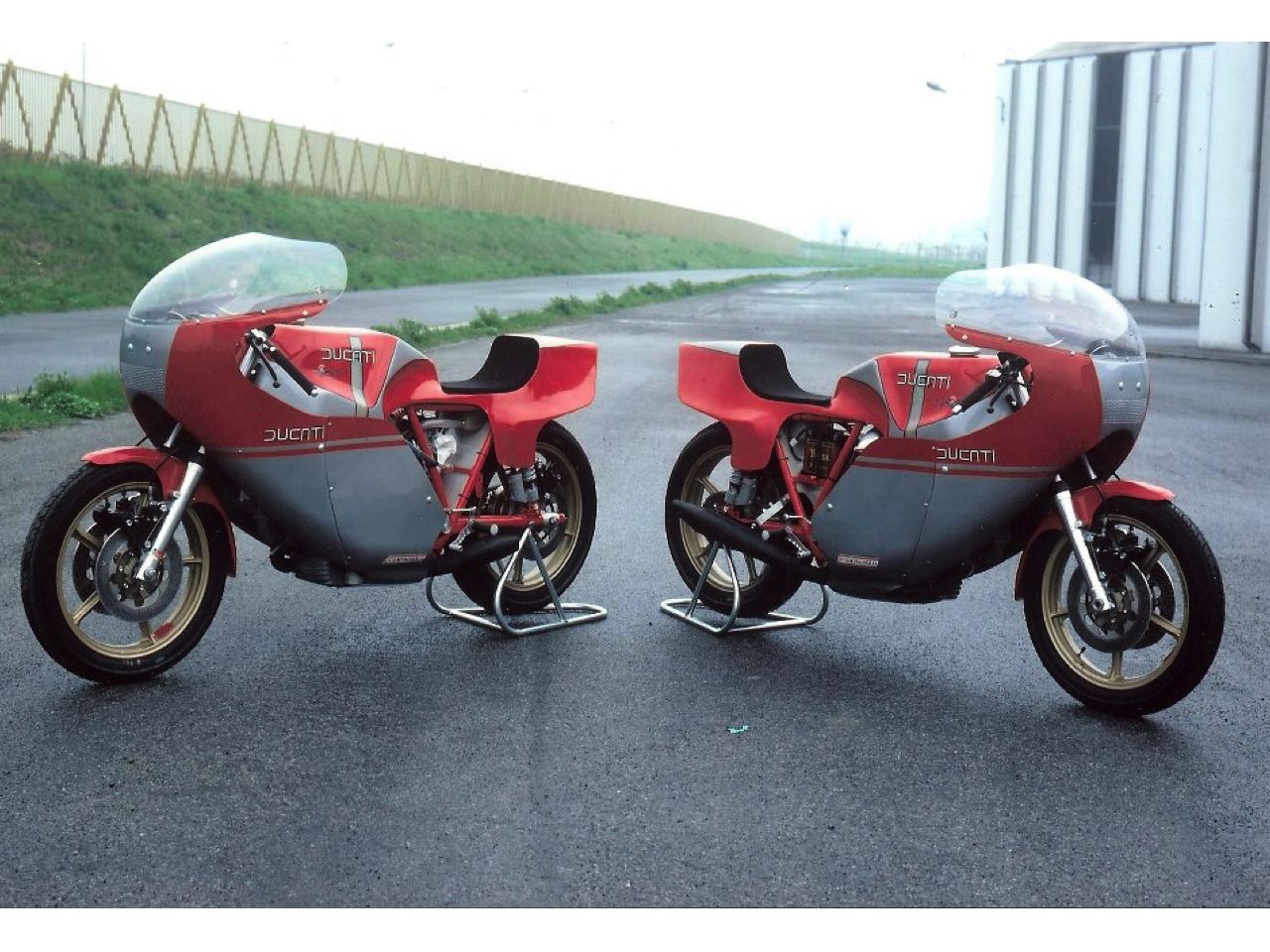
Unlike the endurance racers, the 900 NCR TT Formula 1 was a catalogue model for 1978 for the price of 7,500,000 Italian Lire or 3 times the price of a the top-of-the-range 900 Super Sport. Engine numbers were also applied and in the 088xxx series, the same as the standard 900 SS. The crankcases however were from the same casting series as previously used for the 1977 endurance bikes as was the aluminium casting dry-clutch. Cylinder heads had 44 and 38mm valves in the 80˚ configuration but with special racing camshafts.
The chrome-moly Daspa frame was only slightly revised and largely the same as on the endurance bikes, as was the swingarm. The quick-release rear wheel was replaced by a more standard set-up which would make more sense for the shorter distance this racing bike was intended for.
The bodywork was specific for this model too: the tank-seat unit now had longer padded area and flaps over the top of the rear shocks.
It is stated by Rino Caracchi that a total of 18 of these ‘catalogue’ TT Formula 1 racers were built over the course of 1978 and 1979 with only 8 of these built in 1978. Specifications for these 18 bikes would have been largely the same, making it the only series with a shared specification within the NCR era of bevel-drive racing bikes.
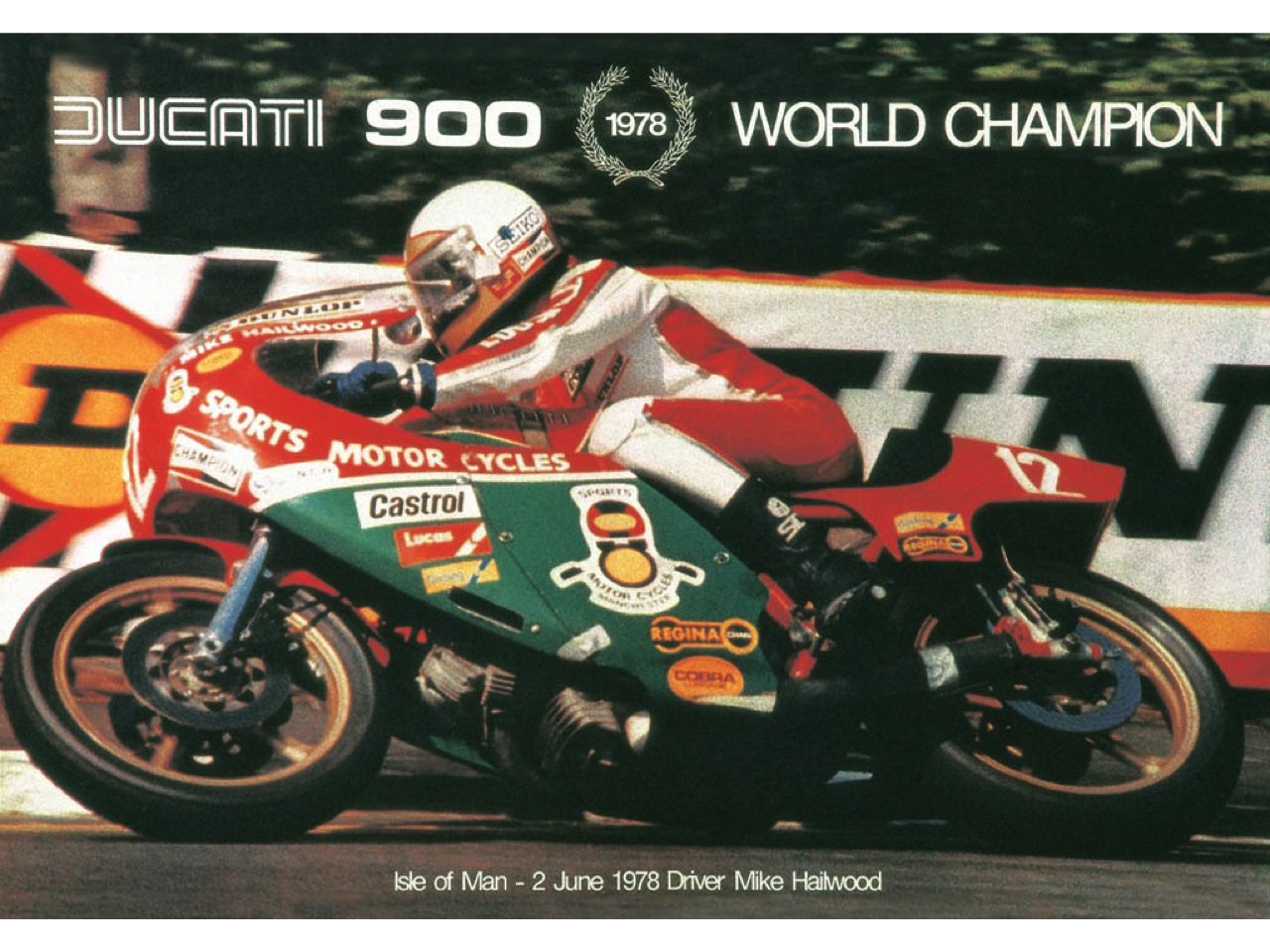
The Manchester based race-shop Sports Motorcycles, owned and operated by Steve Wynne, purchased 2 of the TT Formula 1 catalogue racers from the factory in 1978. Both bikes were entered in the TT F1 race of that year after a very promising attempt the year before. One was to be ridden by Jim Scaysbrook, the other by none-other than Mike Hailwood… The rest is history (and deserves its own article some day).
THE FINAL BEVEL-DRIVE RACERS
The success of the Formula 1 in 1978 caused renewed interest in endurance racing for 1979. The 900 NCR Endurance was further developed and received a revised frame with the left exhaust running behind the central frame down-tubes. A new box-section swingarm was developed and the ignition was now electronic running from the right side of the crankshaft.
Results again were mixed with some second and third places and from 1980 onwards, Ducati did not enter the bevel-drive NCR in official racing events anymore. That did not mean the NCR racing bikes were not entered by privateer teams, most notably the victory at the 1980 Montjuich 24 hour race by Mallol and Tejedo.
On the Formula 1 front too, new developments saw a new racing bike for 1979. This was supplied to Sports Motorcycles for entry in the Isle of Man that year. That bike however proved to be far from the winning bike of the year before; it was down on power and handling and Mike was only able to finish 5th.
By 1980, the Ducati bevel-drive racers were outclassed by the competition. Although there were some successes with privateer racing teams, there was certainly need for something new. Ducati’s fame was to be successfully upheld by the Pantah and the racing bikes that were derived from it.