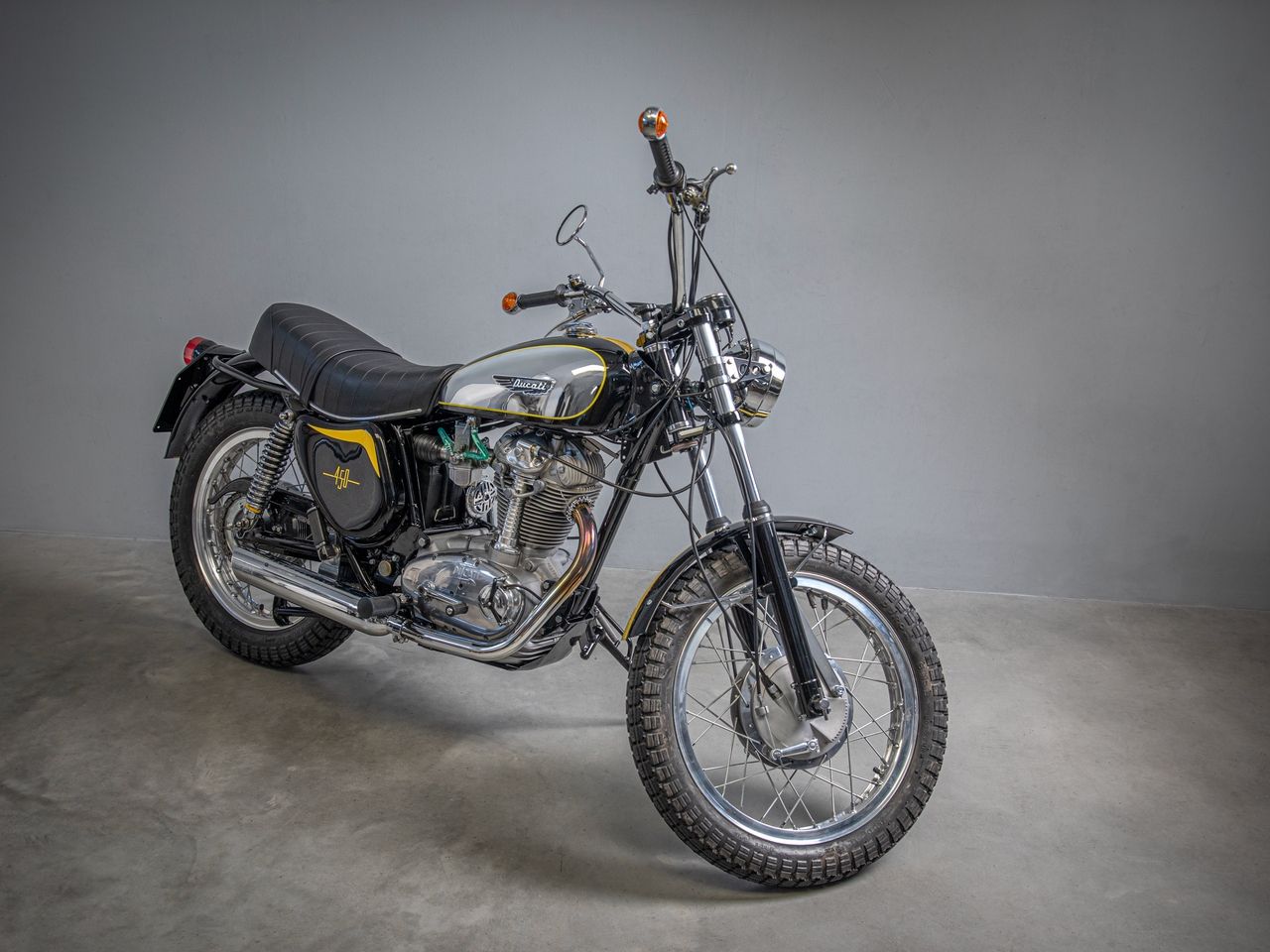
The Scrambler: lots of fun on any Sunday
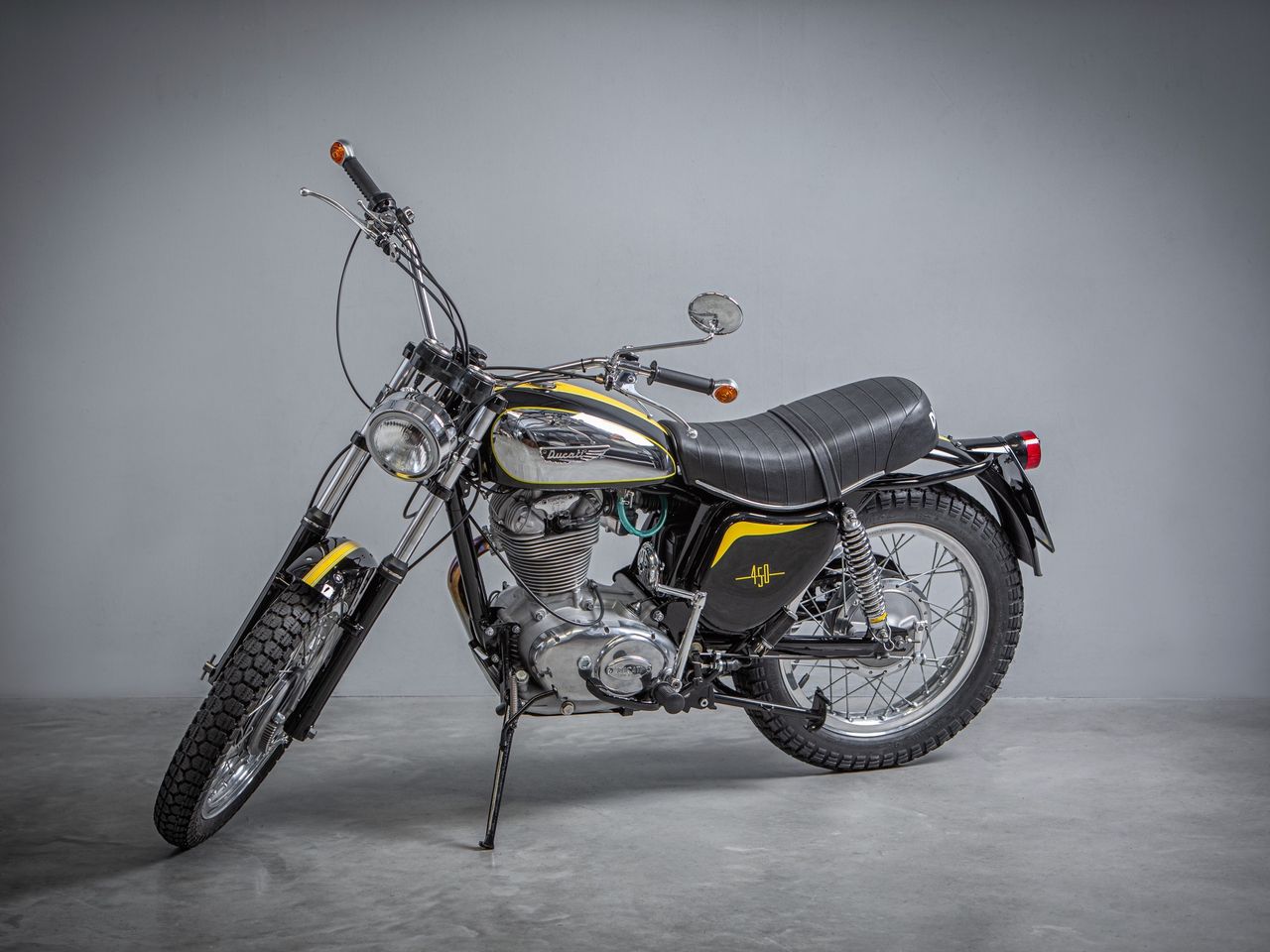
With a nut-and-bolt restoration of this 1974 Ducati 450 Scrambler recently finished, we thought to shine a light on these great bikes. With a lifetime spanning from 1962 up to the present day, it is probably the longest running family line of all Ducati models. What makes these Scrambler such lovely bikes?
Where the nicest Ducatis usually are derived from the race track, the Scrambler has different origins. At the end of the 1950’s, the United States became an increasingly important market for Ducati. The Berliner Motor Corporation from New Jersey played an important role as the US importer and had Ducati made a number of specific models for the US market. These were always based on existing frames and engines but with specific bodywork, handlebars and other parts to make them appeal more to the American public.
In 1958 Ducati had marketed a true off-road racing model for the first time: the 175 Motocross followed a year later by a 200cc version. These Motocross models were hard core off-road bikes with a strengthened frame and swingarm and a lot of specific (and beautiful) competition components. It made these bikes quite expensive and not very appealing to the more road oriented users. Berliner asked Ducati to develop a softened-down off-road model that would be more attractive to a broader public. This became the first 250 Scrambler of 1962.
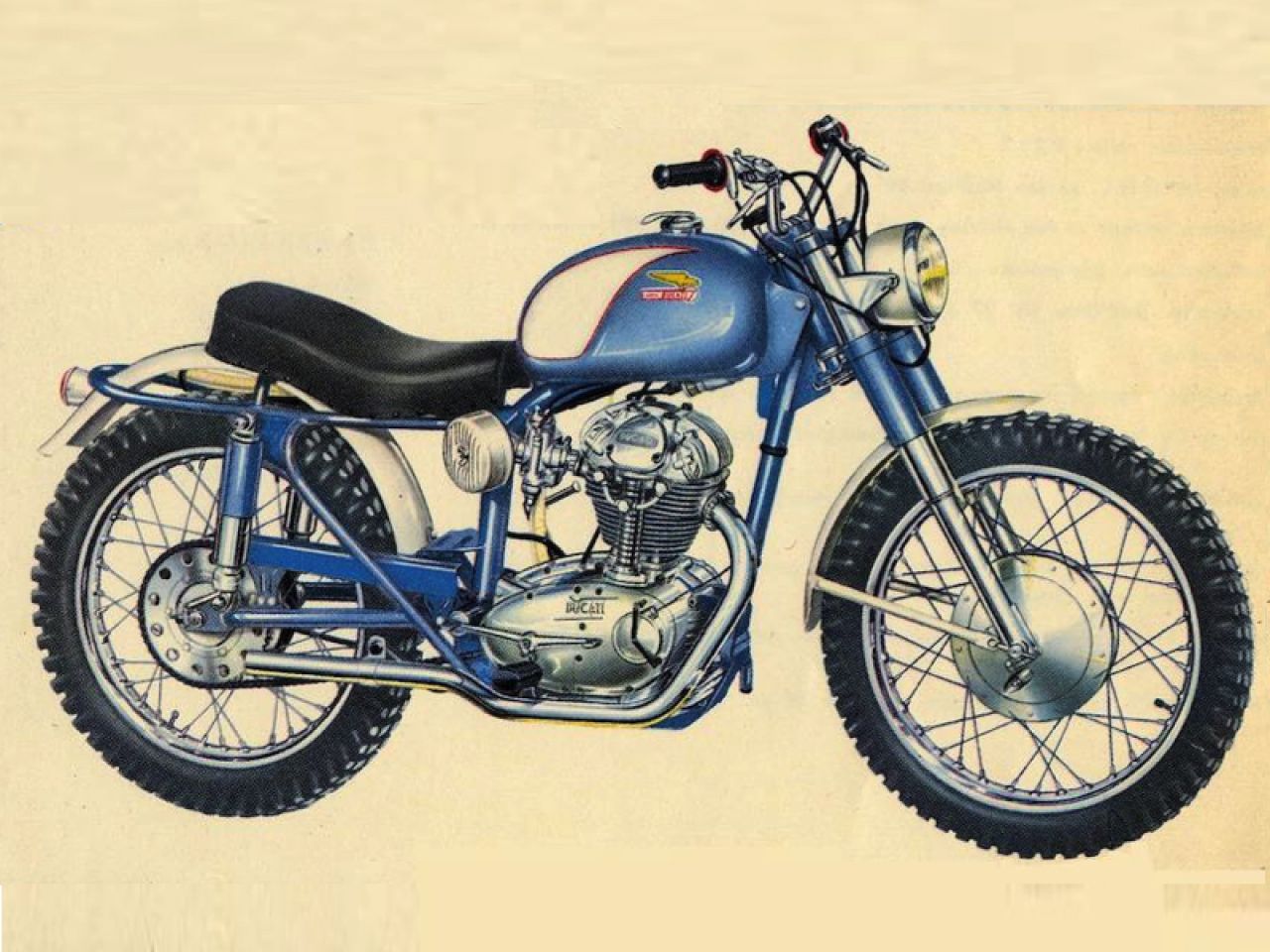
Frame and suspension were largely the same as on the 250 Diana of the same year. The engine was tuned with a higher compression piston, a hot camshaft and a Dell’Orto SSI27 carburettor. A flywheel magneto was fitted with no battery and tiny head- and tail lights. The beautiful rounded fuel tank was specific for these early ‘narrow case’ Scramblers and was replaced by a more angular style tank in 1964.
The 250 Scrambler proved to be quite popular US and received a number of updates during the late 1960’s. A small battery was added from 1966 to improve the lighting and, along with other models, it received a new 5-speed gearbox in the same year.
Ducati made a big step in developing the single cylinder models when in 1968 they introduced the first ‘wide case’ models. The engine castings were strengthened and now allowed for larger displacements and the frame was much stronger and heavier. This new set-up was first translated to the 250 and 350 Scrambler that now also became regularly available throughout Europe.
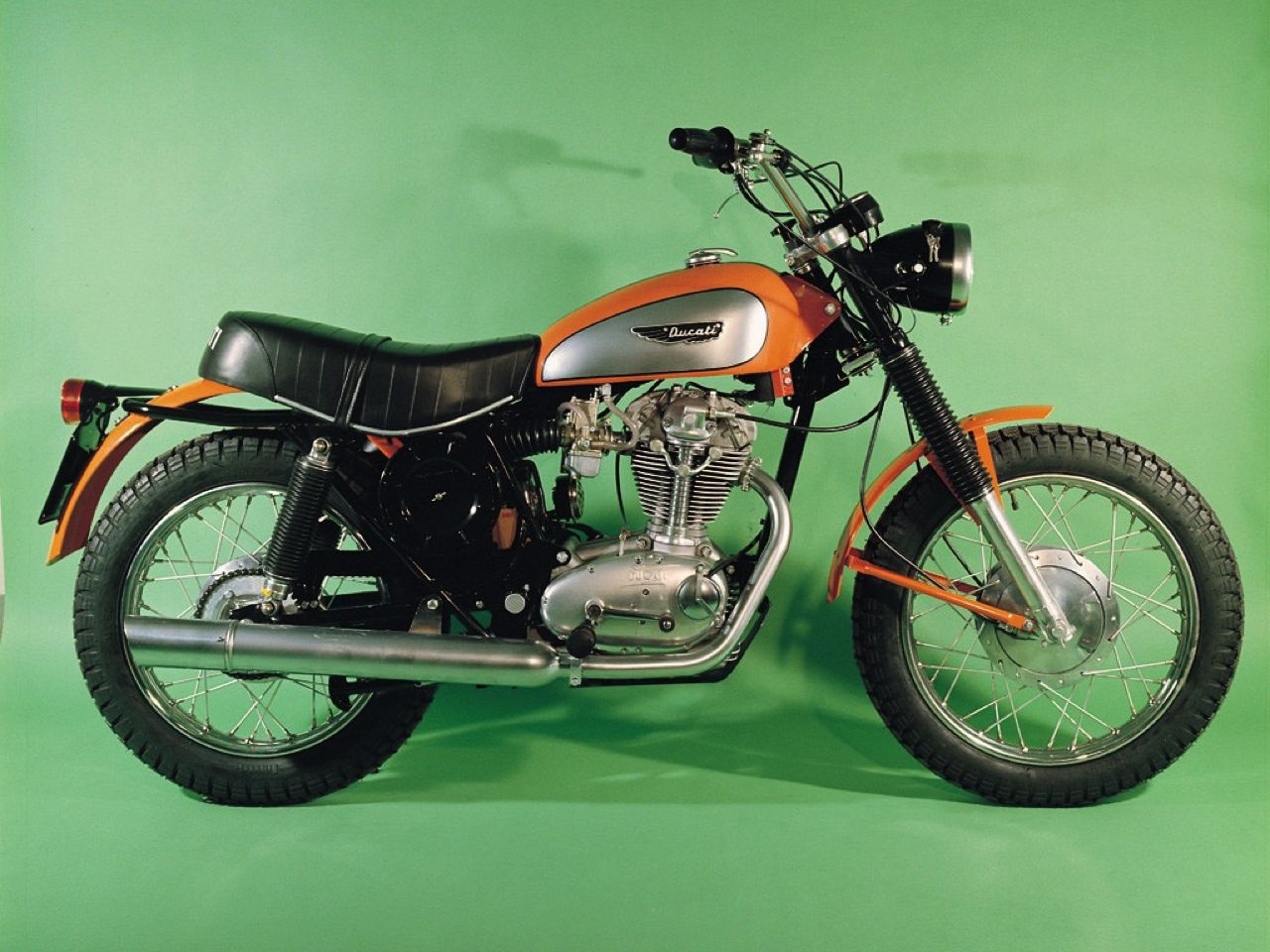
For 1969 the Scrambler family was joined by the first 450, sold in the US as the Jupiter but simply as the 450 Scrambler in the rest of the world. For 1973 the Scrambler got further updates and now included the double-sided front brakes of the Desmo models and fibreglass side covers. The recently restored 1974 450 Scrambler is one of the last to have been made before the model went out of production.
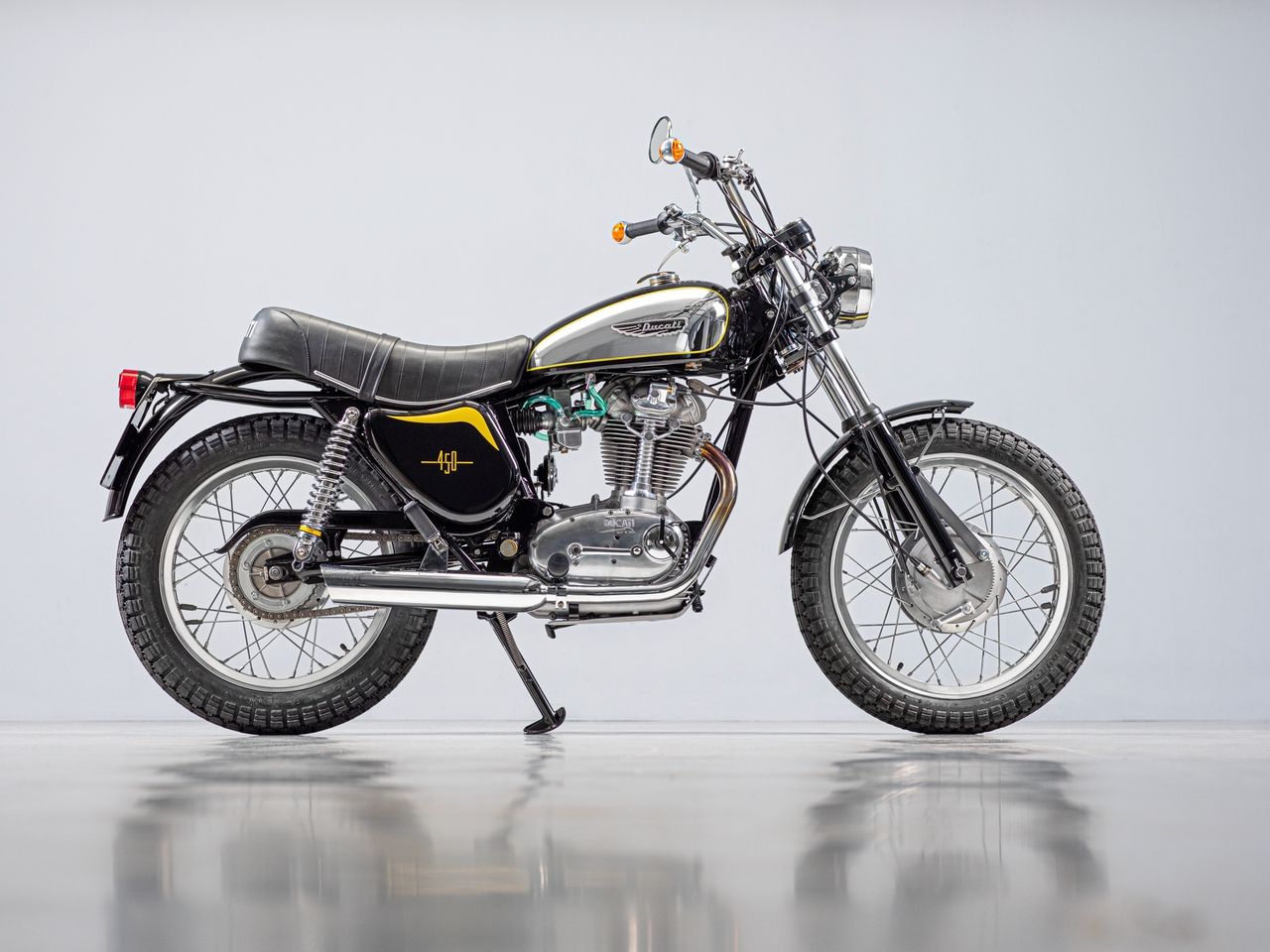
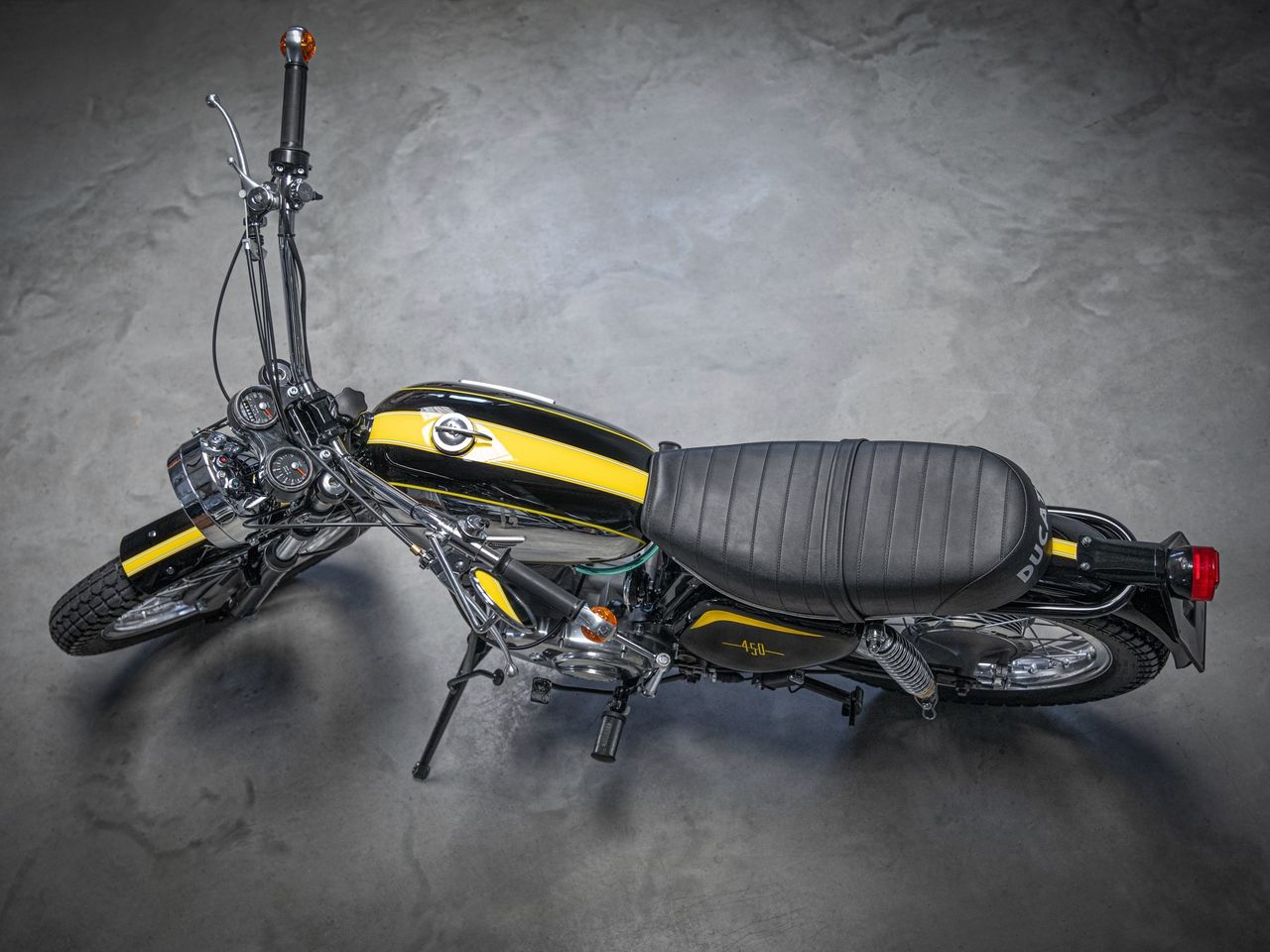
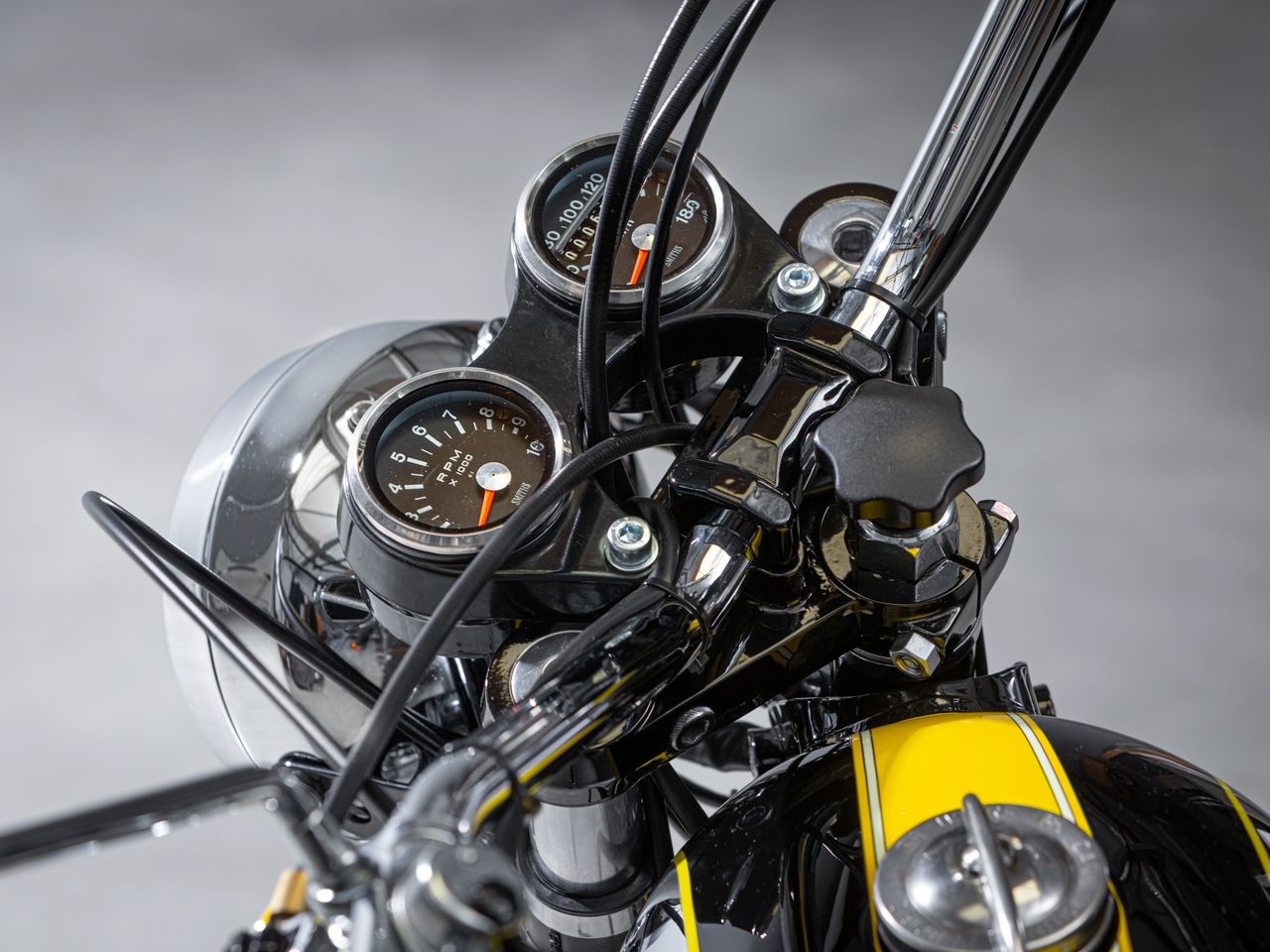
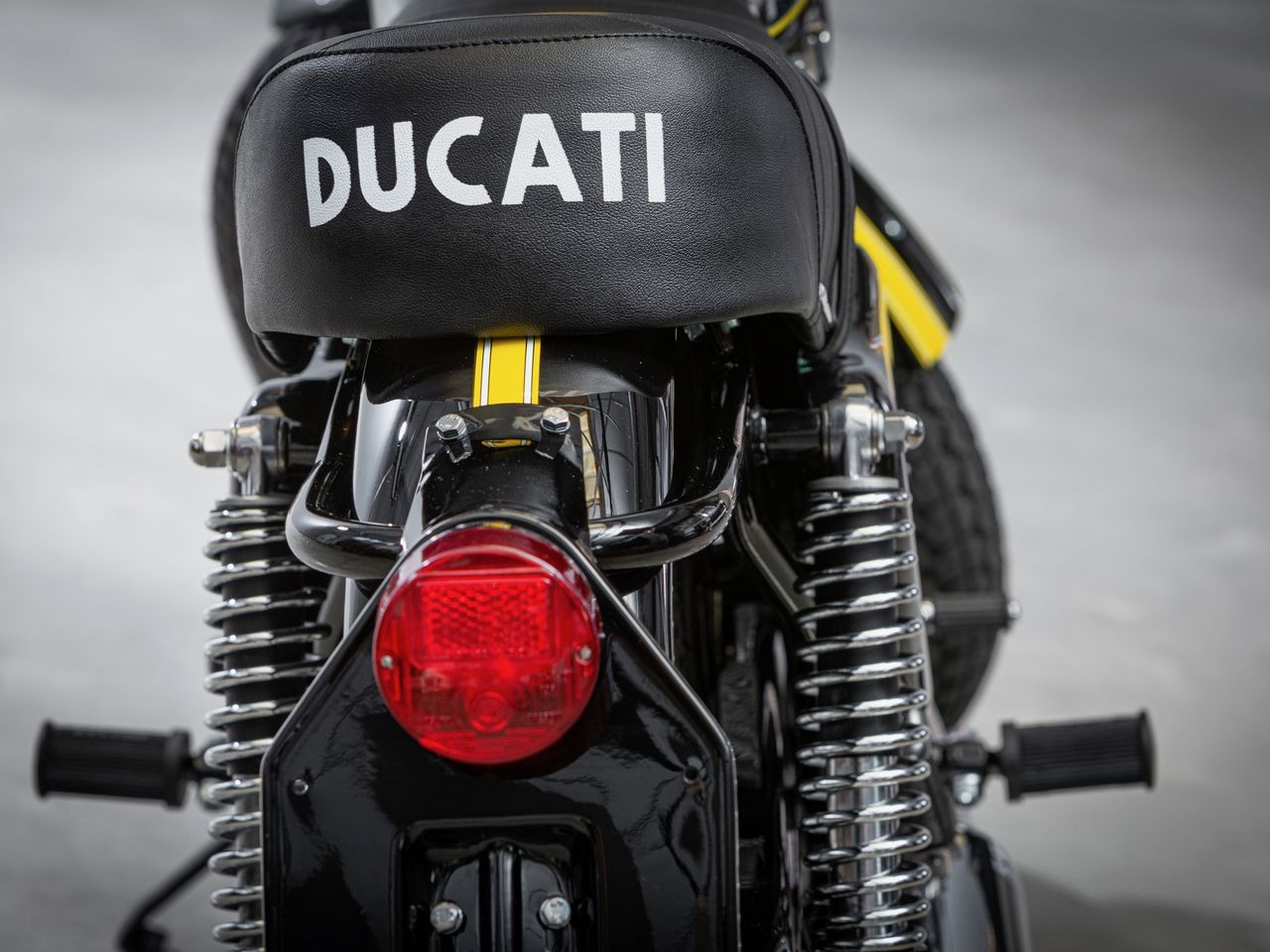
By the early 1970’s, the Ducati single cylinder models were at the end of their live time and new models were being developed. In hindsight it is a shame however that Ducati never made a proper successor for this wonderful line of motorcycles. The singles were replaced, first by the 350 and 500 parallel twin models in 1975. (Much to the chagrin of Fabio Taglioni must be added here!) It became a complete nightmare for Ducati and the parallel twins were luckily soon replaced again by the Pantah models in 1979.
But a (mild) off-road motorcycle never was made by Ducati. This changed in 2015 when, after an absence of 41 years, a new Scrambler was introduced. A number of different models were marketed under the ‘Scrambler’ sub-brand and a huge amount of optional extras were available.
In our humble opinion, this should have been a perfect occasion to finally develop a new single cylinder engine and to stay closer to the ‘original’ Scramblers of the 1960’s and 70’s. The known V-twin power plant was chosen however with a 803cc displacement. The design is an obvious reference to the Scramblers of the 1970’s with the same basic shapes for the fuel tank and the seat.
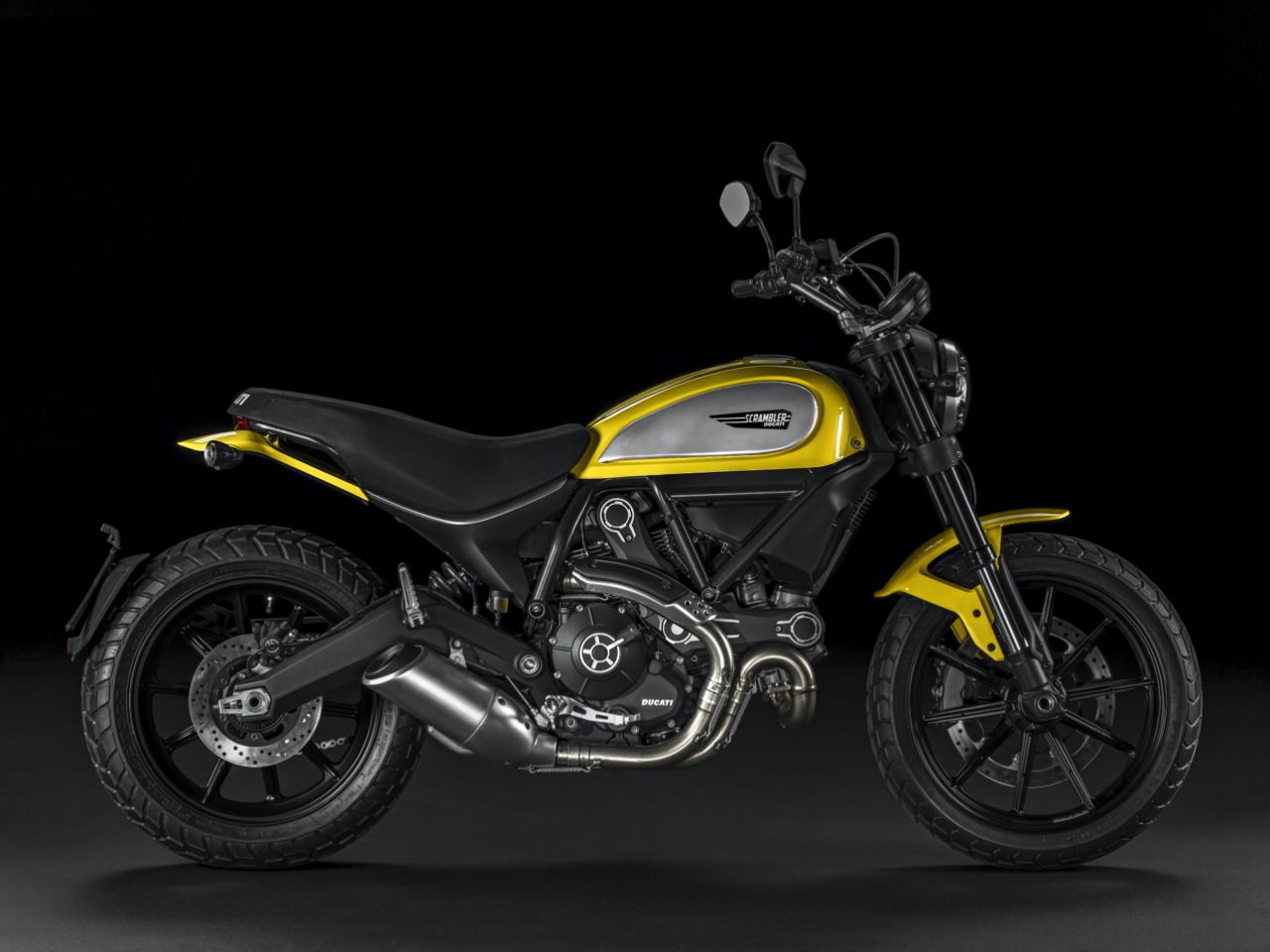
Not only did Ducati base the design of the new Scrambler on that of the old, a whole range of 1970’s-inspired merchandizing and lifestyle products became available. It’s clear that Ducati intended to recreate the freedom and fun of this era with the introduction of this retro-model. After all it was then that the motorcycle came to represent the traits we now ascribe to it, rather than just being a means of transport.
We’re sure the new Scrambler will drive very well and has a lot more power than the Scramblers of the 1960’s and 70’. Perhaps it’s even just as fun to drive as the original which is among our all-time favourite classic Ducati. But as is the case with many sequels, the original is just better…